Can conversations around food reveal the positional tensions individuals negotiate daily?
Can conversations around food reveal the positional tensions individuals negotiate daily?
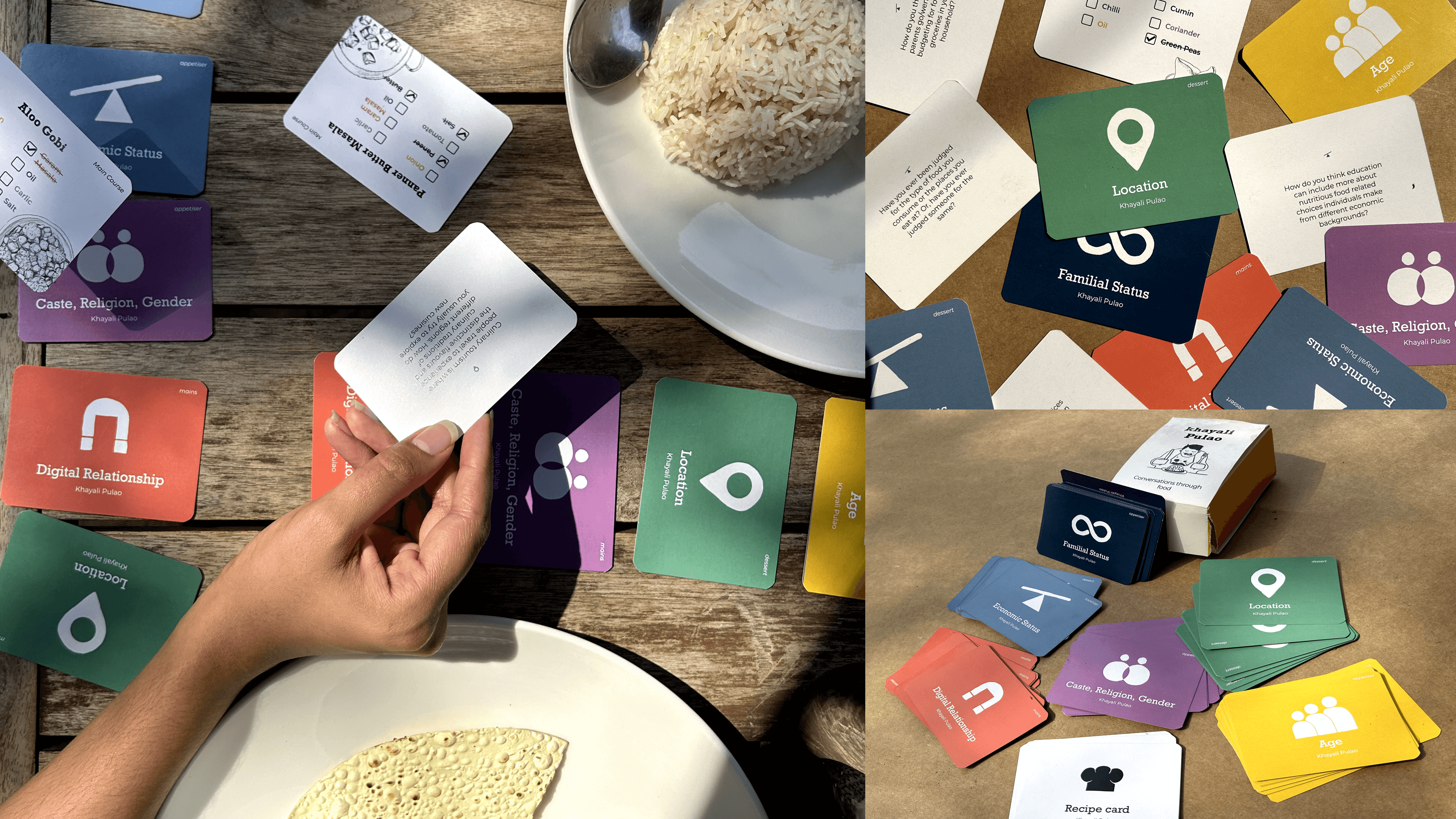
Khayali Pulav is a participatory card game toolkit that transforms casual food conversations into rich research insights. Players trade cards across categories like Starters, Main Course, and Deserts, discussing, and documenting intersectional and lived stories of the world we live in. Co-created with Project Ottenga and Srishti Manipal Institute under Narrative kitchen project, it turns food narratives into structured, diverse data for meaningful futures thinking.
Khayali Pulav is a participatory card game toolkit that transforms casual food conversations into rich research insights. Players trade cards across categories like Starters, Main Course, and Deserts, discussing, and documenting intersectional and lived stories of the world we live in. Co-created with Project Ottenga and Srishti Manipal Institute under Narrative kitchen project, it turns food narratives into structured, diverse data for meaningful futures thinking.
Participatory Research Toolkit
Qualitative Design Research
Experience Design
Visual Design
My Role
Visual & Experience
Designer
Timeline
2 Weeks
Collaborators
Anuhya Mahesh
Viha Shah
Project Ottenga
Collaborators
Anuhya Mahesh
Viha Shah
Project Ottenga
The Context
The Context
X
This project is part of a larger project called “Narrative kitchen” that we got the opportunity to work on for 2 weeks in collaboration with Kabya Shree Borgohain and some of her students from CEPT at Project Otenga and facilitated by Sudebi Thakurata. We explored using food as a communication tool through multiple forms such as metaphors, mediums and topics for larger discussion. We used food as a lens to bring conversations surrounding topics associated with the concept of positionality.
This project is part of a larger project called “Narrative kitchen” that we got the opportunity to work on for 2 weeks in collaboration with Kabya Shree Borgohain and some of her students from CEPT at Project Otenga and facilitated by Sudebi Thakurata. We explored using food as a communication tool through multiple forms such as metaphors, mediums and topics for larger discussion. We used food as a lens to bring conversations surrounding topics associated with the concept of positionality.
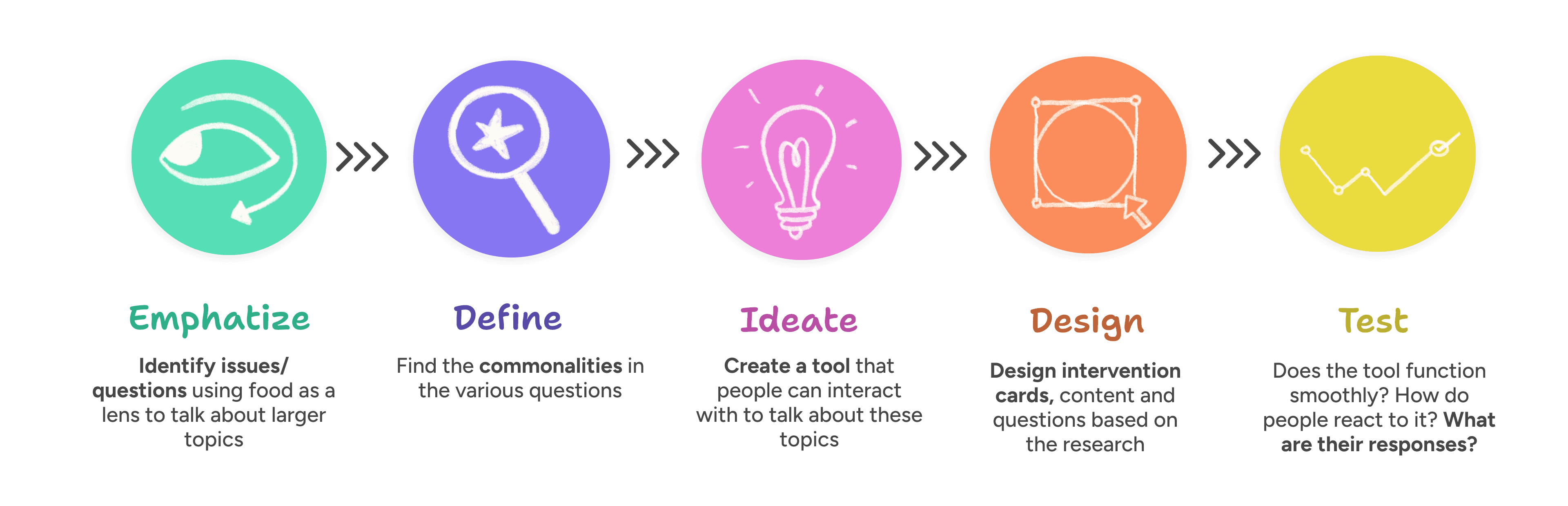
Design Process
Design Process
Insights often fail to reflect the lived realities of marginalized groups due to unintentional biases and exclusionary practices.
The normalization of plurality and empathy within research and design practices is critical to dismantle systems of exclusion.
Current systems often rely on generalized, one-size-fits-all frameworks that fail to address the intersectional realities of diverse communities. These frameworks overlook critical socio-cultural, economic, and historical contexts, leading to the marginalization of vulnerable groups.
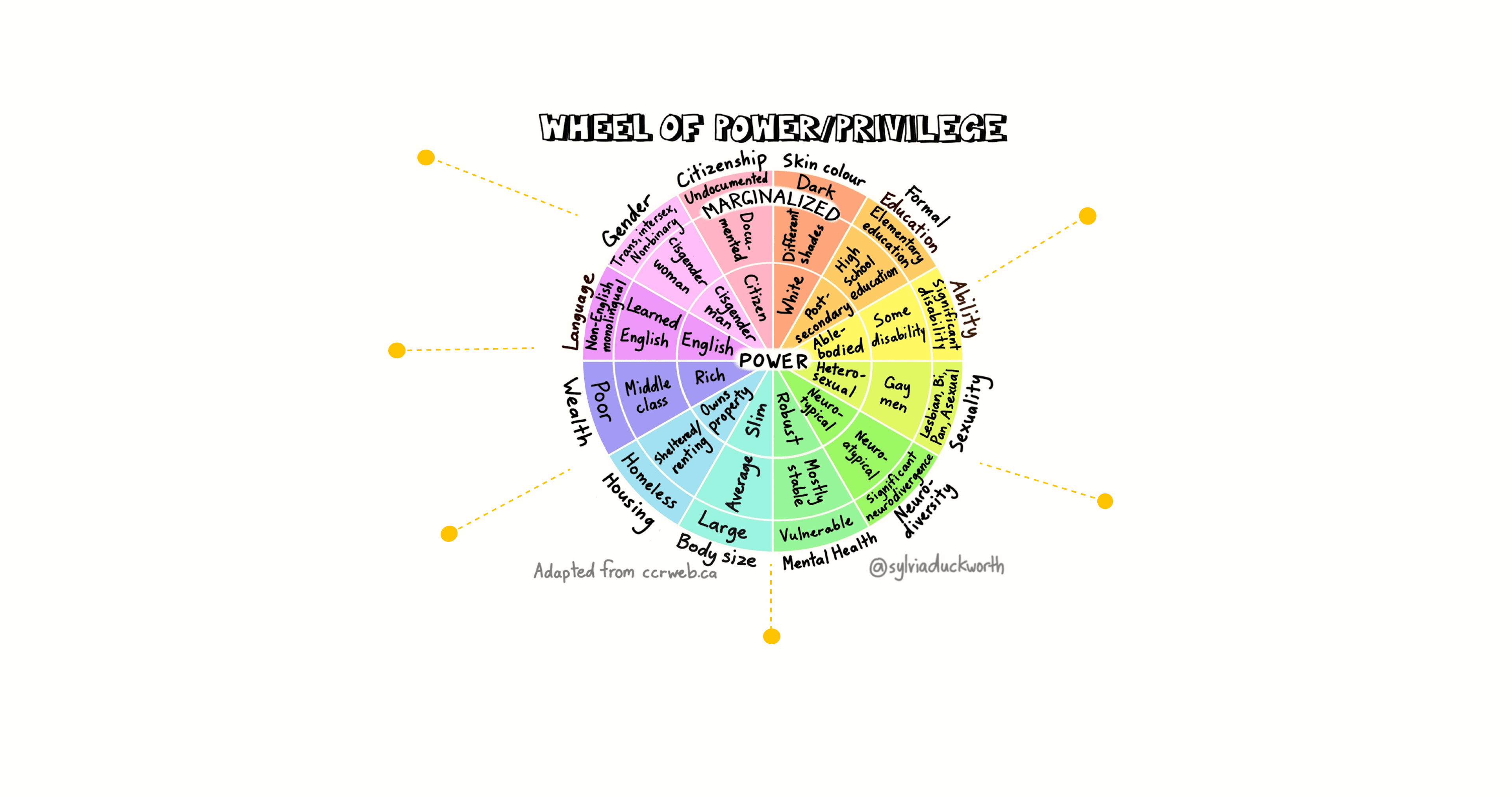
The “Wheel of Power/Privilege” highlights how intersections of identity, such as citizenship, education, and gender, shape access to power and privilege.
Diversity in teams enhances the ability to address complex challenges by incorporating multiple perspectives.
Inclusive design frameworks, as posited by Noel and Paiva (2021), emphasize the importance of identifying exclusionary practices and reframing them as opportunities.
Understanding our Positionality
Understanding our Positionality
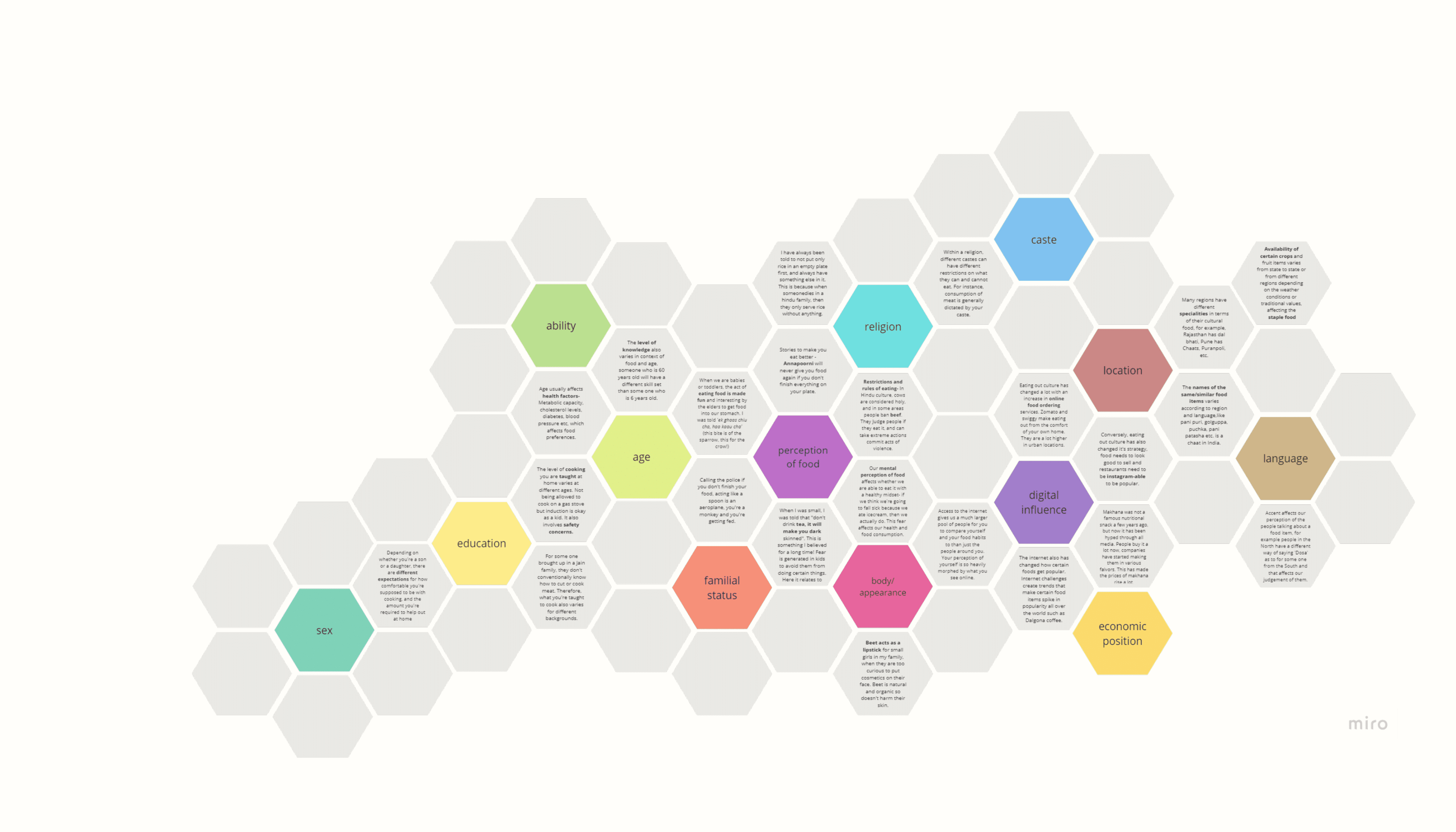
Using the Wheel of Positionality as a starting point, we tried creating our own frameworks to talk about different stories we had that were related to food. We did this in groups, allowing us to compare different experiences we’ve had and analyse the patterns that emerged, observing how different aspects of positionality tend to connect with each other.
Using the Wheel of Positionality as a starting point, we tried creating our own frameworks to talk about different stories we had that were related to food. We did this in groups, allowing us to compare different experiences we’ve had and analyse the patterns that emerged, observing how different aspects of positionality tend to connect with each other.

Using the Wheel of Positionality, we are able to get a better understanding of how much power and privilege we hold, but knowing shouldn’t be an end goal. What can we do with these revelations?
By using food as common ground, we’re able to engage in conversations that expand past our own identity, allowing us to get important insights from each other that only come from a space of vulnerability and understanding.
Area of Focus

Using the Wheel of Positionality, we are able to get a better understanding of how much power and privilege we hold, but knowing shouldn’t be an end goal. What can we do with these revelations?
By using food as common ground, we’re able to engage in conversations that expand past our own identity, allowing us to get important insights from each other that only come from a space of vulnerability and understanding.
Area of Focus
Using the Wheel of Positionality, we are able to get a better understanding of how much power and privilege we hold, but knowing shouldn’t be an end goal. What can we do with these revelations?
By using food as common ground, we’re able to engage in conversations that expand past our own identity, allowing us to get important insights from each other that only come from a space of vulnerability and understanding.
Area of Focus


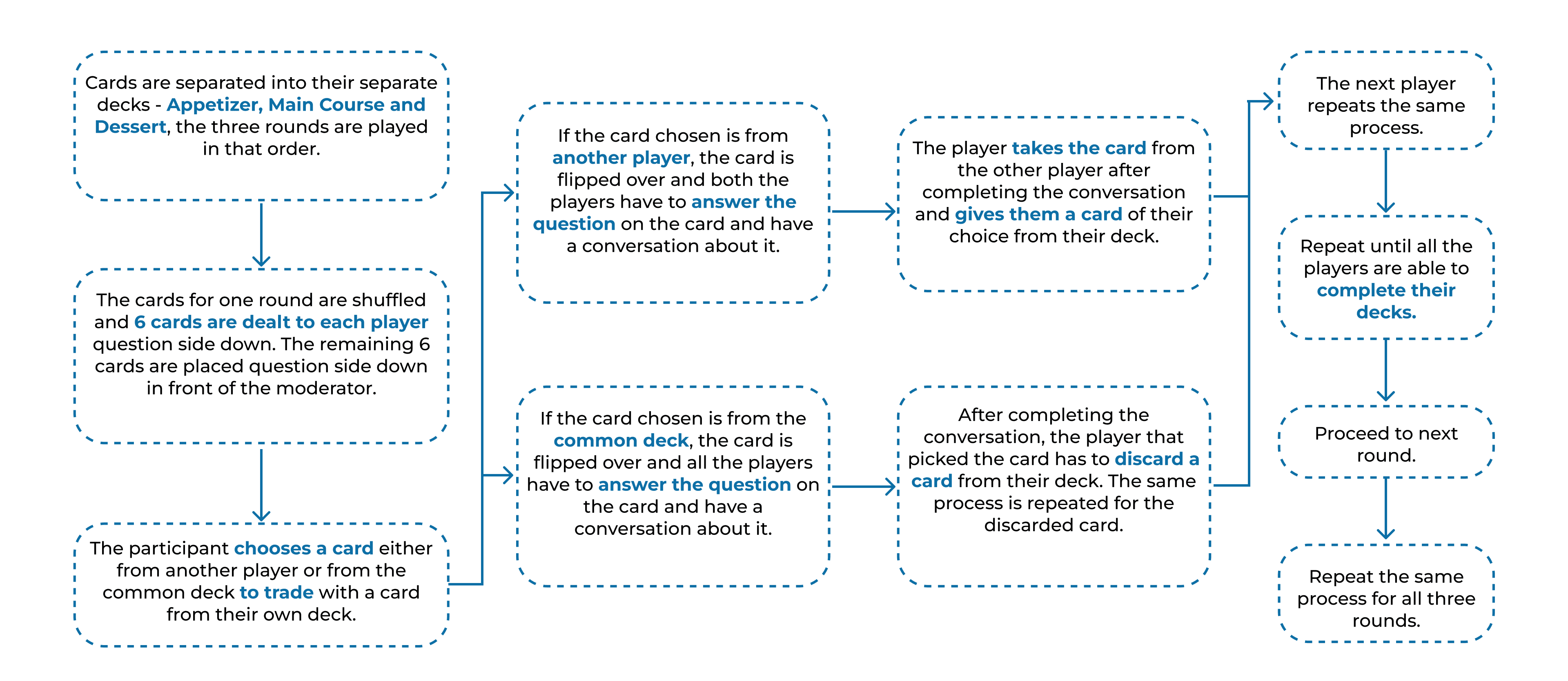
This game serves as a catalyst for conversation and provides a framework to record said conversations. This information can then be used for research for larger outcomes surrounding the topics discussed in the game.
The objective of the game is to collect cards from the various categories. To do so, the player must trade cards with the other players to get all their required cards. This requires the players to engage in conversation about topics in the all the different categories.
What is the objective of the toolkit for the participants?
What is the objective of the toolkit for the facilitator?
Unpacking stories
Unpacking stories
The process of creating this Research toolkit began with all of us writing pieces about our own connections to food and trying to jump off of these topics into larger ideas. We combined these personal insights with secondary research to create a large idea bank of topics to choose from. Once we had these ideas, we were able to organize them into 3 categories, namely -
The process of creating this Research toolkit began with all of us writing pieces about our own connections to food and trying to jump off of these topics into larger ideas. We combined these personal insights with secondary research to create a large idea bank of topics to choose from. Once we had these ideas, we were able to organize them into 3 categories, namely -
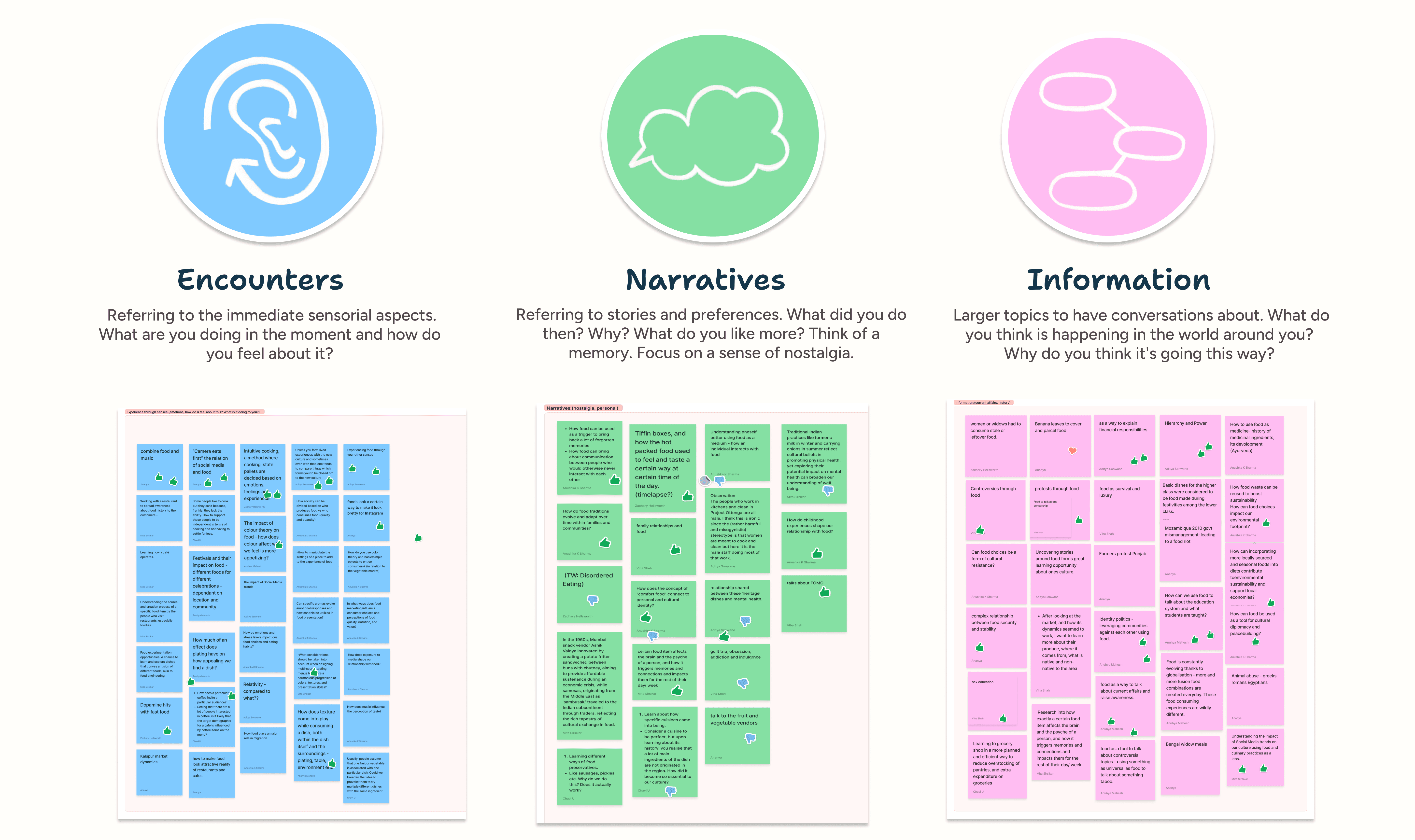
Using these three lenses, we plan to crate room for a variety of conversations that can help the players articulate their views in a much larger context, but in a very accessible manner and helps us collect a wider range of insights as well.
Using these three lenses, we plan to crate room for a variety of conversations that can help the players articulate their views in a much larger context, but in a very accessible manner and helps us collect a wider range of insights as well.

What is the objective of the toolkit
for the participants?
The objective of the game is to collect cards from the various categories. To do so, the player must trade cards with the other players to get all their required cards. This requires the players to engage in conversation about topics in the all the different categories.
What is the objective of the toolkit
for the facilitator?
This game serves as a catalyst for conversation and provides a framework to record said conversations. This information can then be used for research for larger outcomes surrounding the topics discussed in the game.
Building 1st iteration
Building 1st iteration
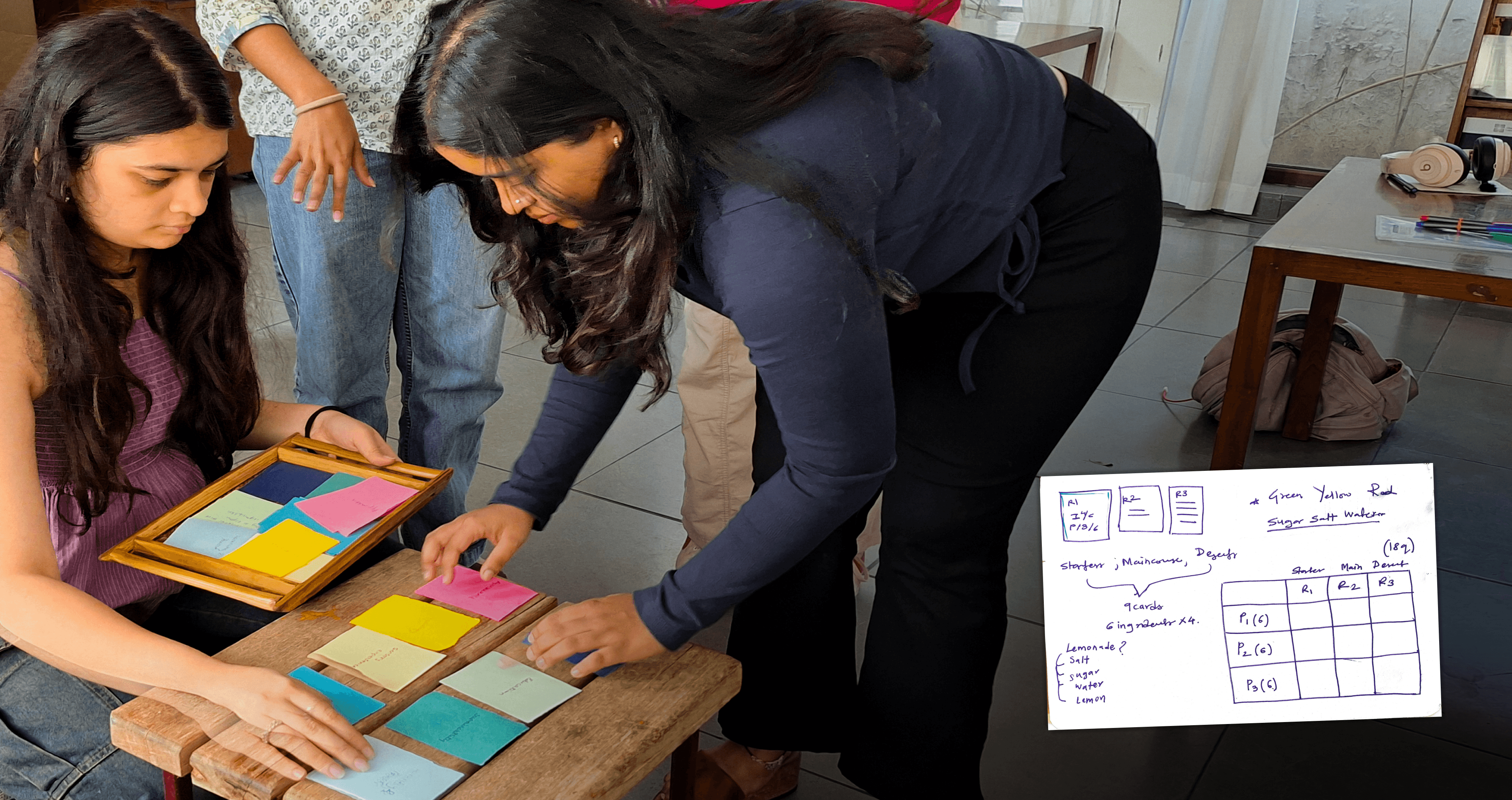
Initially, we were considering 8 different categories - (Hierarchy and Power; Sustainability; Education; Appearance; the 5 senses; Psychology; Families; and; Material Memory). Each card has a question relevant to the topic. The goal is to get one card from each category( colour) to fill in their “lunchbox”.
Initially, we were considering 8 different categories - (Hierarchy and Power; Sustainability; Education; Appearance; the 5 senses; Psychology; Families; and; Material Memory). Each card has a question relevant to the topic. The goal is to get one card from each category( colour) to fill in their “lunchbox”.
Reflection through practice
Reflection through practice
We realized however, that these categories and the lunchbox metaphor weren’t fully working to convey what we meant and what we wanted the players to engage with. We went back to the Wheel of Positionality and compared it with our memories to find categories that overlapped with each other.
The lunchbox also made each category seem somewhat separate from each other and that wasn’t in line with our understanding of how these various aspects of society tend to combine with each other to form practices. Hence, we settled on the metaphor of collecting ingredients to complete a recipe instead.
We realized however, that these categories and the lunchbox metaphor weren’t fully working to convey what we meant and what we wanted the players to engage with. We went back to the Wheel of Positionality and compared it with our memories to find categories that overlapped with each other.
The lunchbox also made each category seem somewhat separate from each other and that wasn’t in line with our understanding of how these various aspects of society tend to combine with each other to form practices. Hence, we settled on the metaphor of collecting ingredients to complete a recipe instead.
Building and rebuilding
Building and rebuilding
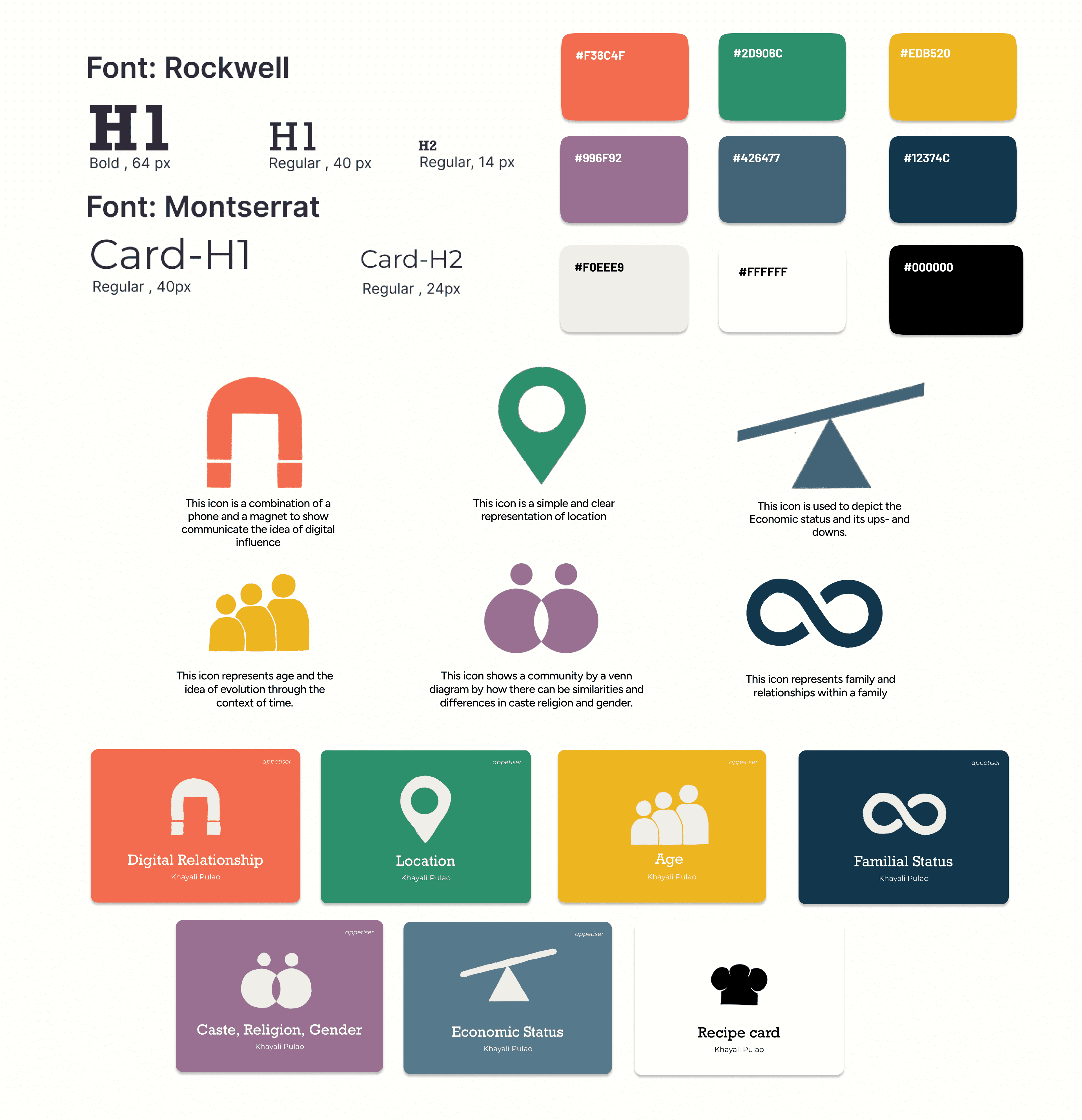
After multiple rounds of ideation and inspiration from the wheel of positionality, we reorganized the content into six categories: Caste, Religion & Gender; Technology; Location; Age; Economic Status; and Family Status. Drawing from prior classroom activities, we designed concise, clear, and unbiased questions for each category, carefully avoiding assumptions.
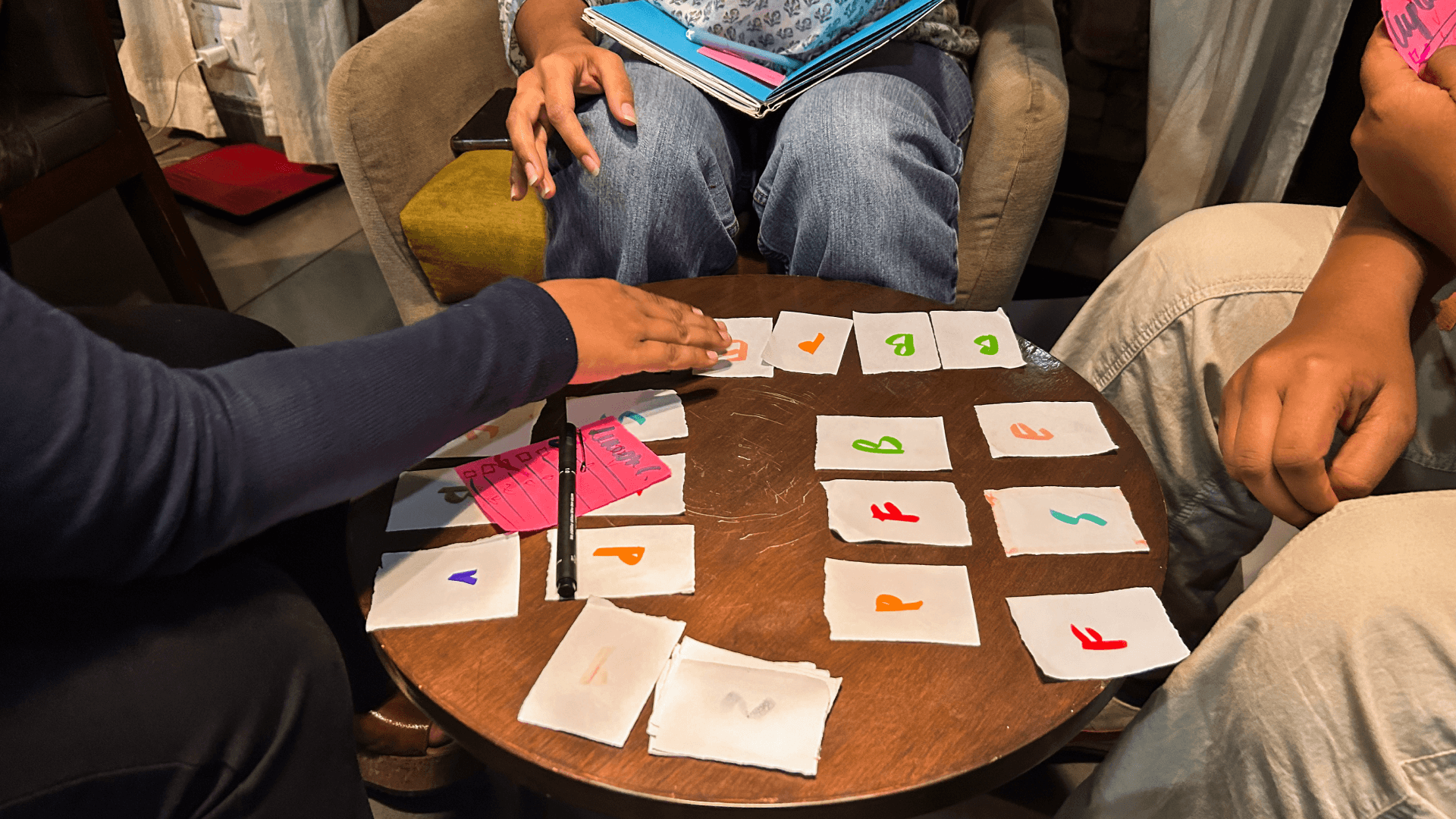
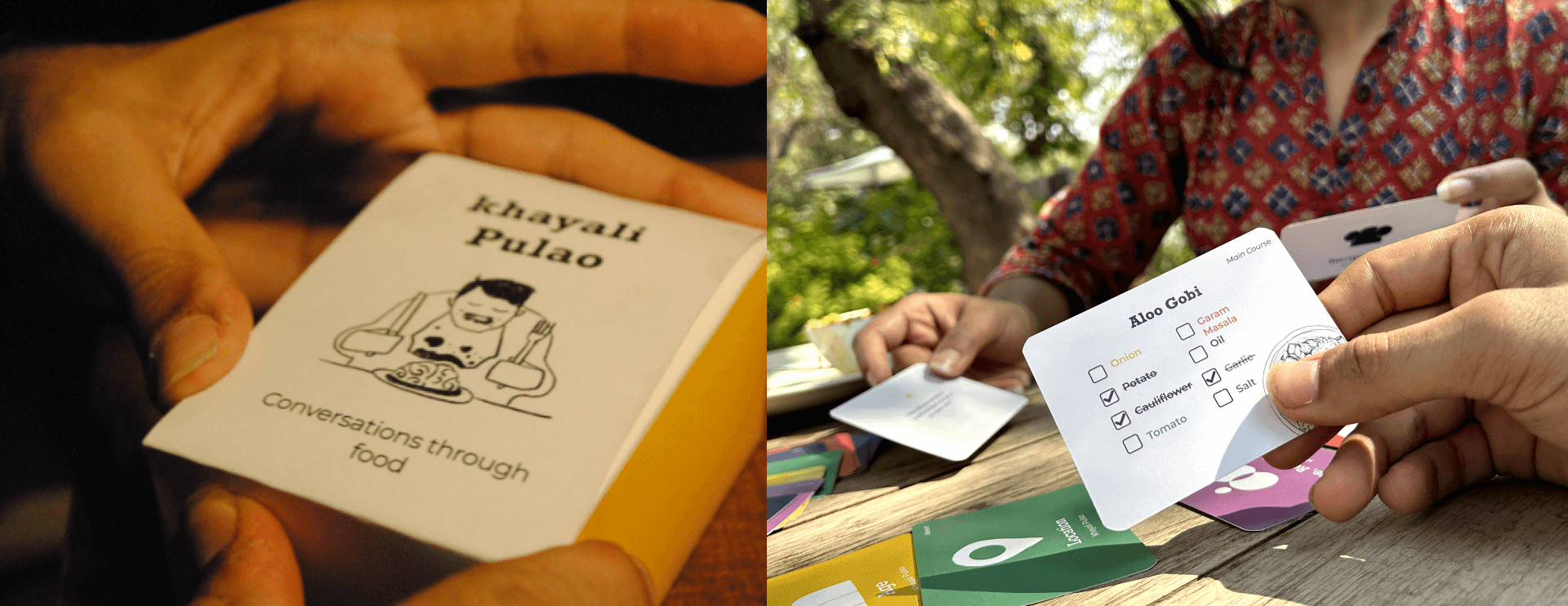
Once we were settled on how the game would be played, we made a very rough version for a mock play-through without any of the content to check if our gameplay was working. Here, we came up with the concept of recipe cards to indicate what cards the players were supposed to collect and give them the motive to do so. We were clear that there would be no winner or loser, but we still had to ensure that the game was engaging, hence the objective of completing a set. The mock also helped us finalize what we needed from the visual team and the content team.
After multiple rounds of ideation and inspiration from the wheel of positionality, we reorganized the content into six categories: Caste, Religion & Gender; Technology; Location; Age; Economic Status; and Family Status. Drawing from prior classroom activities, we designed concise, clear, and unbiased questions for each category, carefully avoiding assumptions.
Once we were settled on how the game would be played, we made a very rough version for a mock play-through without any of the content to check if our gameplay was working. Here, we came up with the concept of recipe cards to indicate what cards the players were supposed to collect and give them the motive to do so. We were clear that there would be no winner or loser, but we still had to ensure that the game was engaging, hence the objective of completing a set. The mock also helped us finalize what we needed from the visual team and the content team.
User Flow
User Flow
Framework to document insights
Framework to document insights
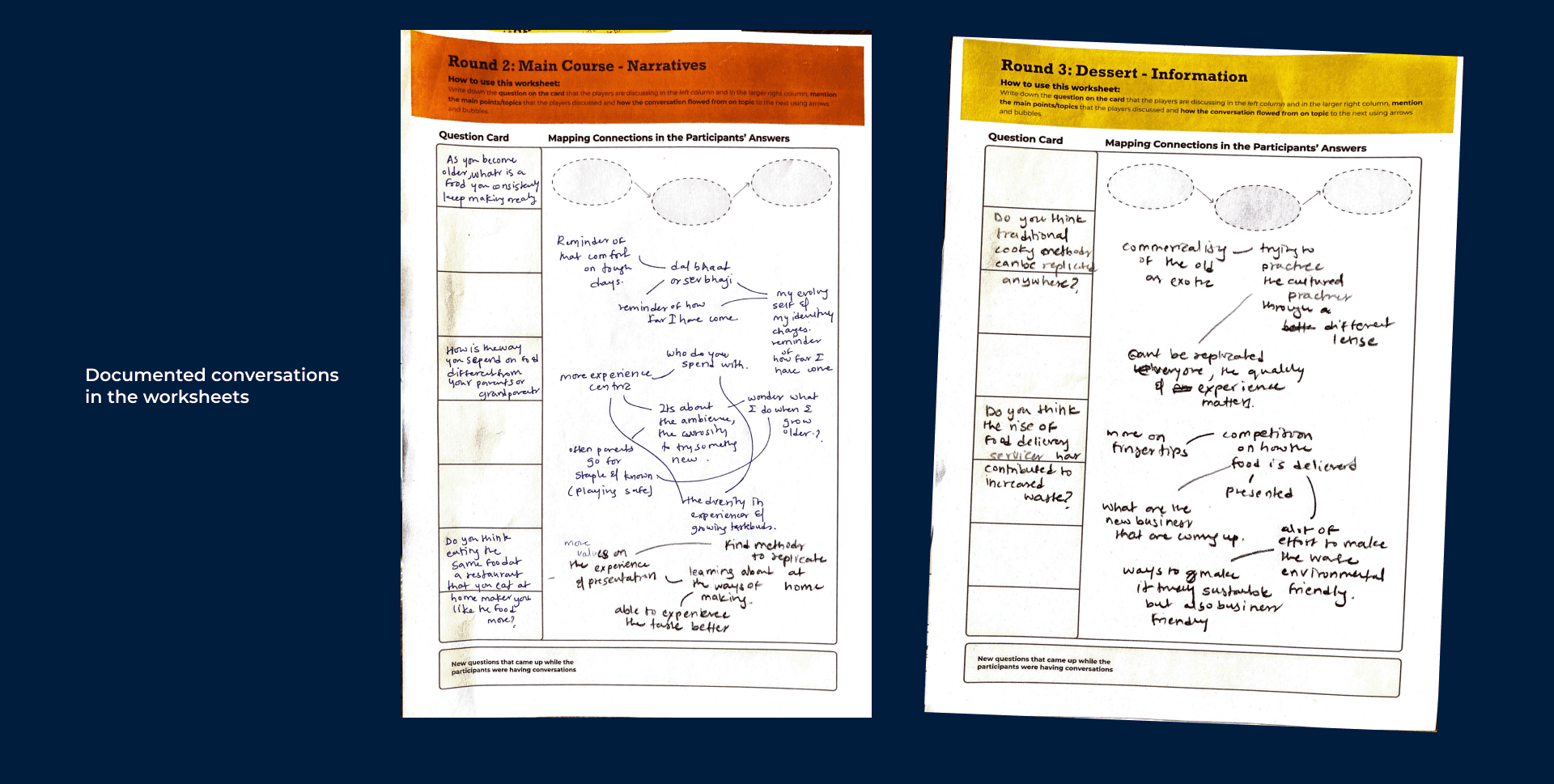
As we tested the game, we found that it got quite difficult to keep track of all the conversations happening at a table, and what is the point of having these conversations if we don’t have a way to revisit this information at a later point? These worksheets help the researcher by recording the information in a manner that visualizes the connections people made in the process olf talking and helps you navigate the flow of the conversation and recognize patterns much faster.
As we tested the game, we found that it got quite difficult to keep track of all the conversations happening at a table, and what is the point of having these conversations if we don’t have a way to revisit this information at a later point? These worksheets help the researcher by recording the information in a manner that visualizes the connections people made in the process olf talking and helps you navigate the flow of the conversation and recognize patterns much faster.
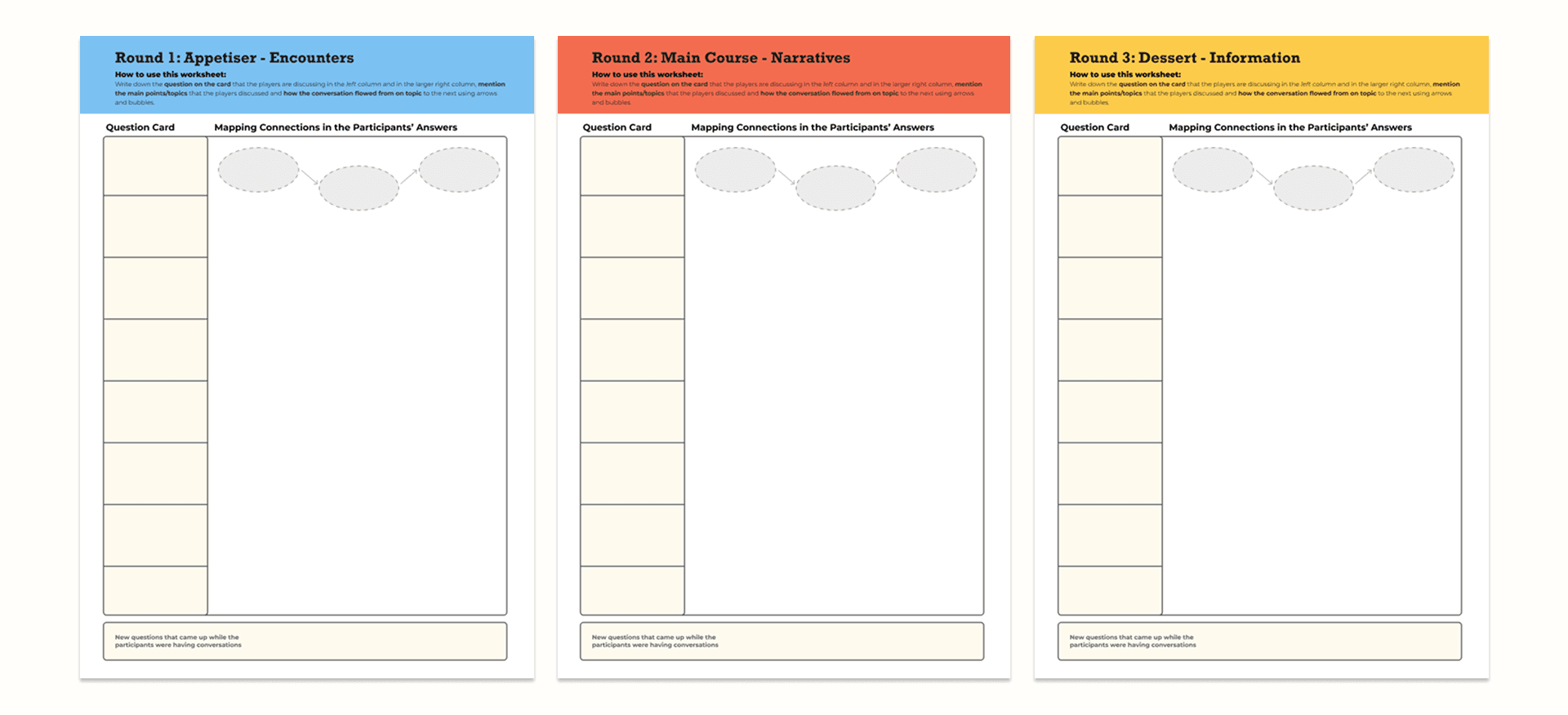
Download the worksheet here
Download the worksheet here
Visual Design
Visual Design
Event Night!
Event Night!
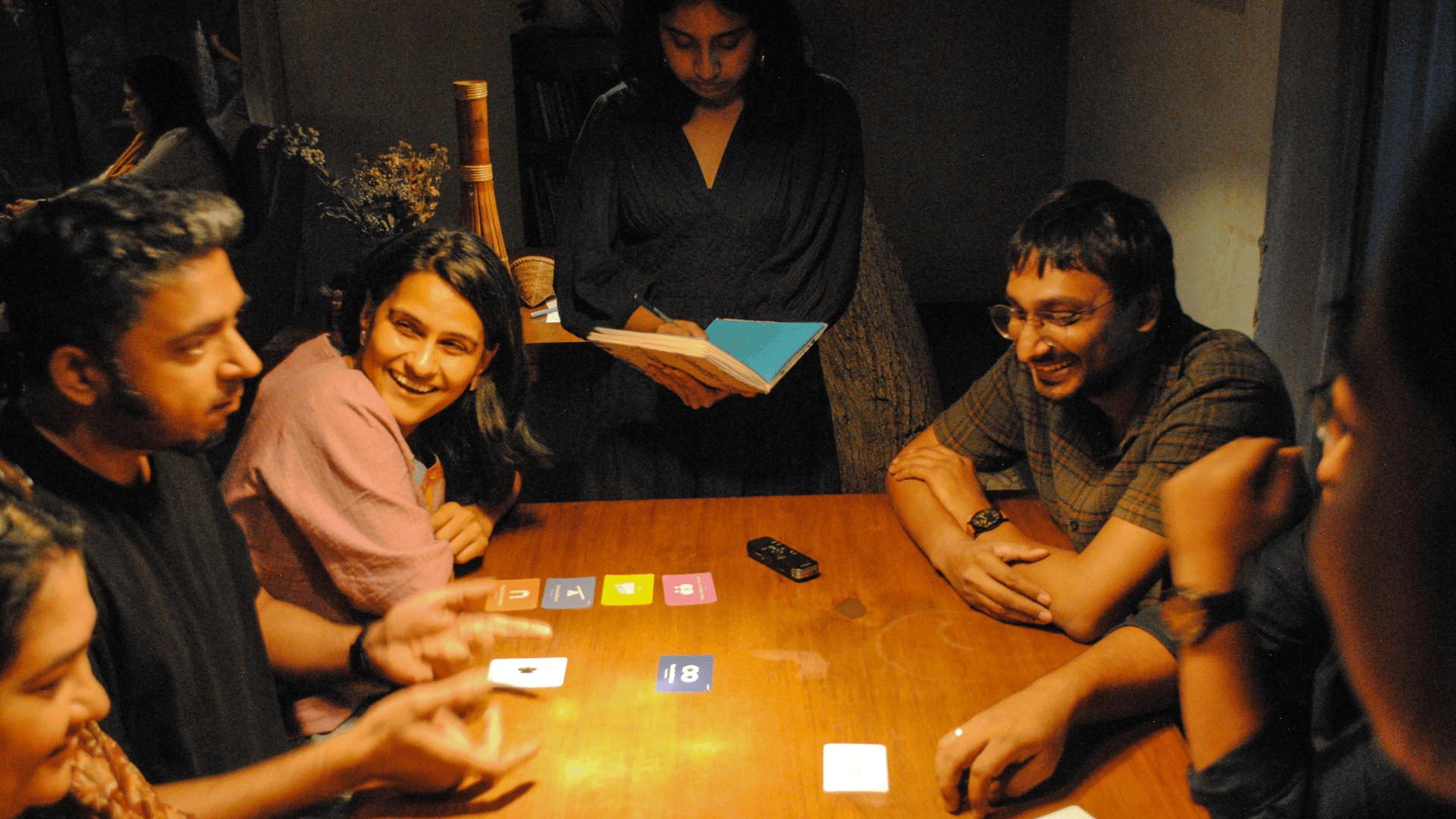
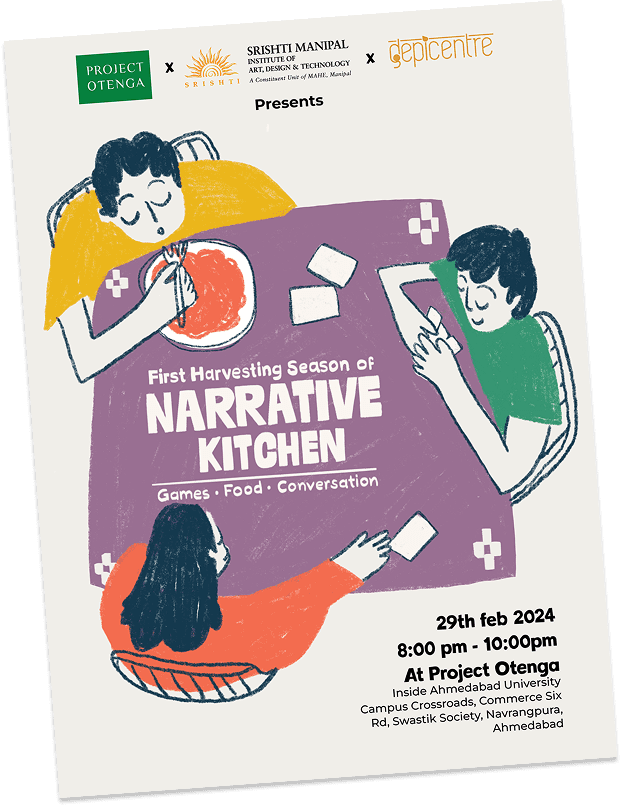
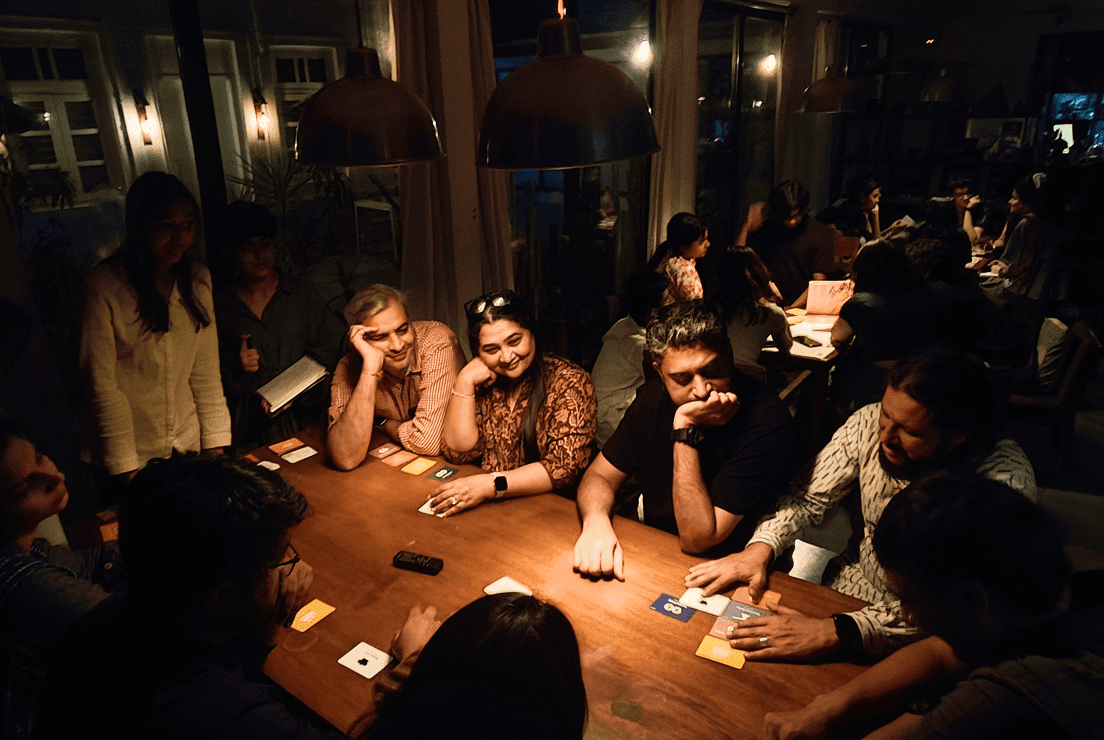
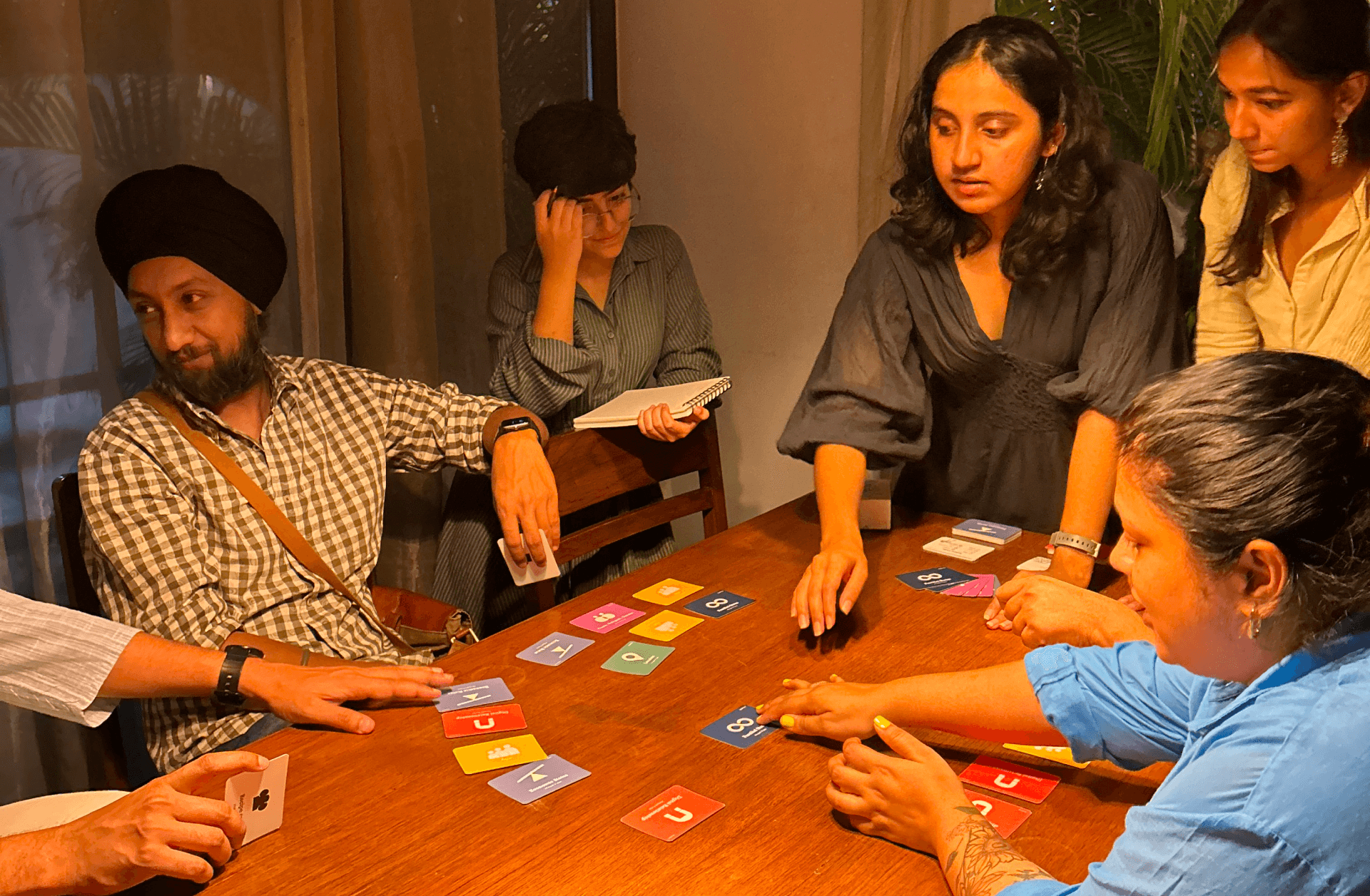
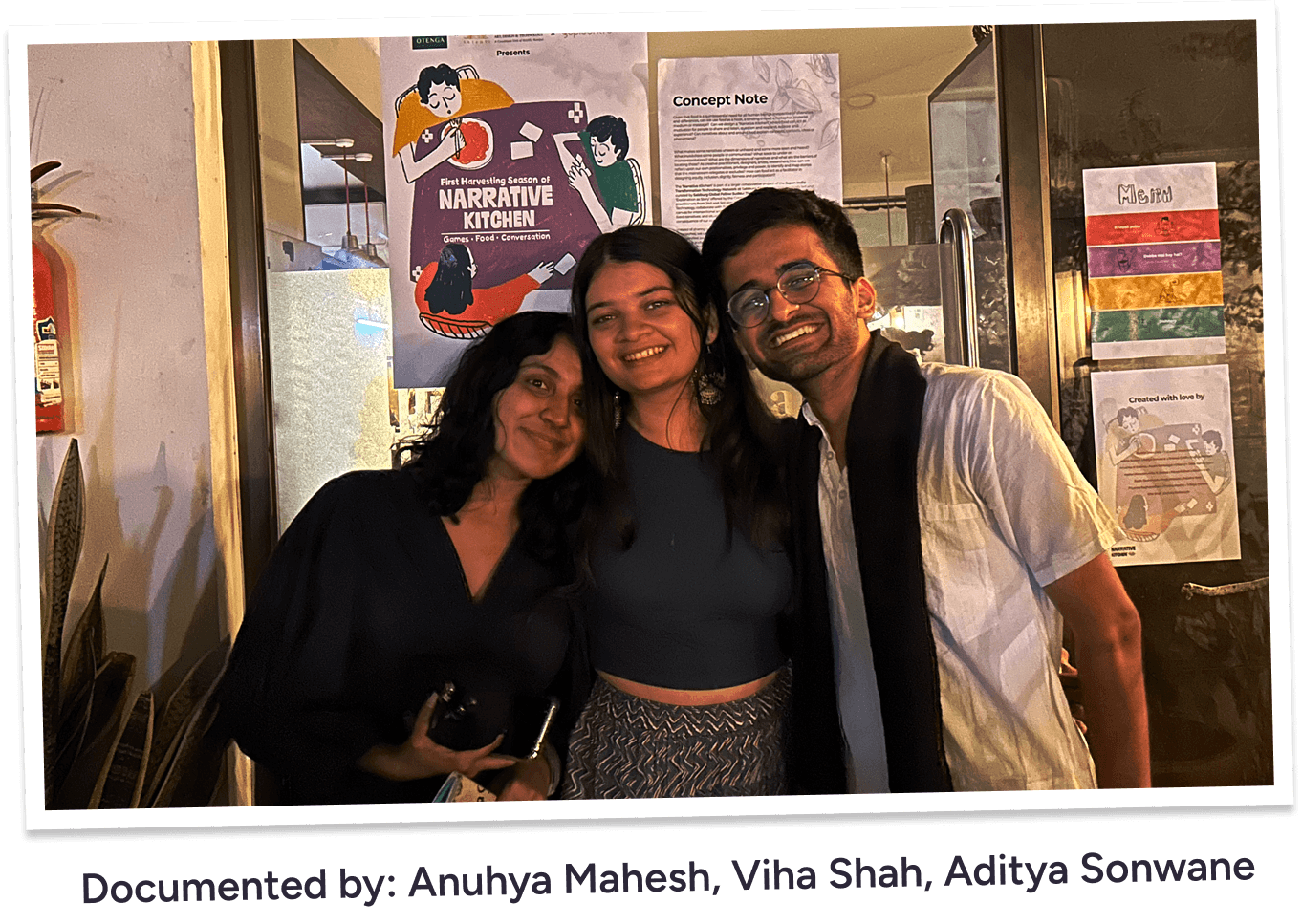
The First Harvesting Season of Narrative Kitchen took place on 29th February, 2024. We had a larger audience than we expected who were ready to play the various games we had created, including Khayali Pulao. We were able to conduct 2 rounds during the event with a total of 11 people playing. The event was very insightful as we had a wider age range of people play our game.
The First Harvesting Season of Narrative Kitchen took place on 29th February, 2024. We had a larger audience than we expected who were ready to play the various games we had created, including Khayali Pulao. We were able to conduct 2 rounds during the event with a total of 11 people playing. The event was very insightful as we had a wider age range of people play our game.
Round 1
Round 1
A total of 4 participants played as 3 entities with 2 people playing together in a team while others played solo.
A total of 4 participants played as 3 entities with 2 people playing together in a team while others played solo.
Round 2
Round 2
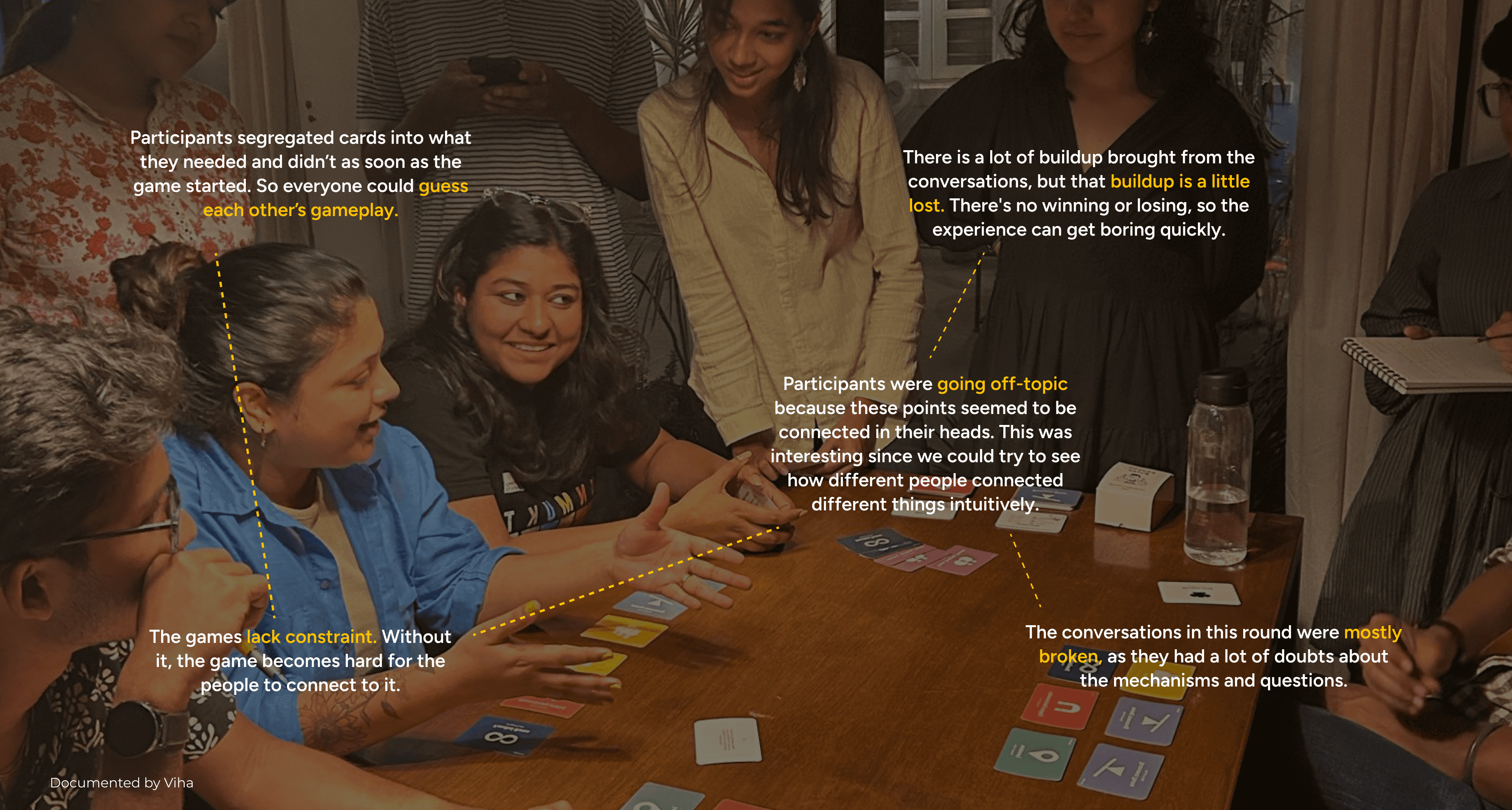
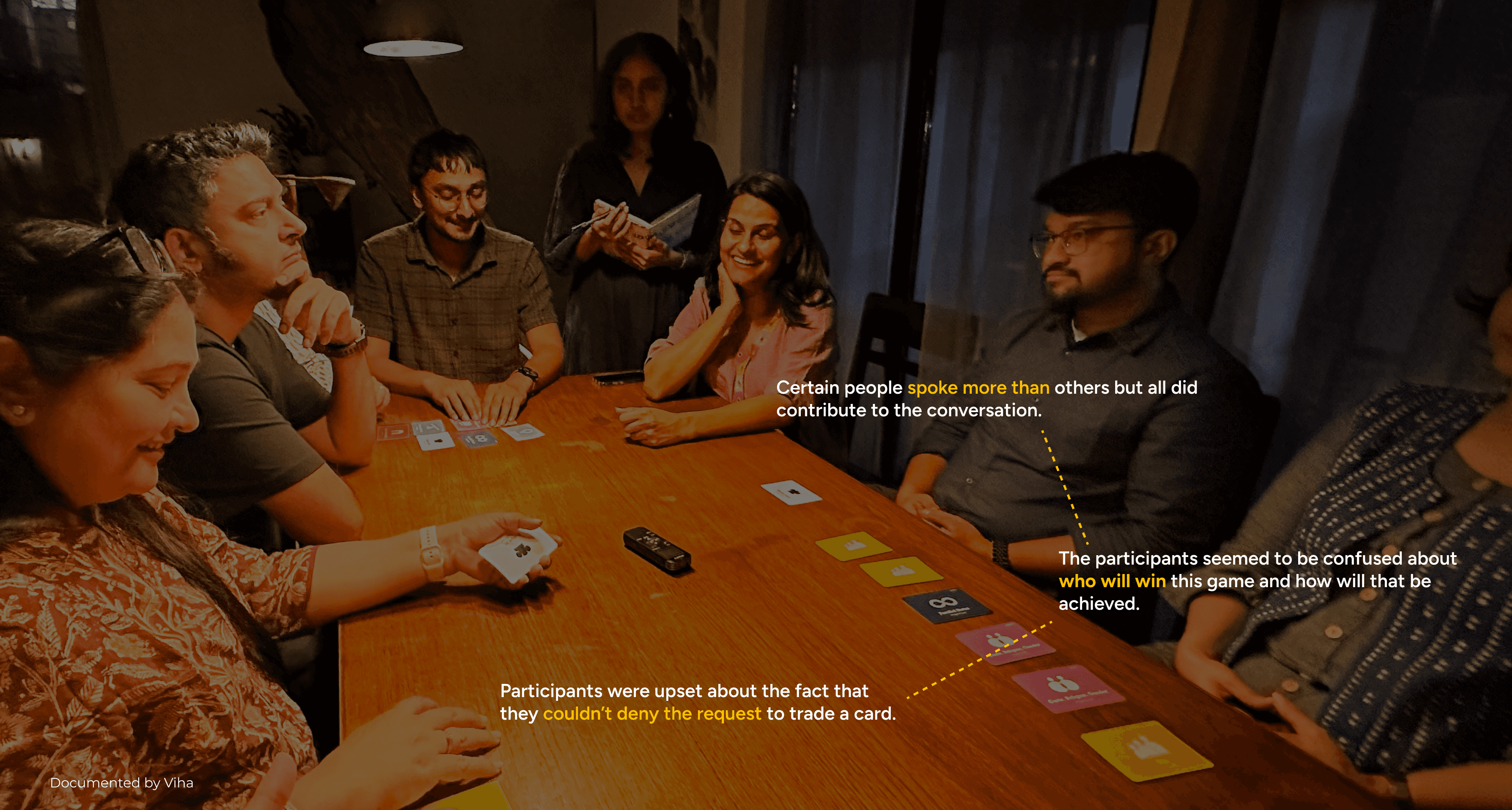
The second round was played by 6 people who played in 3 groups which consisted of 2 players each. Later one more player joined one of the teams.
The second round was played by 6 people who played in 3 groups which consisted of 2 players each. Later one more player joined one of the teams.
Ways to go ahead
Ways to go ahead
After multiple rounds of ideation and inspiration from the wheel of positionality, we reorganized the content into six categories: Caste, Religion & Gender; Technology; Location; Age; Economic Status; and Family Status. Drawing from prior classroom activities, we designed concise, clear, and unbiased questions for each category, carefully avoiding assumptions.
Once we were settled on how the game would be played, we made a very rough version for a mock play-through without any of the content to check if our gameplay was working. Here, we came up with the concept of recipe cards to indicate what cards the players were supposed to collect and give them the motive to do so. We were clear that there would be no winner or loser, but we still had to ensure that the game was engaging, hence the objective of completing a set. The mock also helped us finalize what we needed from the visual team and the content team.
After multiple rounds of ideation and inspiration from the wheel of positionality, we reorganized the content into six categories: Caste, Religion & Gender; Technology; Location; Age; Economic Status; and Family Status. Drawing from prior classroom activities, we designed concise, clear, and unbiased questions for each category, carefully avoiding assumptions.
Once we were settled on how the game would be played, we made a very rough version for a mock play-through without any of the content to check if our gameplay was working. Here, we came up with the concept of recipe cards to indicate what cards the players were supposed to collect and give them the motive to do so. We were clear that there would be no winner or loser, but we still had to ensure that the game was engaging, hence the objective of completing a set. The mock also helped us finalize what we needed from the visual team and the content team.
Reflections through practice and play
Reflections through practice and play
The hardest thing to do is to get individuals to talk about their vulnerabilities, which takes a lot of careful planning and experience Design.
There are many iterations when working on a participatory research project!
Another task is to document discussions and quotations to build an archive research body!
The hardest thing to do is to get individuals to talk about their vulnerabilities, which takes a lot of careful planning and experience Design.
There are many iterations when working on a participatory research project!
Another task is to document discussions and quotations to build an archive research body!
We know this is not ideal but the tablet version of this project is WIP!
You can view the project on desktop or phone!
We know this is not ideal but the tablet version of this project is WIP!
You can view the project on desktop or phone!
IK, that was a long Scroll !
IK, that was a long Scroll !
here are some other projects
here are some other projects
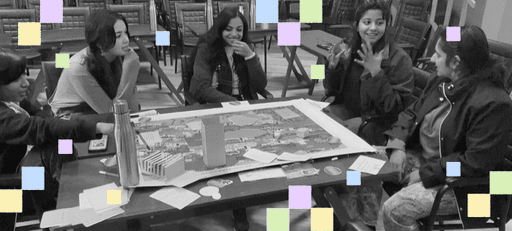
Can "Development" Listen?
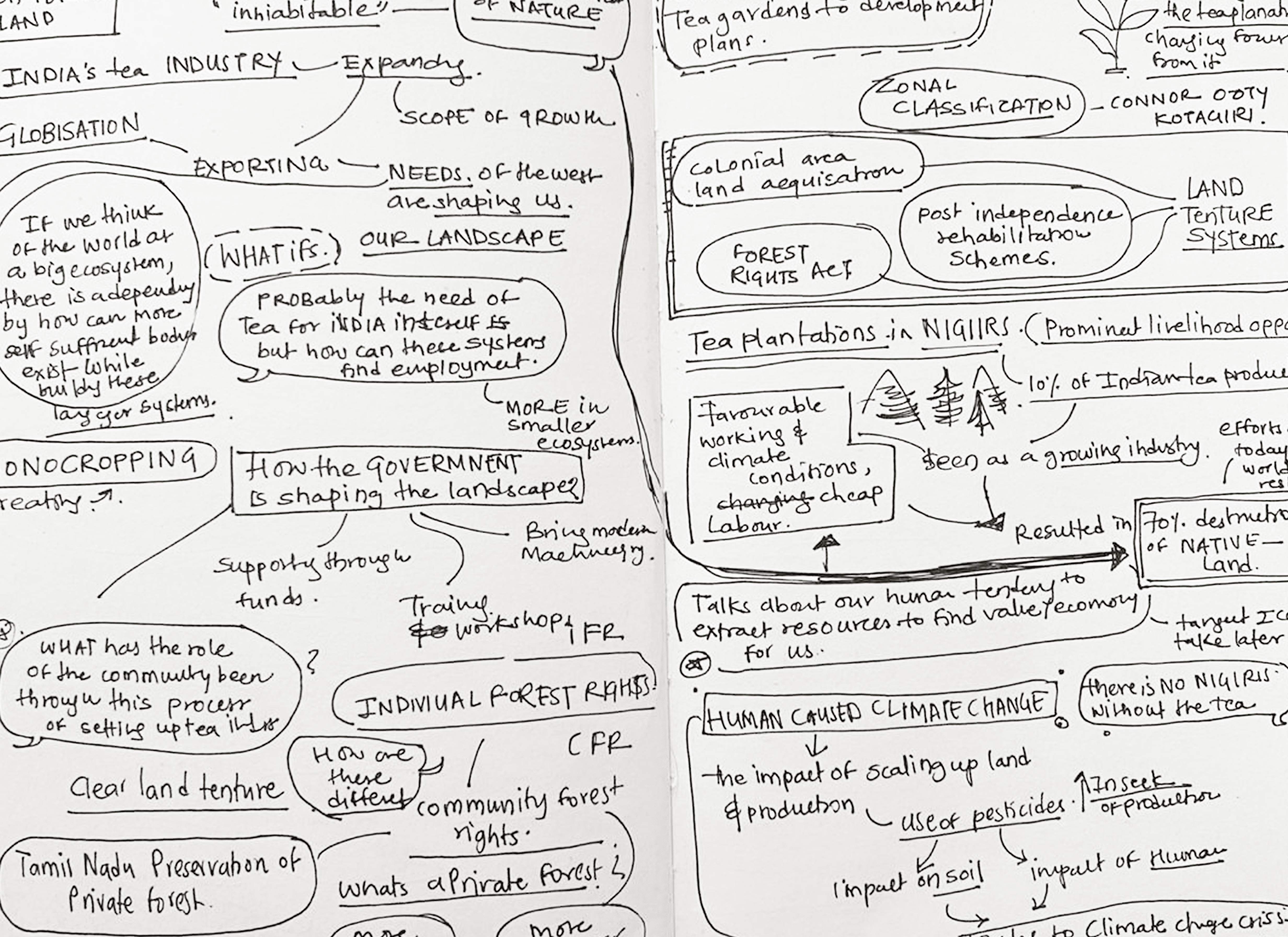
A Participatory Research workshop unpacking and empowering to imagine divergent futures from Kotagiri, Niligirs
Can "Development" Listen?
A Participatory Research workshop unpacking and empowering to imagine divergent futures from Kotagiri, Niligirs
Experiential Participatory Futures • Speculative Design • Qualitative Design Research • Learning Experience Design
Experiential Participatory Futures • Speculative Design • Qualitative Design Research • Learning Experience Design
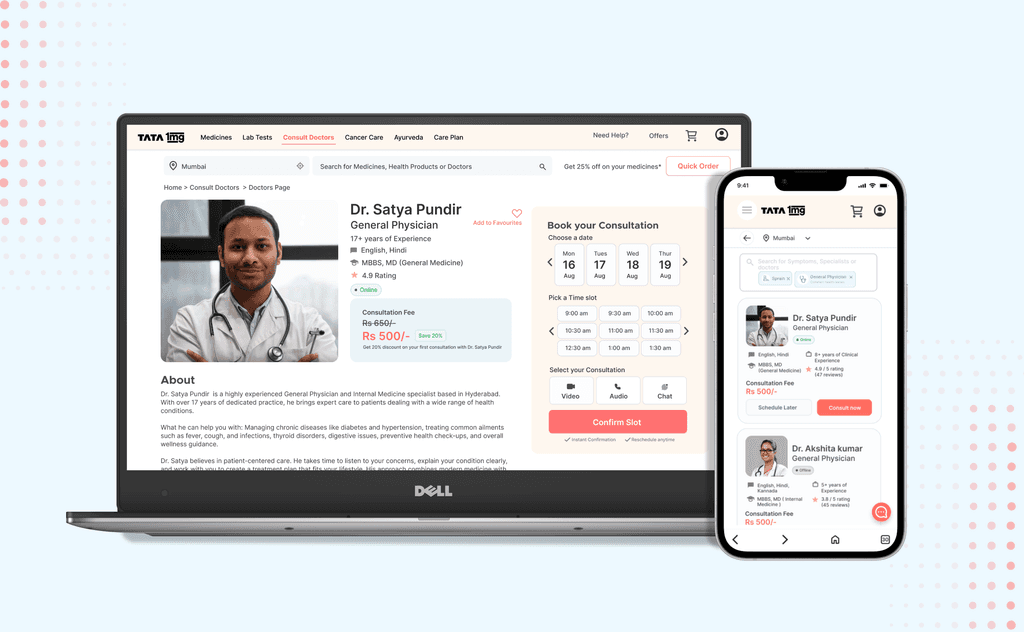
Tata 1 mg
UI/UX Case study
Tata 1 mg
UI/UX Case study
Experience Evaluation • UI Redesign • Interaction Design
Experience Evaluation • UI Redesign • Interaction Design