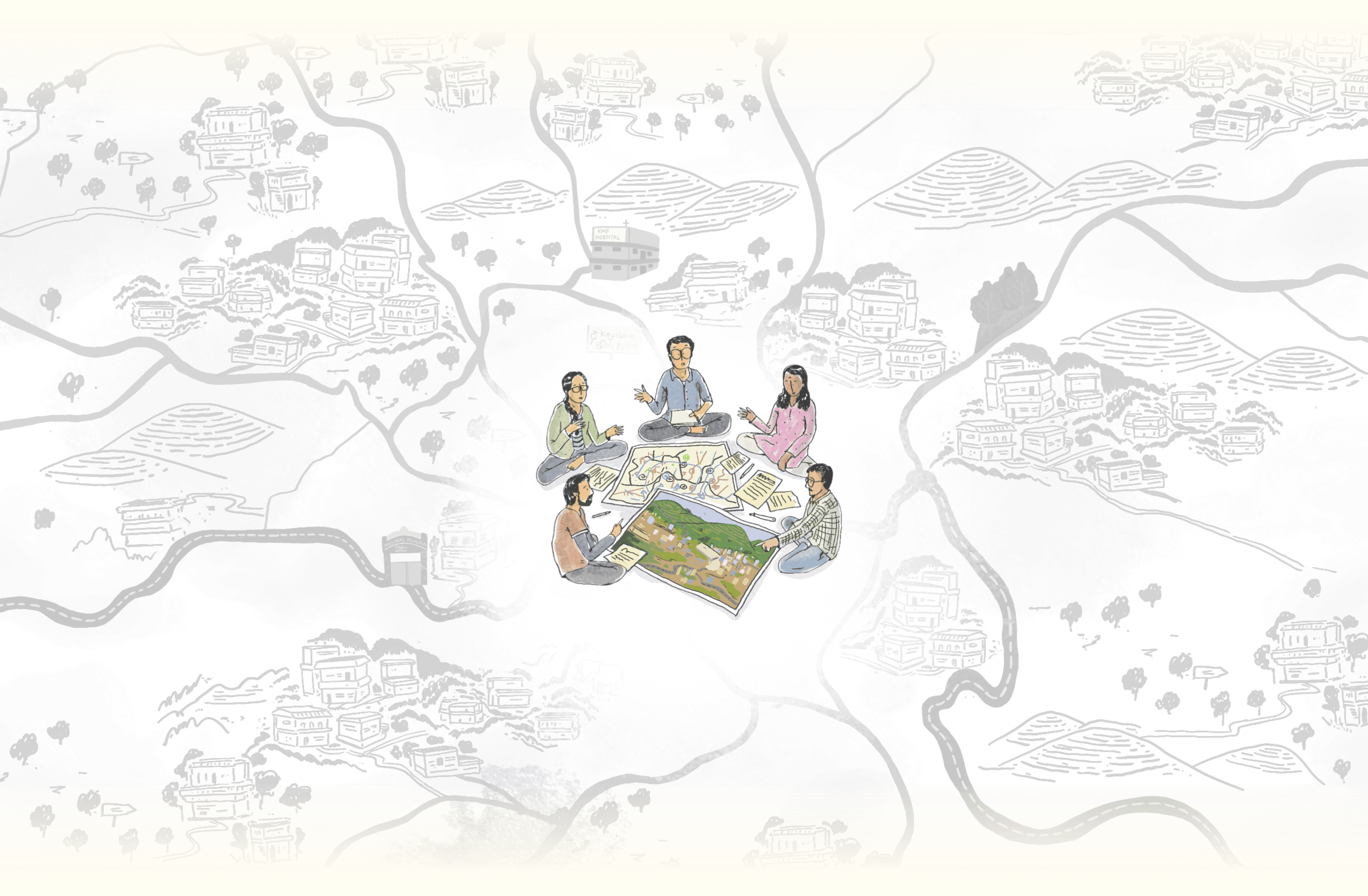
Can "Development" Listen is a Speculative Time Travel Workshop + Research Tool based in Kotagiri that helps people understand , unpack, evaluate and imagine divergent futures through participatory processes. The workshop was carried out in groups of 15 participants from Kotagiri, and the conversations are now archived as part of this data storytelling experience, which will become a live archive.
The experience is divided into four themes: Community well-being, Employment and Livelihood opportunities, Land resources, and Collective vision, each with a brief analysis and sense-making documentation, and at the end of the document, there is a tool to help you unpack these questions for your unique context!
"Many areas in the town, get Water Supply only once a week! On the other hand, resorts have constant water supply!"
Peak season? Just horns and jammed roads now. Nilgiris was not like this before!
"We have just one government hospital here. For surgery, we travel to Mettupalayam or Coimbatore."
"Every day commuting to work, I pass this huge waste pile, monkeys scavenging through it, making a real mess."
Community Well being
Keep hovering over the conversation bubbles!
Click on this card to know about what this theme is about!

These conversations revealed something which leads us to question development.
These two voices from Kotagiri tell a complex and interconnected reality:
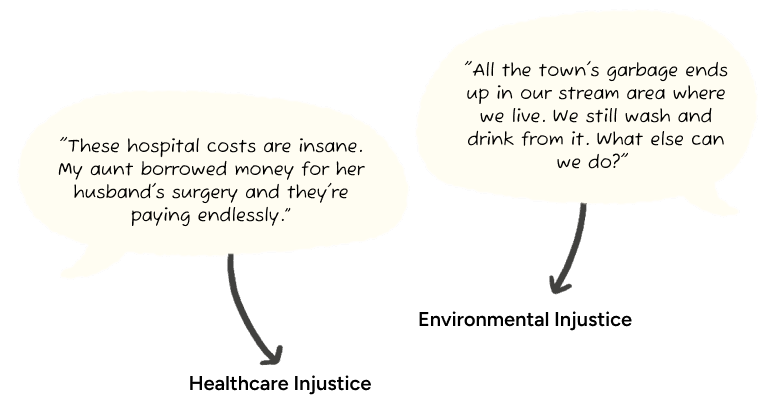
These are not separate problems.
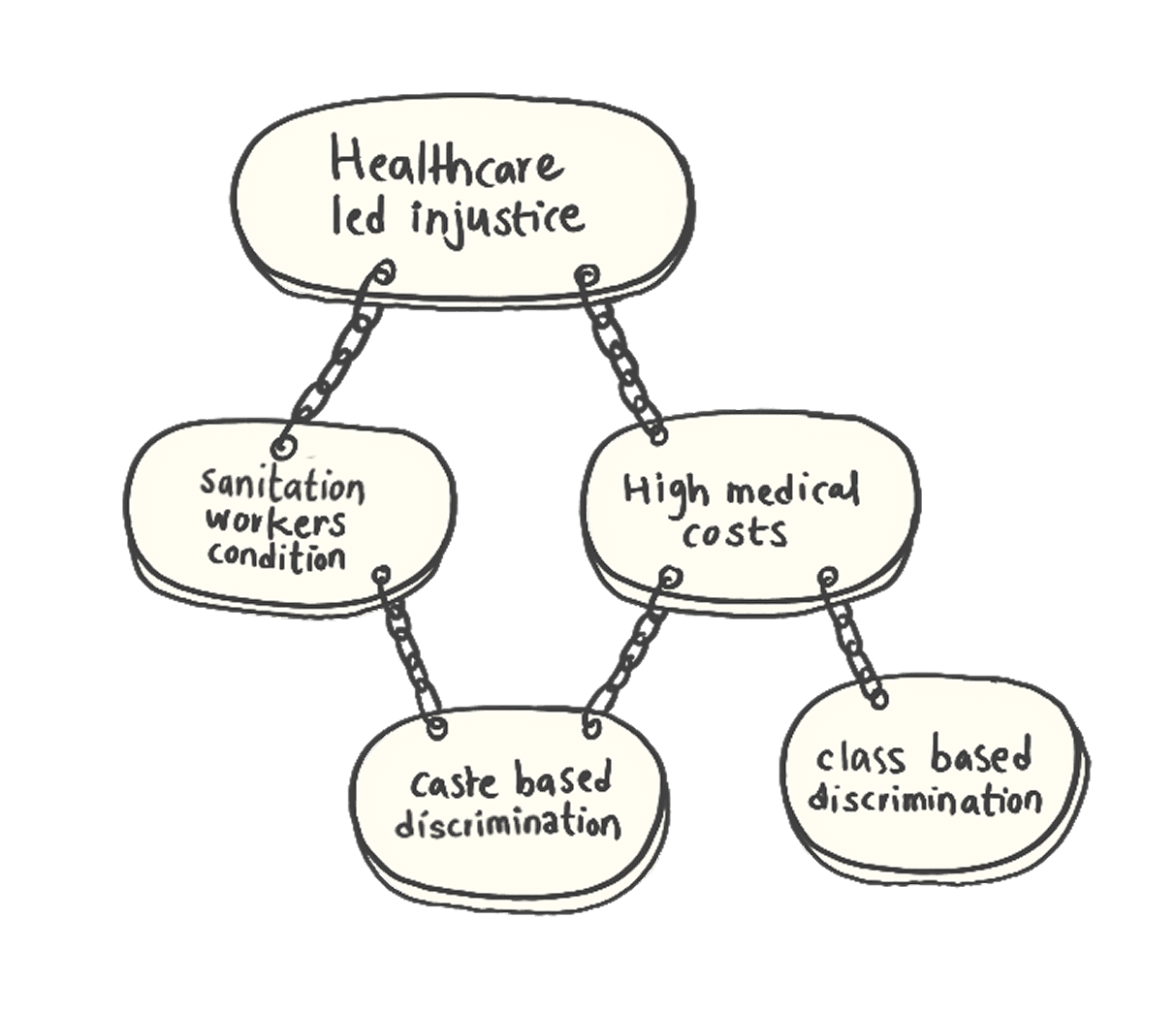
They are part of a "Clustered System of Deprivation" where one crisis creates another.

The person drinking contaminated water will get waterborne illness → The illness requires hospital treatment → The hospital visit creates debt → The debt creates barrier for clean water source → The unprevented contamination worsens health.
Each Deprivation is both Cause and Consequence of the others.
Sociologist Johan Galtung calls this Systemic Oppression, when social institutions and systems hinder rather than support people's ability to meet their basic needs. When a municipality allows garbage in drinking water sources and people cannot afford clean water or healthcare treatment, that is structural violence. It is embedded in the our System, Economics and society.
Research on Systemic Oppression shows it disproportionately impacts Women due to how gender intersects with existing disadvantages.

cluster together, Deprivation multiplies Exponentially.
A wealthy upper-caste man with water contamination can access and afford healthcare. A Dalit woman wage worker in a remote area faces barriers on many levels which then deprives her of basic resources.
What happens when the consequences of these systems add, they lead to a cumulative disadvantage. These cumulative disadvantages then create intergenerational poverty which set back the coming generations.
Intersectionality means deprivations don't add, they multiply.
But here's the escape, aspirations and employment. Family members often say, "Study hard. Get a better job." When people access stable income, and dignified work, they earn enough to break the debt cycle. Employment upscaling becomes the ladder out, economic growth that reaches poor communities with viable livelihoods offering real monetary returns. Without this, deprivation clusters tighten across generations.


The employment landscape in Kotagiri is becoming unsustainable. Traditional sectors that once anchored community livelihoods, through tea plantations, agriculture, small business, are contracting due to violate markets, climate uncertainty, and rising inflation.
Yet the opportunities emerging to replace them are themselves
limited, seasonal, and increasingly dependent on outmigration.

These aspiration, while deeply human, reveals as how families are making rational calculations that leaving is necessary for survival.

As migration scholar Arjun Appadurai argues, aspirations are "Structures of feeling" shaped by Globalized media and Economic hierarchies that pull individuals toward distant opportunities shaping how they should think and imagine their futures. Urban desire becomes the measure by which young people judge their own lives as insufficient.
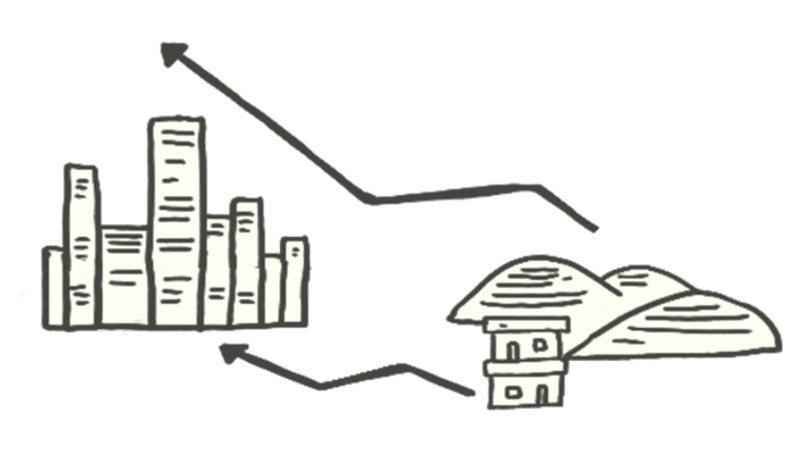
When local employment fails to match these urban-constructed aspirations, youth face what development economists call "Forced Migration", not chosen opportunity but structural necessity.
Yet urban spaces fail to deliver the hopes they promise. Young migrants arrive expecting opportunity but find themselves in
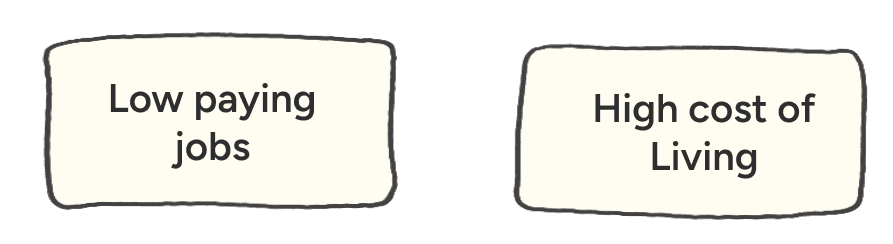
and
that demand constant
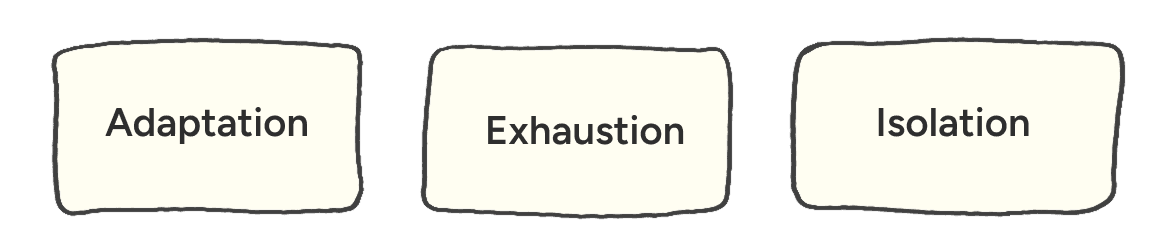
Cities are not welcoming, they are extractive. They take youth labor and energy while offering uncertain stability or belonging.
Migrants escape rural poverty only to enter urban poverty, except now they are far from family, community.
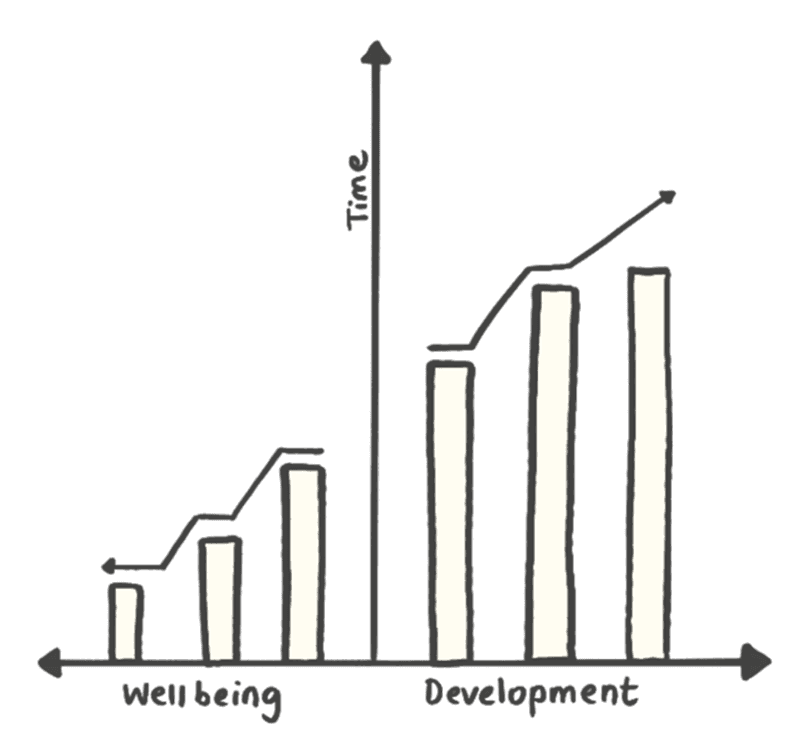
This system persists because development rhetoric disguises extraction as Progress. We celebrate migration as "Opportunity," corporations market tourism as "Growth".
But this language obscures reality: young people are not choosing these pathways; they are being pushed into them by shrinking local economies, then blamed for not adapting quickly enough.
More fundamentally, youth are being robbed of the ability to imagine futures based on their own desires and identities.
Their questions change from

When youth are forced to leave, they don't just migrate, they lose their relationship with the land that has shaped their families for generations. This disconnection becomes critical as we confront the next reality: the land itself is changing, transforming the very foundation upon which communities have built their identities and livelihoods.
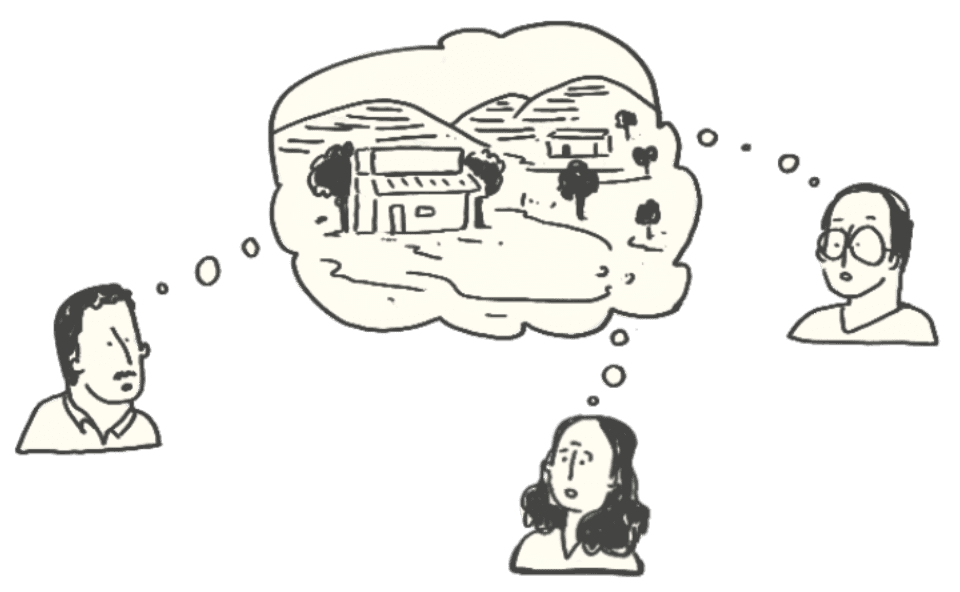

Kotagiri's landscape is changing not simply by physical transformation but about who gets to claim belonging and whose memories count.
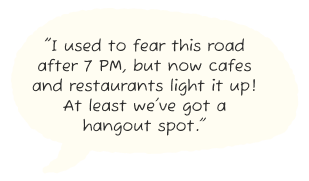
This quote reveals a complex reality: the road is safer, perhaps, but also crowded, commercialized, and increasingly inaccessible to those who cannot afford the cafes. The landscape is reorganizing around consumption, and with it, belonging becomes answered by purchasing power rather than presence or history.
Urban sprawl, tourism infrastructure, second-home construction, and road expansion have transformed the hill towns into crowded commercial zones. This congestion has reorganized everyday spaces and labelled it as economic opportunities to grow!
Most of the times, Development Initiatives prioritizes Growth over Equity.
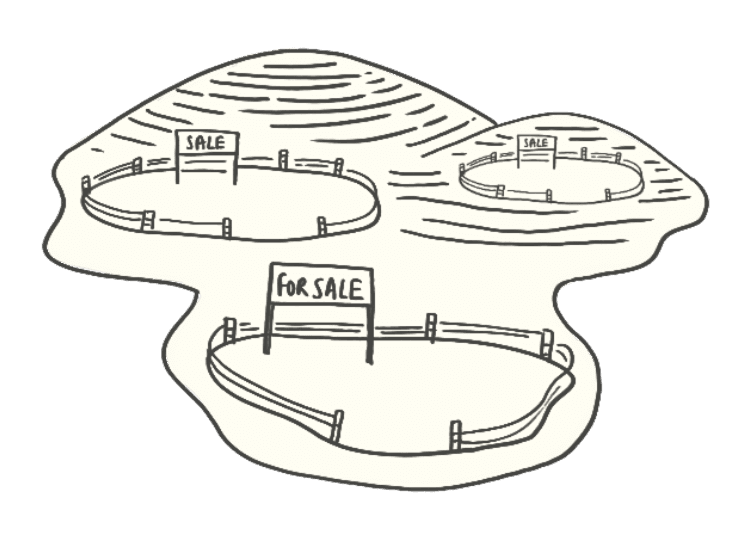
Land prices have increased by 300-500% within a decade, pricing out local residents while attracting urban residents. Simultaneously, inflation compounds this crisis while incomes remain stagnant. The cost of food, housing, and necessities has increased by 6-8% annually, yet wages for plantation workers and service staff remain frozen.
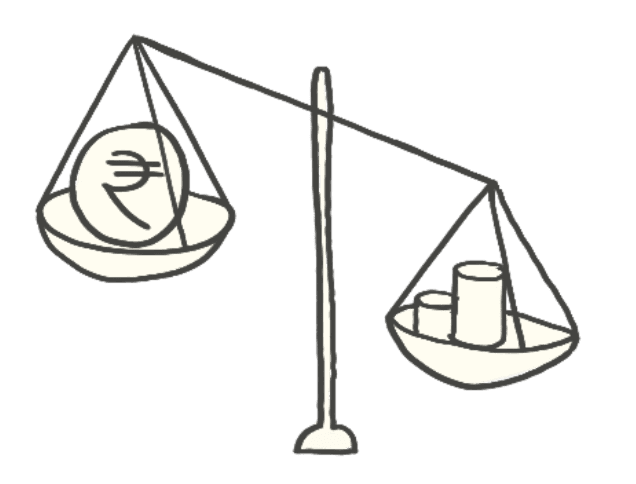
A tea worker earning Rs. 30,000 monthly in 2018 still earns Rs. 30,000 in 2026, but that income now purchases 30-40% less. The gap forces families into debt and dispossession while wealthy outsiders purchase land as leisure investments.
This raises a profound question:
Who gets to call themselves an insider?
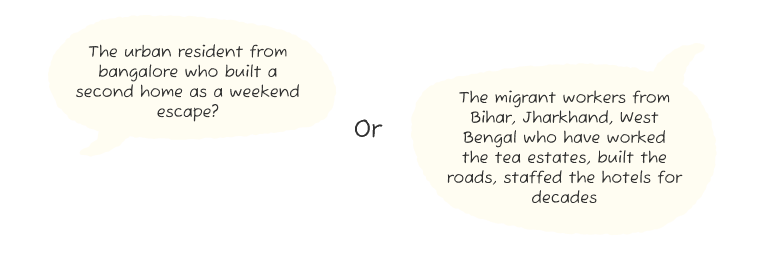
Forests that once sustained communities are now deemed under Protected areas. To sustain themselves in this changing economy, Tribal communities are now commodifying their cultures for tourist consumption. Toda and Irula communities find their embroidery, rituals, and traditional knowledge packaged as heritage tourism.

Meanwhile, protected areas constrain both human and animal mobility. Forests designated as sanctuaries restrict tribal access while compressing wildlife into shrinking territories. The result is intensified human-wildlife conflict. Yet human demands will only increase while wildlife territories continue shrinking.
Now Cultural Identity becomes Marketable Authenticity.
Can development paradigms allow space for anything beyond human consumption?
Development is fundamentally extractive. It extracts land value, labor, culture, and nature, all in the name of progress. Yet benefits concentrate narrowly while costs, displacement, debt, environmental degradation, are dispersed across communities with the least power to resist.
Now Cultural Identity becomes Marketable Authenticity.

The analysis reveals that the youth have moved beyond "survival thinking" to a more proactive logic of design. By connecting the dots between rising inflation and the lack of third spaces, they are rationalizing that social isolation and economic debt are linked.
Development in this context is being reimagined as a matter of access, access to dialogue, to equitable resources, and to physical spaces. The community is articulating that progress is not found in more concrete or hotels, but in the other infrastructure of civic literacy and community well being.
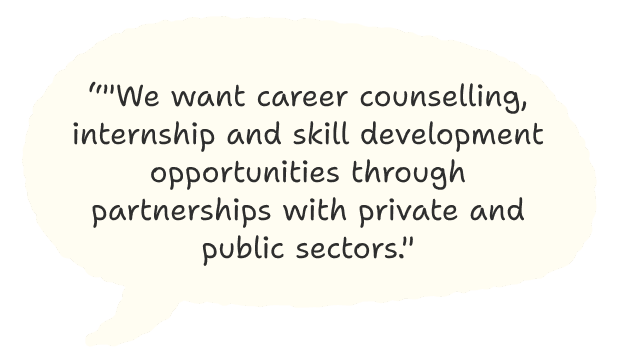
This marks a crucial shift, from passive acceptance of imposed futures to Active reimagining of what is possible.
The shift toward 2035 highlights a desire for "Political agency," where the community is the primary architect of its own growth. They are positioning themselves as collaborators who can help the local government manage resources more equitably, ensuring that "progress" reaches the ASHA worker, tea estate workers and migrant workers.
Imagination served as the primary tool for the youth of Kotagiri to break away from the "Inevitability" of their current circumstances.
By shifting the horizon to 2035, the workshop allowed participants to step out of immediate survival mode and look at their town through a lens of possibility rather than just problems.
Imagination can be used as a tool for Agency, Participation as practice for Empowerment, and Small Actions as Catalysts for Systemic change.
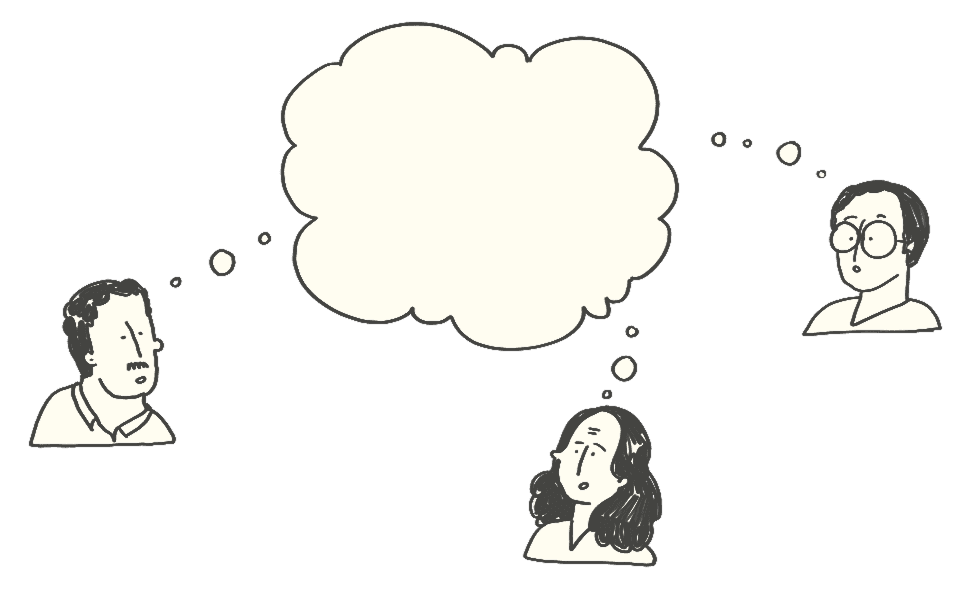
Research on collective imagination reveals, Imagination is not Individual Daydreaming, it generates representations of possible futures that inform deliberation and collective action. When communities collectively imagine alternatives, they develop agency to pursue them.
The Speculative Time travel experience workshop functions as this catalyst. Participants roleplay futures 10 years ahead, evaluating development proposals collectively:
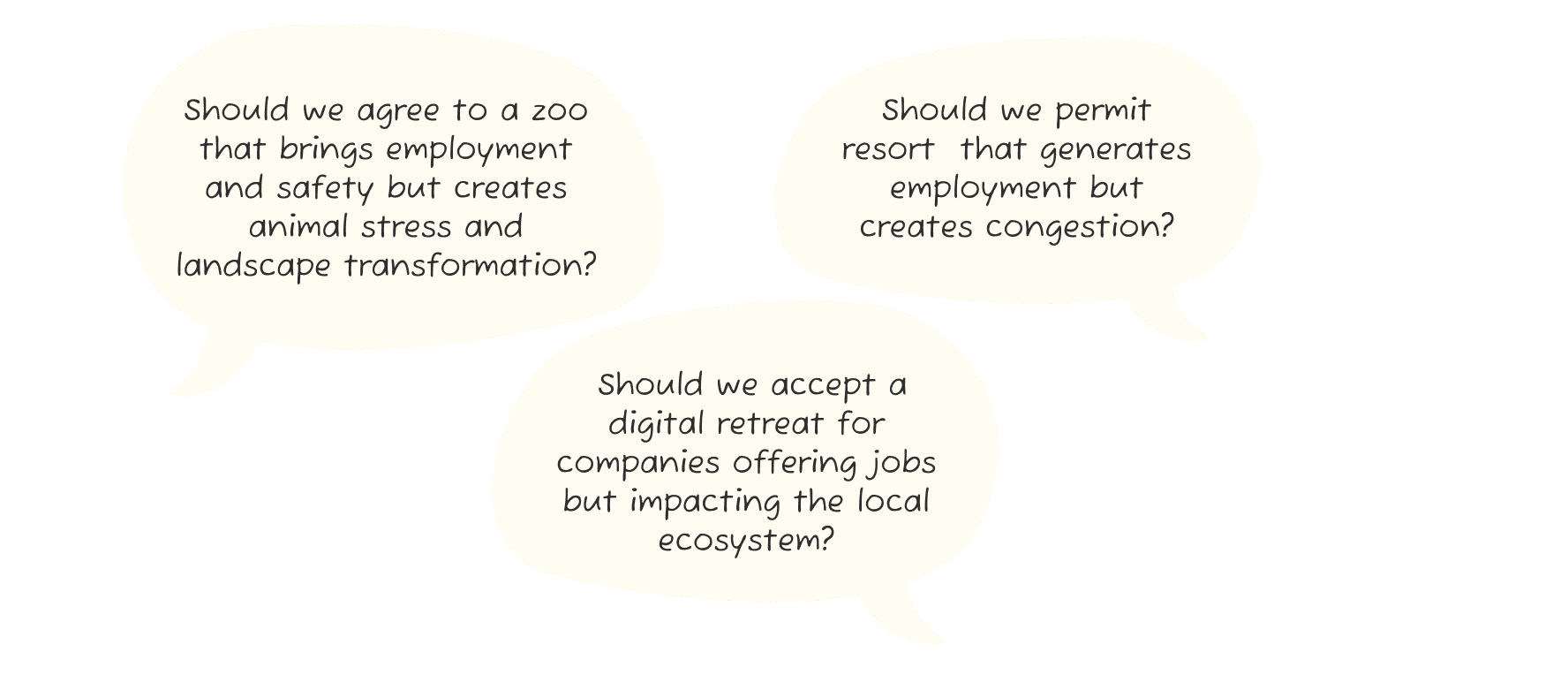
By stepping into different future roles, participants critically weigh the pros and cons of development plans, voice concerns and needs rooted in their lived experience, and imagine futures that may be imperfect yet deeply hopeful.
Having conversations matter.
The conversation itself is the prerequisite to action, without spaces to imagine collectively, alternatives remain invisible, individual and collective frustrations remain isolated loops.
They wanting to co-exist with wildlife, they wanting to have dignified work, they want water management systems, they wanting public spaces demonstrate that strategic thinking resides not solely with those in power, but with residents who understand their lived contexts.
Research on grassroots movements shows transformation begins through shared visions mobilizing collective agency. SEWA, Chipko, and Narmada Bachao Andolan began not with massive resources but communities collectively imagining alternatives and organizing small actions that accumulated into systemic change.


Small in isolation, these become powerful when connected
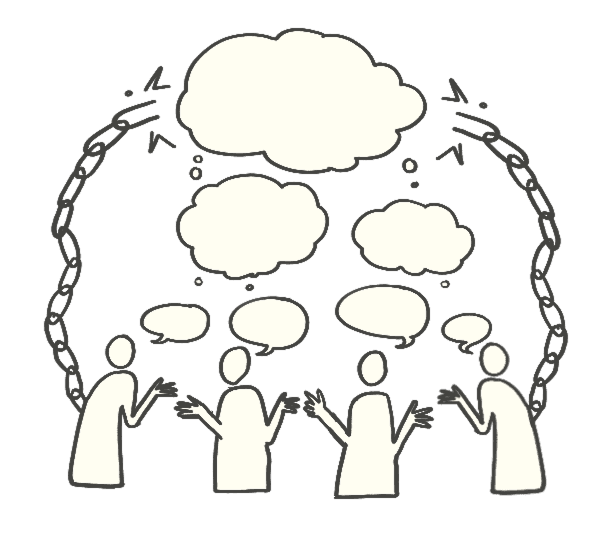
These conversations are starting points to actively observe surroundings and catalyze smaller change. These actions break down larger systems into manageable parts, rebuilding agency from below, not through external saviors but through communities recognizing they already possess the knowledge, relationships, and power to shape their own futures.
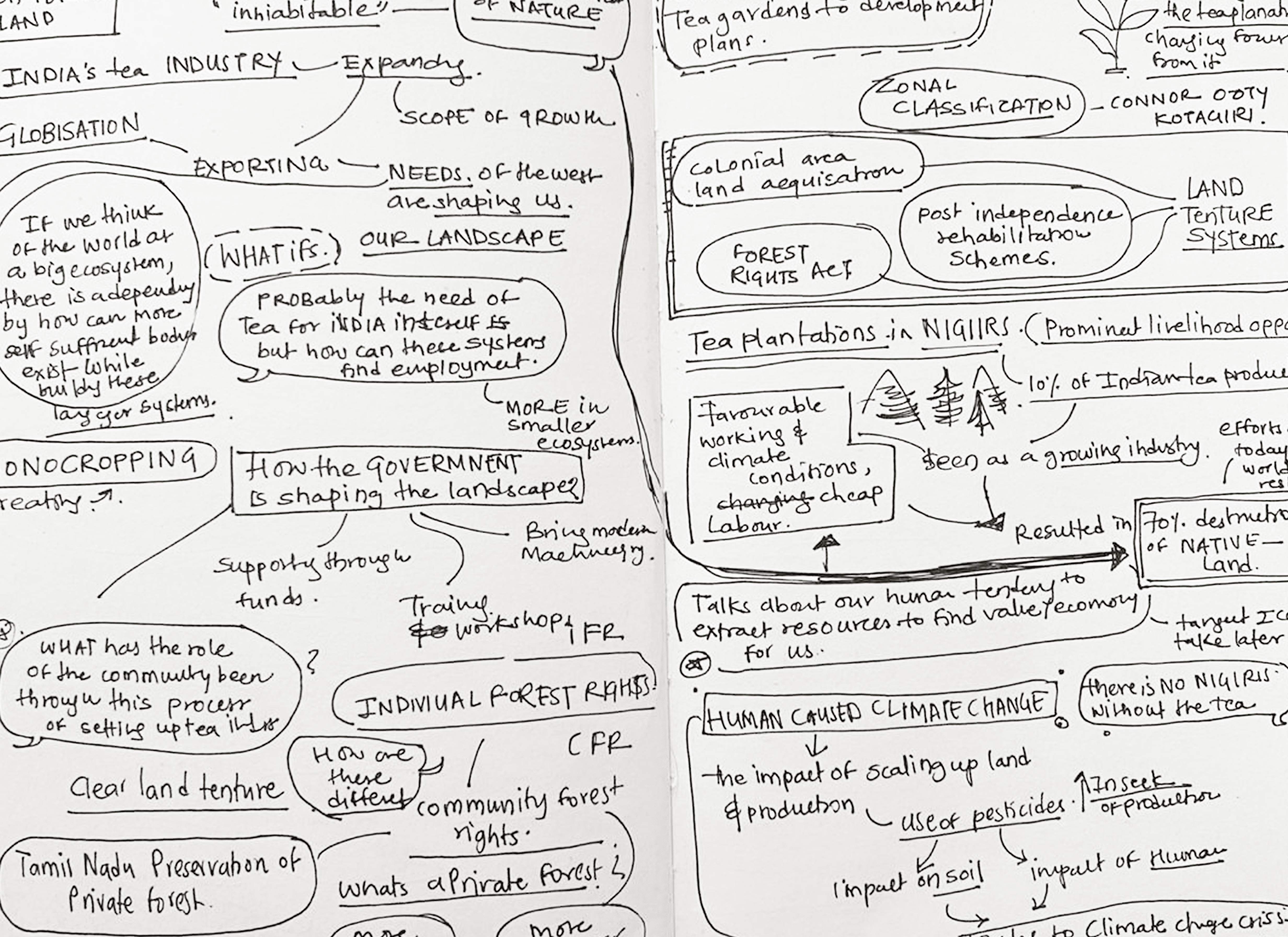

We know this is not ideal but this project is best viewed on on Desktop!
We know this is not ideal but this project is best viewed on on Desktop!
What can you takeaway?
We went from learning how the people of Kotagiri thought about development to really reimagining development. This workshop's approach was fairly extensive, but three questions remain at its core. Think of it as a framework, a tool, or simply some questions. When you observe something around you that appears mundane or complex, ask these questions!
Observe
What is this promising?
Who is it really for?
Question
What are the pros and cons?
Who benefits, and who is left out?
Re-think
What would a fairer version of this would look like?
An Example!
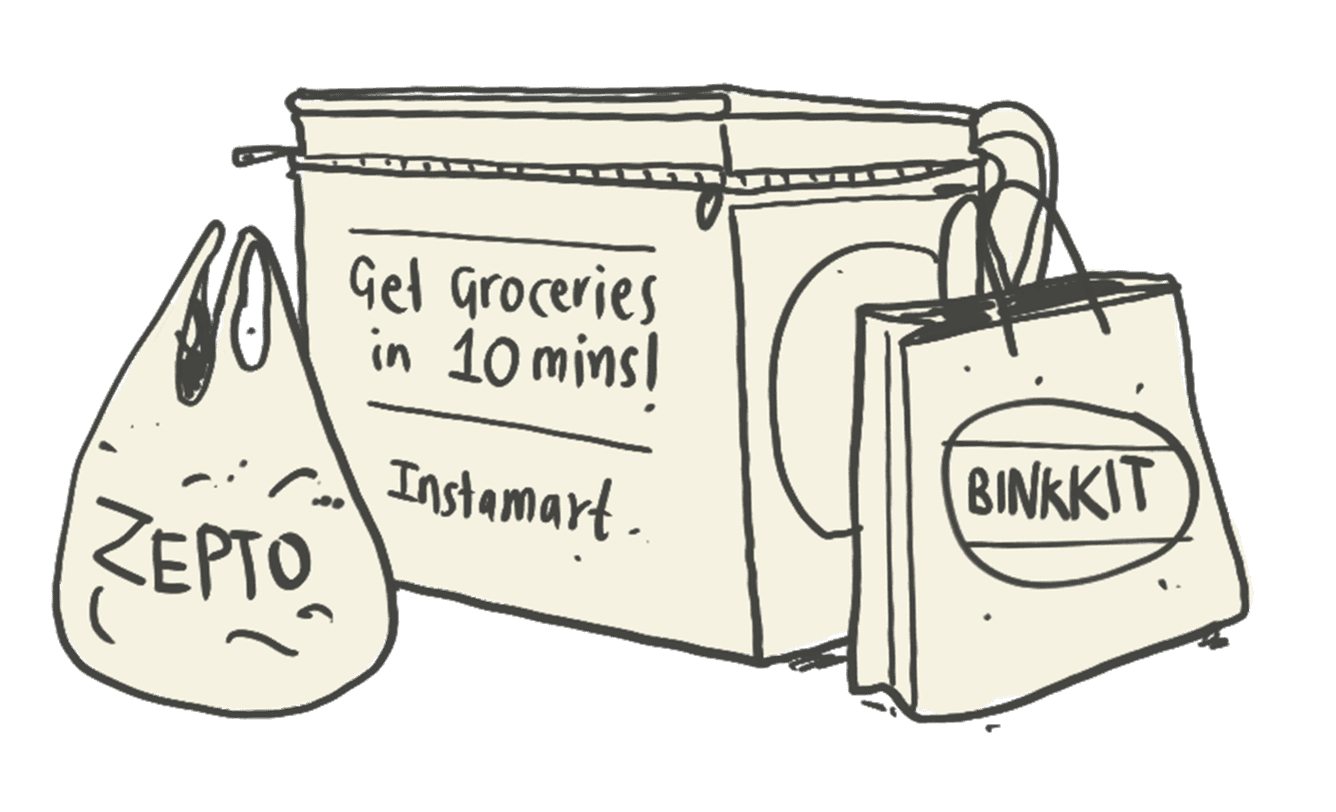
In today's world, everyone orders groceries through a 10 minute delivery app. Advertisements market "You can get anything in 10 mins!" While delivery workers rush to deliver on time!

What is this Promising?Who is this for?

What are the pros and cons? Who benefits, who is left out?

What would a fairer version of this look like?
Hover over the questions
Development is neither inherently Good nor Evil.
It is contextual and consequential.
Roads bring connectivity but also congestion, tourism creates employment but commodifies culture, infrastructure builds services but displaces communities. The problem is not development itself but the absence of meaningful consequence assessment and honest collective negotiation before decisions are made.
We rarely ask:
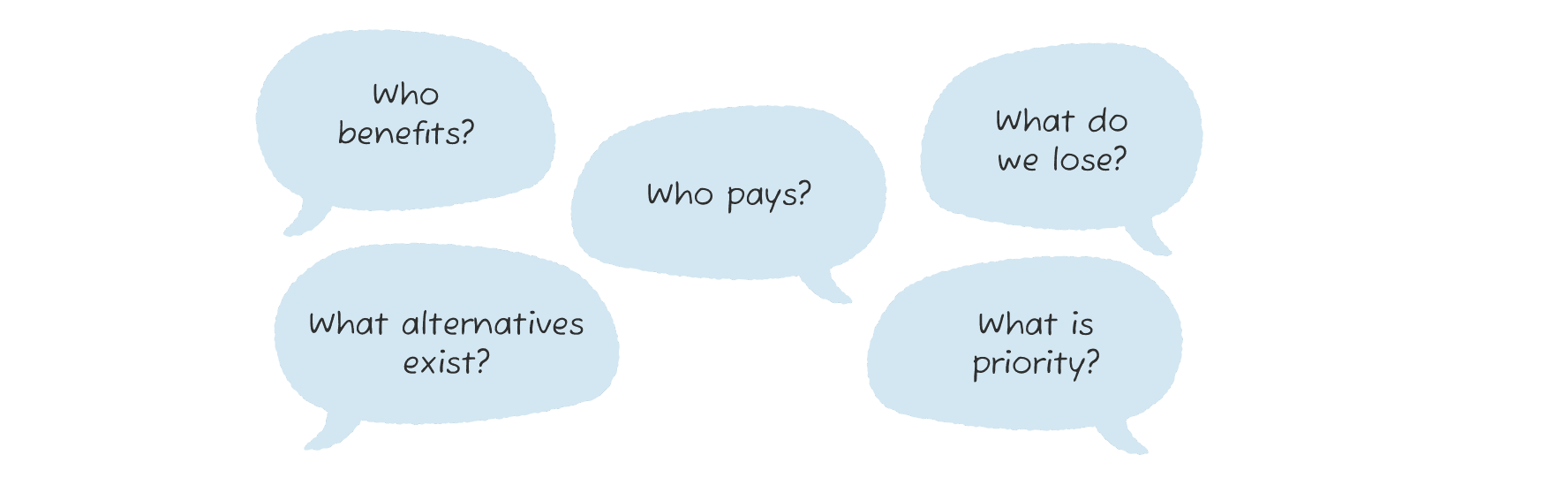
These questions must be posed not after consequences become irreversible but during planning stages when choice still exists.
Now it’s your turn. Choose one everyday example of “development” from your own context, and use these three questions to look at it a little more closely.
Where you are, “Development” might look different from Kotagiri. But these questions still travel. The next time you see a new project, service, or promise, pause with it.
Ask who it is for, who it leaves out, and what else could be possible, then talk about it with someone.
We know this is not ideal but this project is best viewed on on Desktop!