
How might trust translate from physical to digital healthcare systems?
How might trust translate from physical to digital healthcare systems?
Patients don't always have their health concerns at convenient times, and they rarely know exactly when they'll need a doctor. Most people hesitate to use online consultations because of many reasons. This projects understand the deep notions and feelings around booking online consultation and redesigns the experiences to build a more trusted relationship among users about online consultations.
Patients don't always have their health concerns at convenient times, and they rarely know exactly when they'll need a doctor. Most people hesitate to use online consultations because of many reasons. This projects understand the deep notions and feelings around booking online consultation and redesigns the experiences to build a more trusted relationship among users about online consultations.
Experience Evaluation
UI Redesign
Experience Evaluation
UI Redesign
My Role
Experience Designer
UI Designer
My Role
Experience Designer
UI Designer
Timeline
3 Weeks
Timeline
3 Weeks
Collaborators
Chethana Arun
Collaborators
Chethana Arun
The Context
Patients don't always have their health concerns at convenient times, and they rarely know exactly when they'll need a doctor. Most people hesitate to use online consultations because they can't assess doctor credibility before paying, can't choose their preferred time slot before committing, can't understand the doctor's approach beforehand, and worry about privacy and data security. This creates hesitation and abandonment in the booking process on Tata 1mg's Consult Doctors feature.
How might we?
"How can we create a trustworthy relationship with patients by creating a reliable booking experience from finding a doctor to the post-care consultation?
Solution Highlights
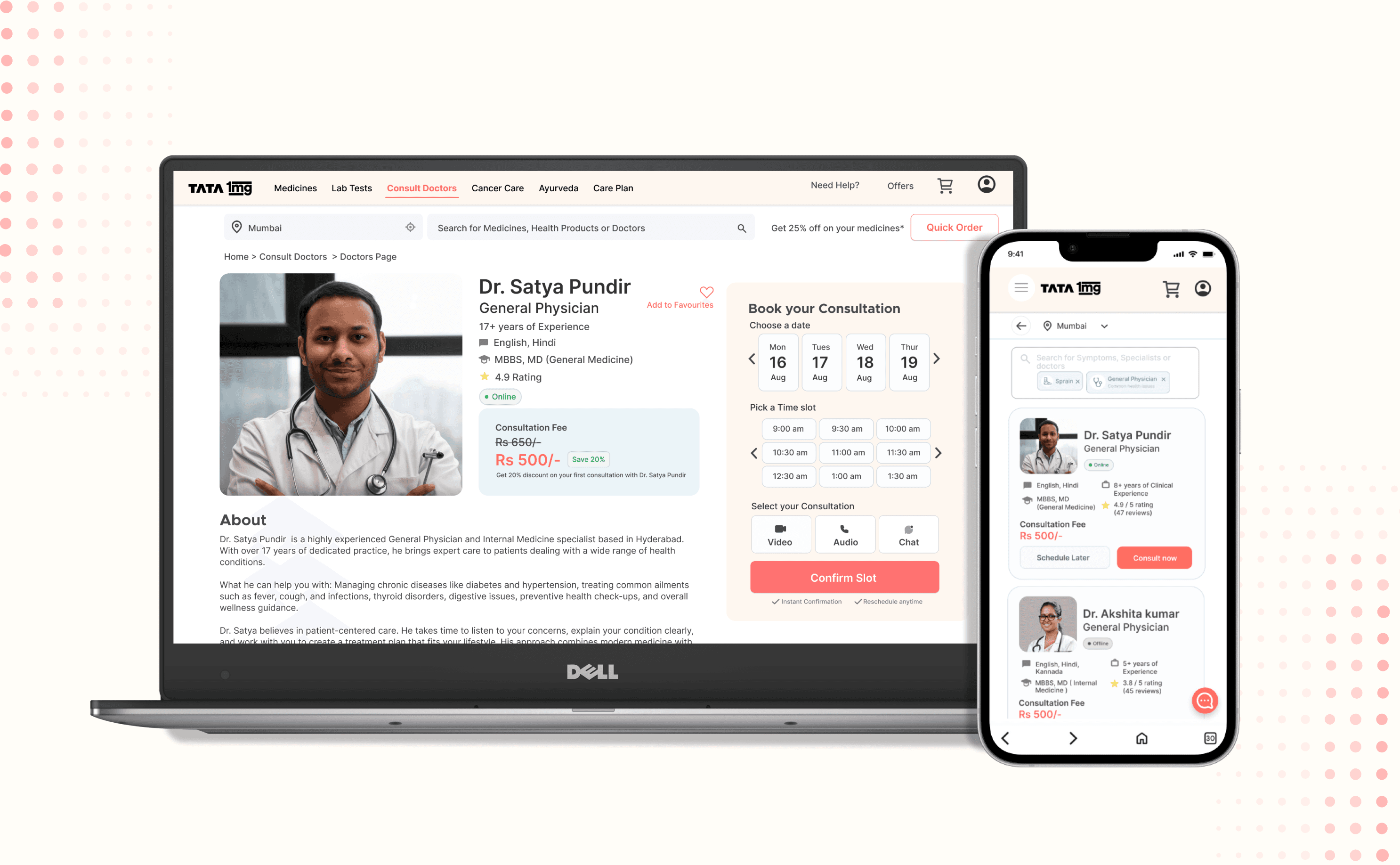
We redesigned Tata 1mg's online consultation feature to let users consult doctors from home seamlessly. The original experience felt scattered and unreliable, users couldn't easily trust the process. Our redesign unified the journey into one smooth, trustworthy flow where users can browse doctors, review their details, book appointments, and start consultations without friction.
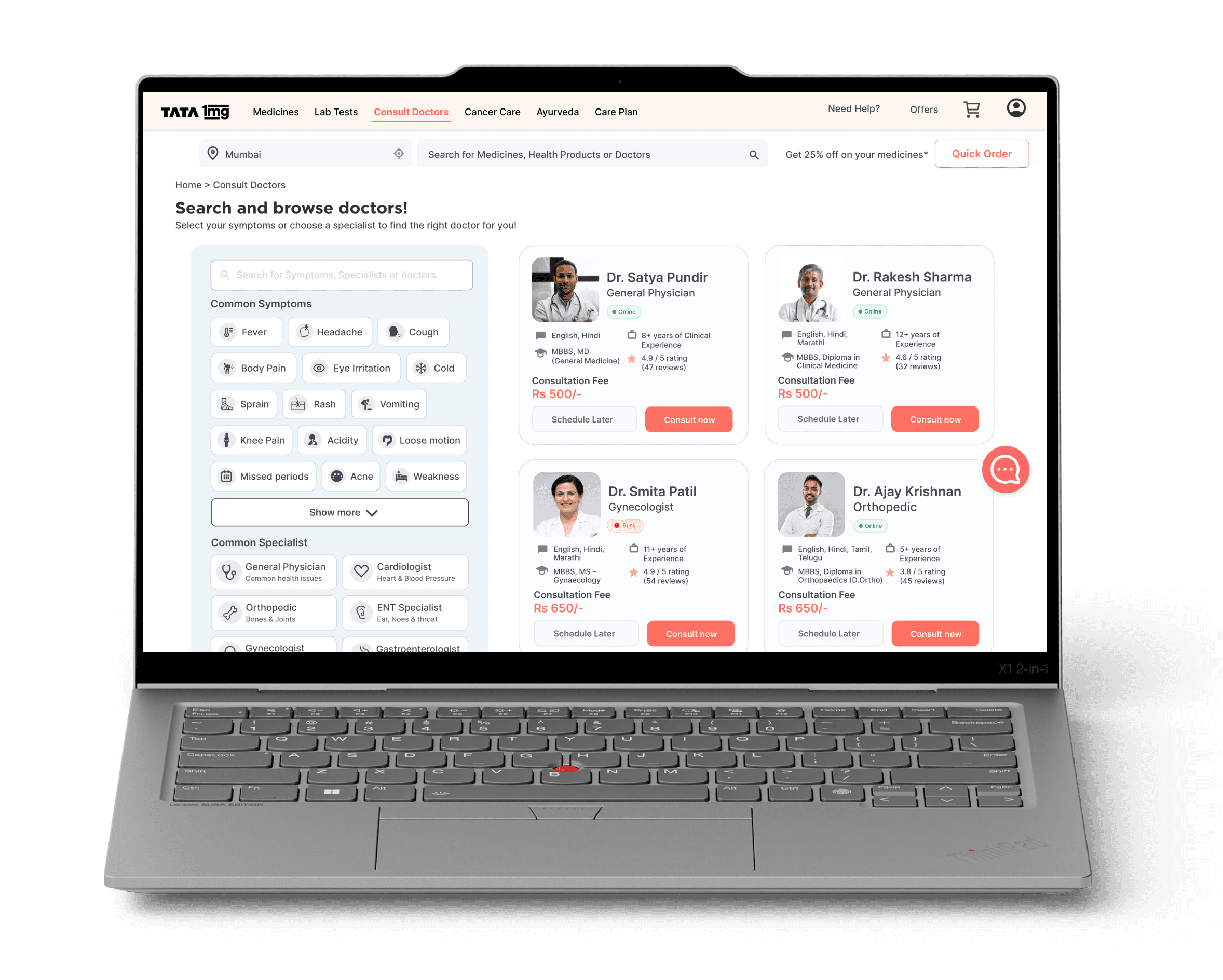
Browsing and Selecting symptoms
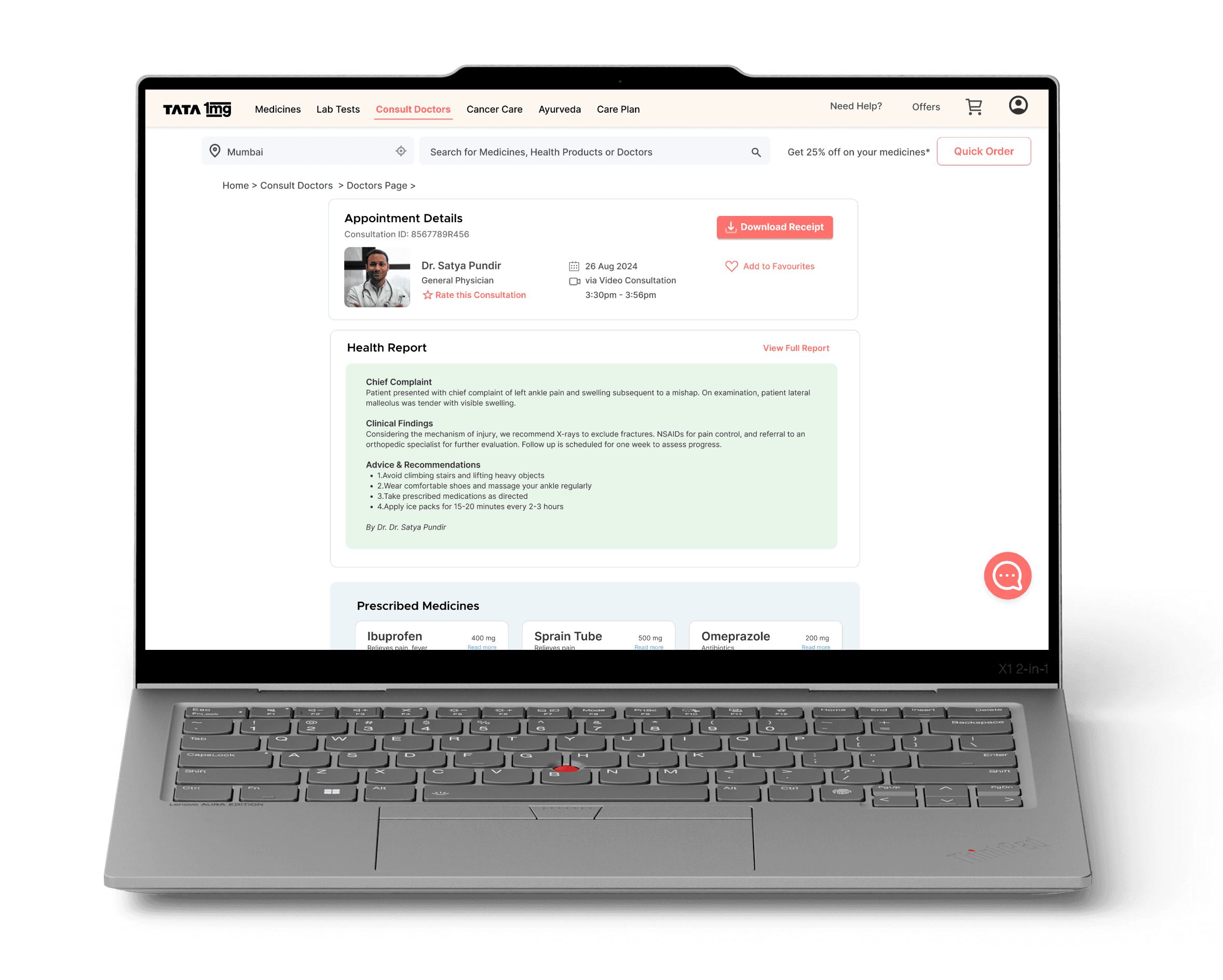
Post consultation, prescription screen
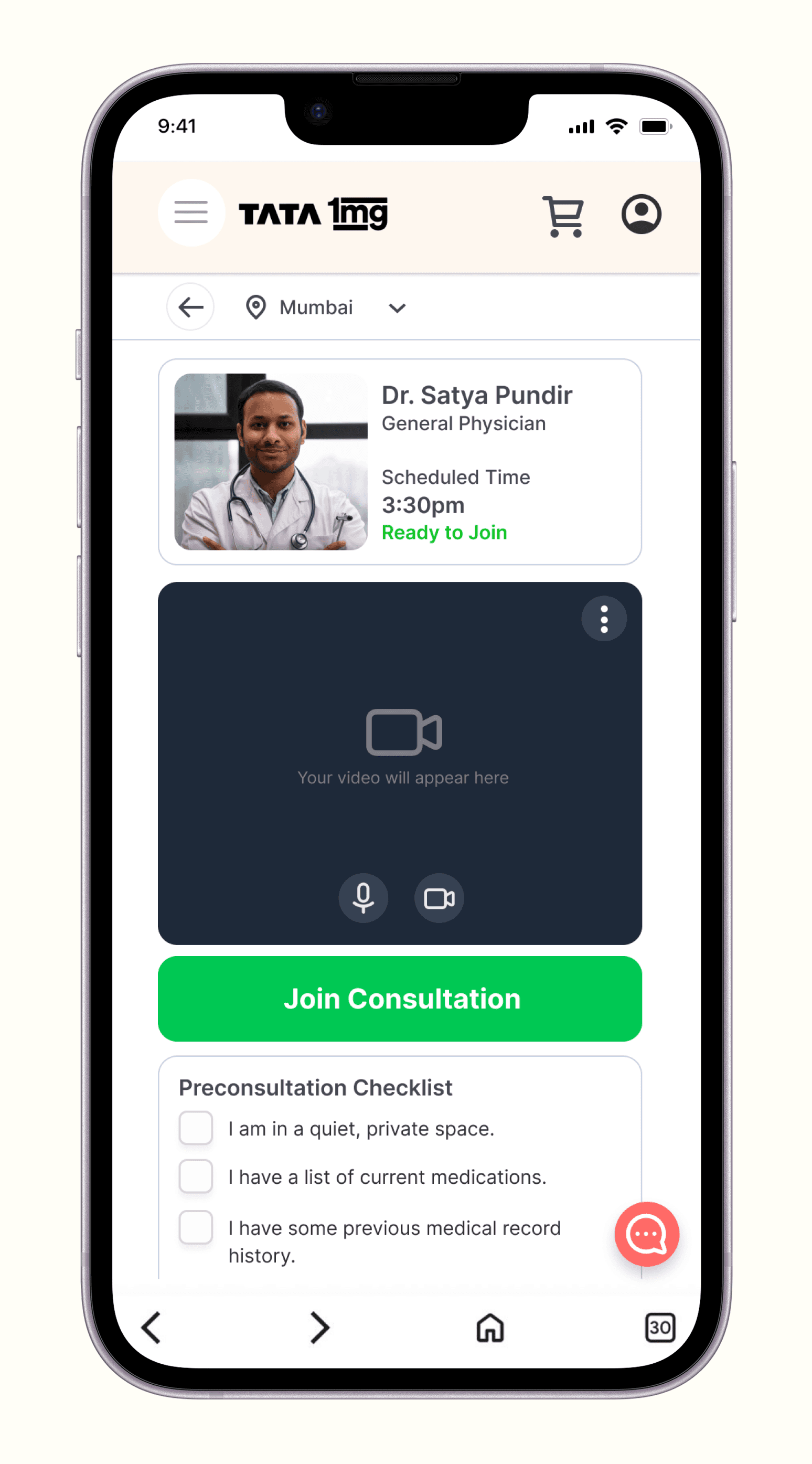
Pre consultation screen
Post consultation screen
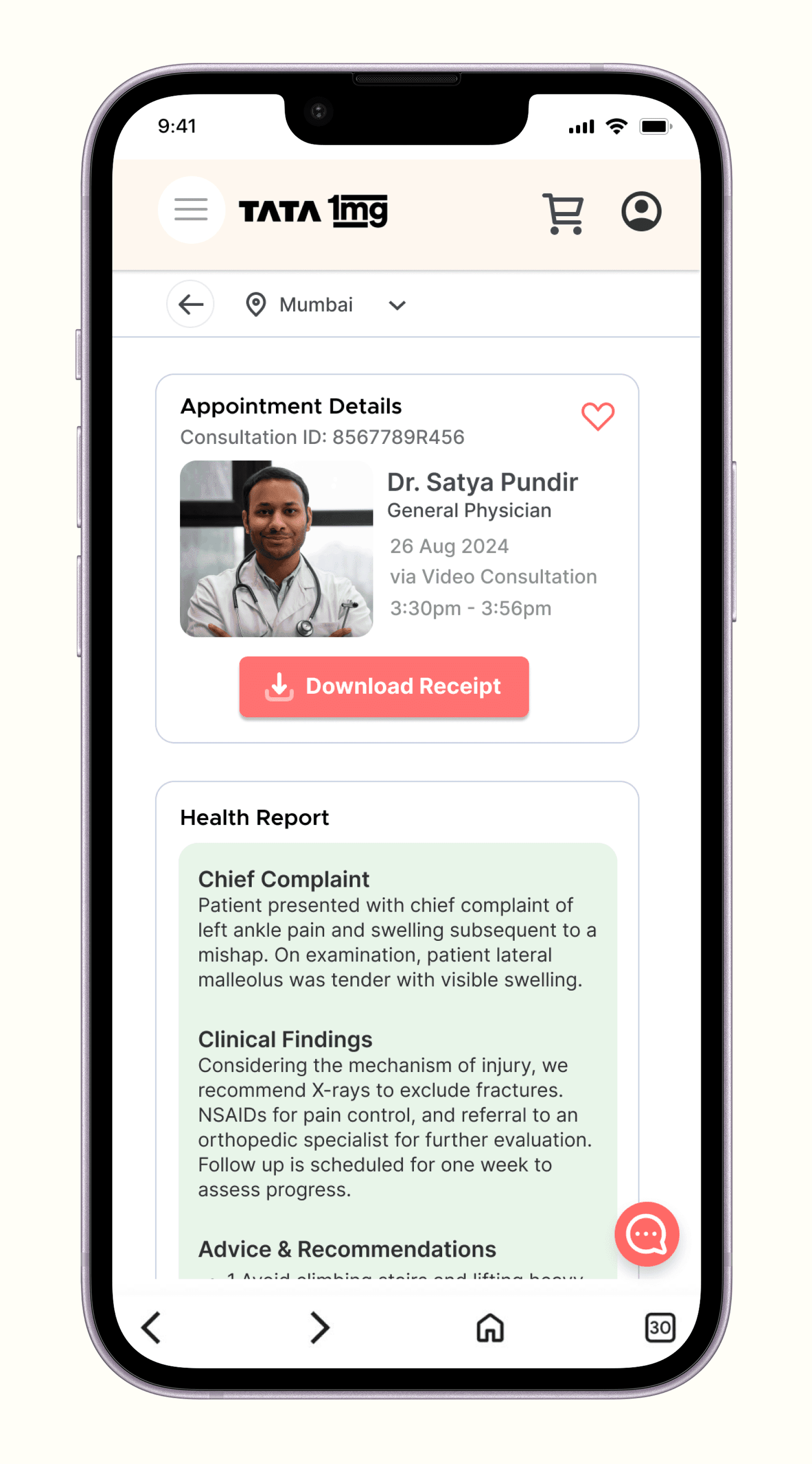
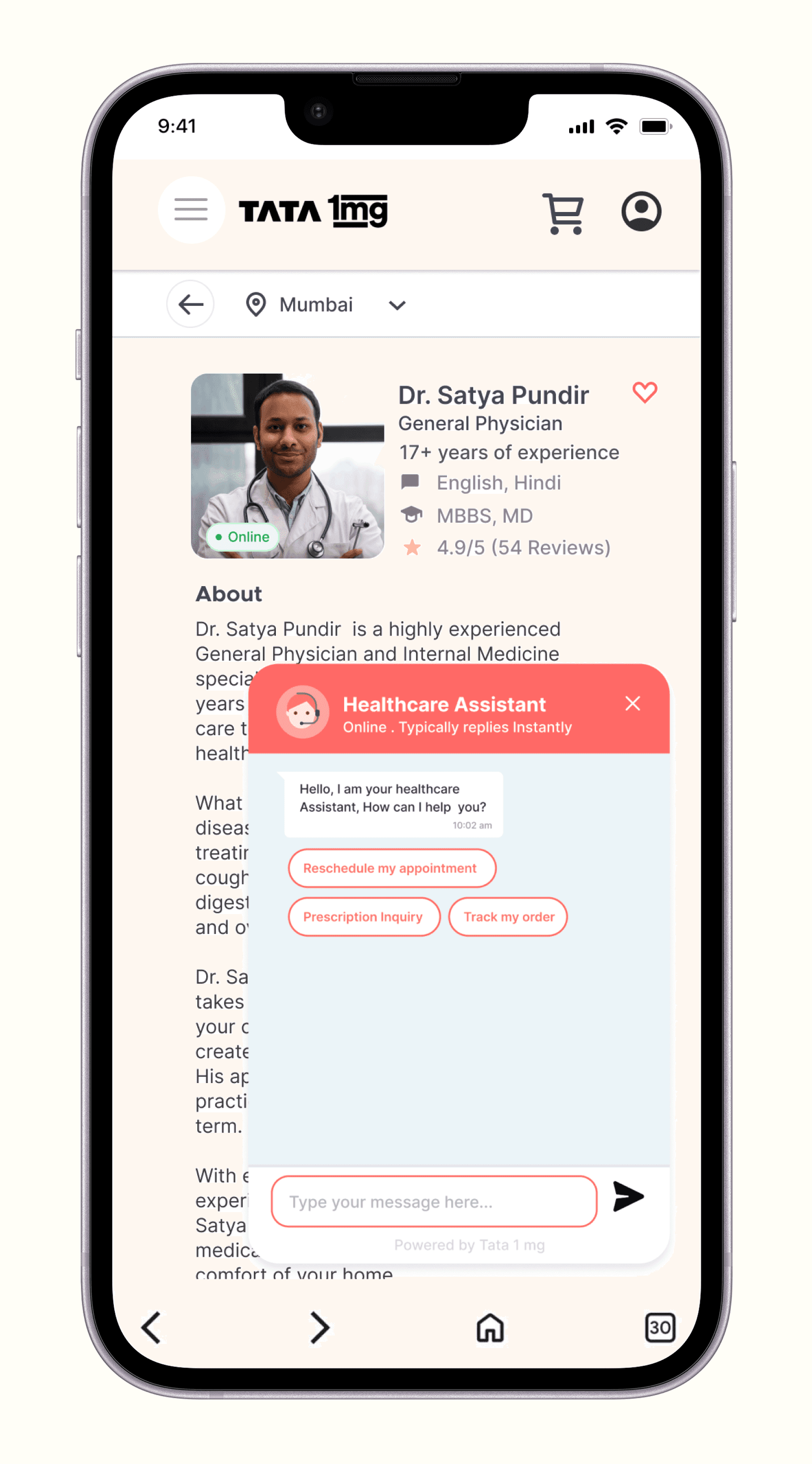
AI assistant chat box screen
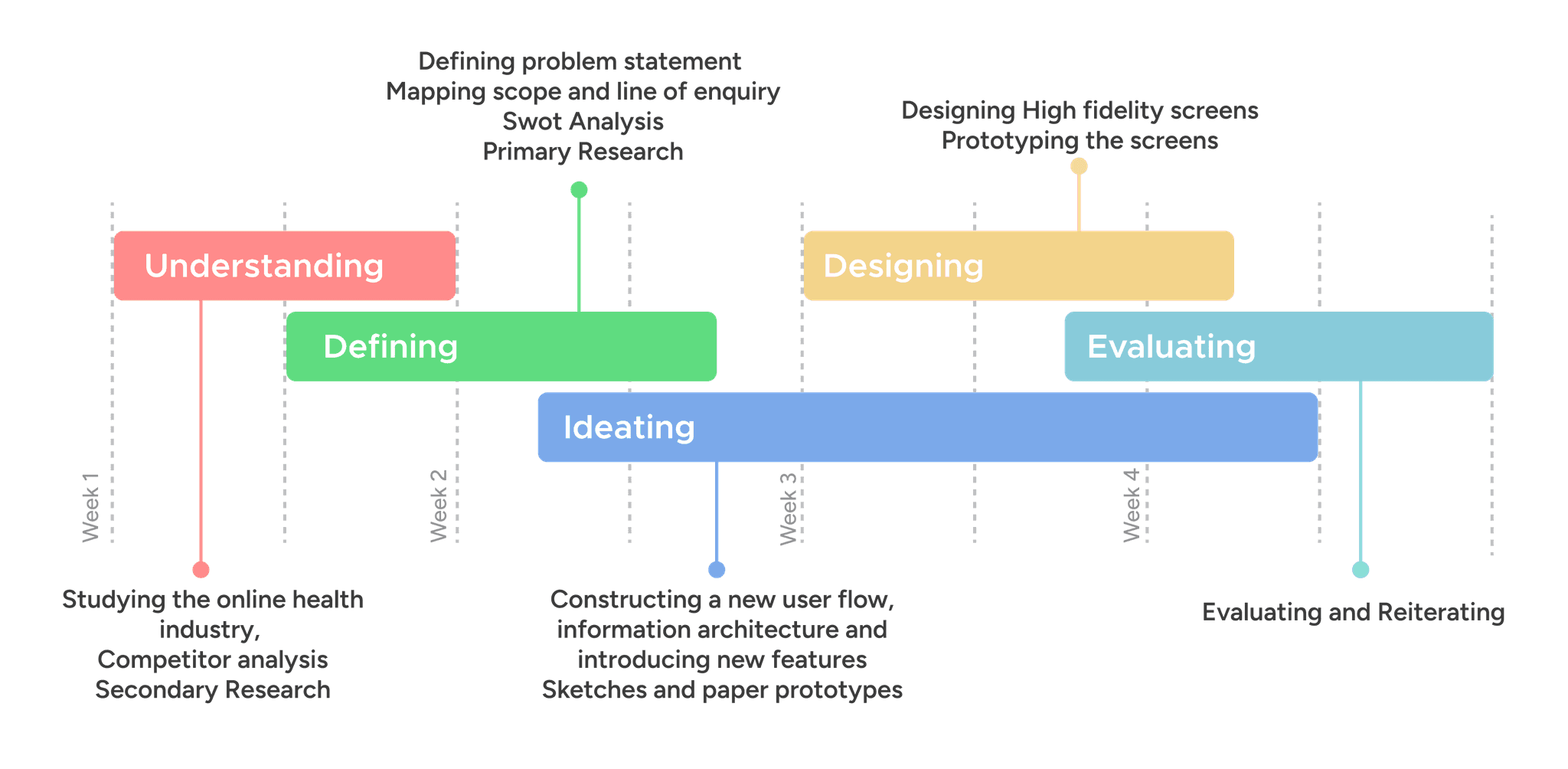
Design Process
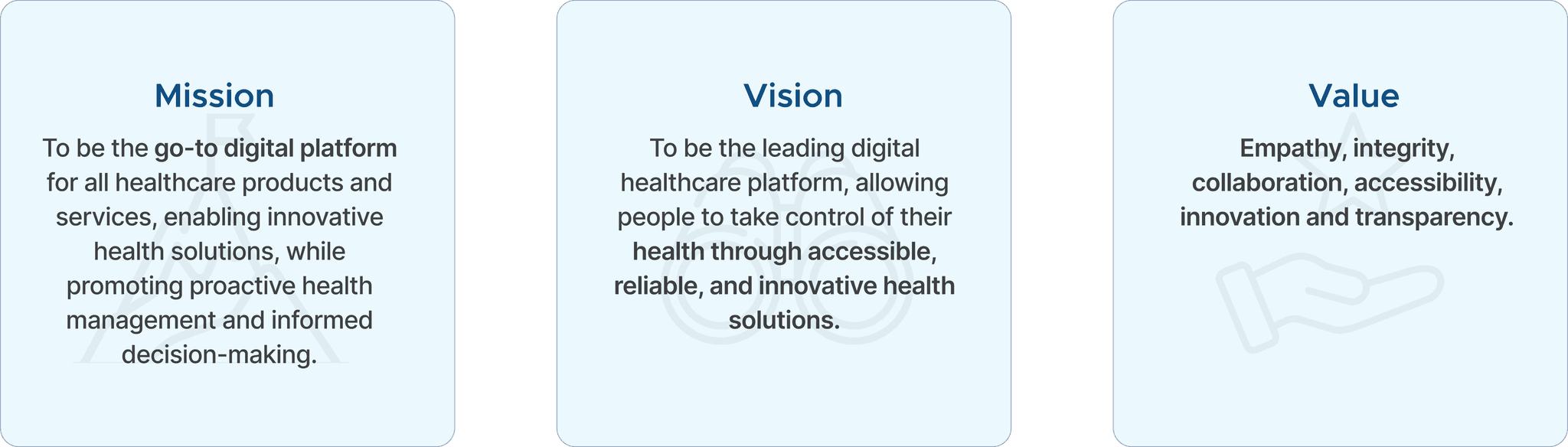
Understanding Tata 1mg
Problem Statement
Despite being a leading online pharmacy and healthcare platform, Tata 1mg faces challenges in user adoption and engagement. Many potential users are not utilizing the platform effectively or choosing alternative options, primarily because of the lack of trust among the users.
Studying and analyzing the platform to make it a comprehensive, user-friendly platform that feels trust worthy and accessible source of healthcare.
Re-evaluating and redesigning the platform such that it offers curated medical services, products, and transparent plans, ensuring patient needs are met with safety reassurance.
Reiterating to more trustworthy and reputable experience, especially for people who are apprehensive to use online healthcare services.
(This means bringing the comfort and assurance of face-to-face interactions into the digital domain.)
Scope
Constraints

Secondary Research
Through a literature review, we explored current trends in the pharmacy sector and how the market in India is shifting toward online healthcare services. We focused on understanding why users increasingly need accessible, reliable digital pharmacy and consultation solutions.
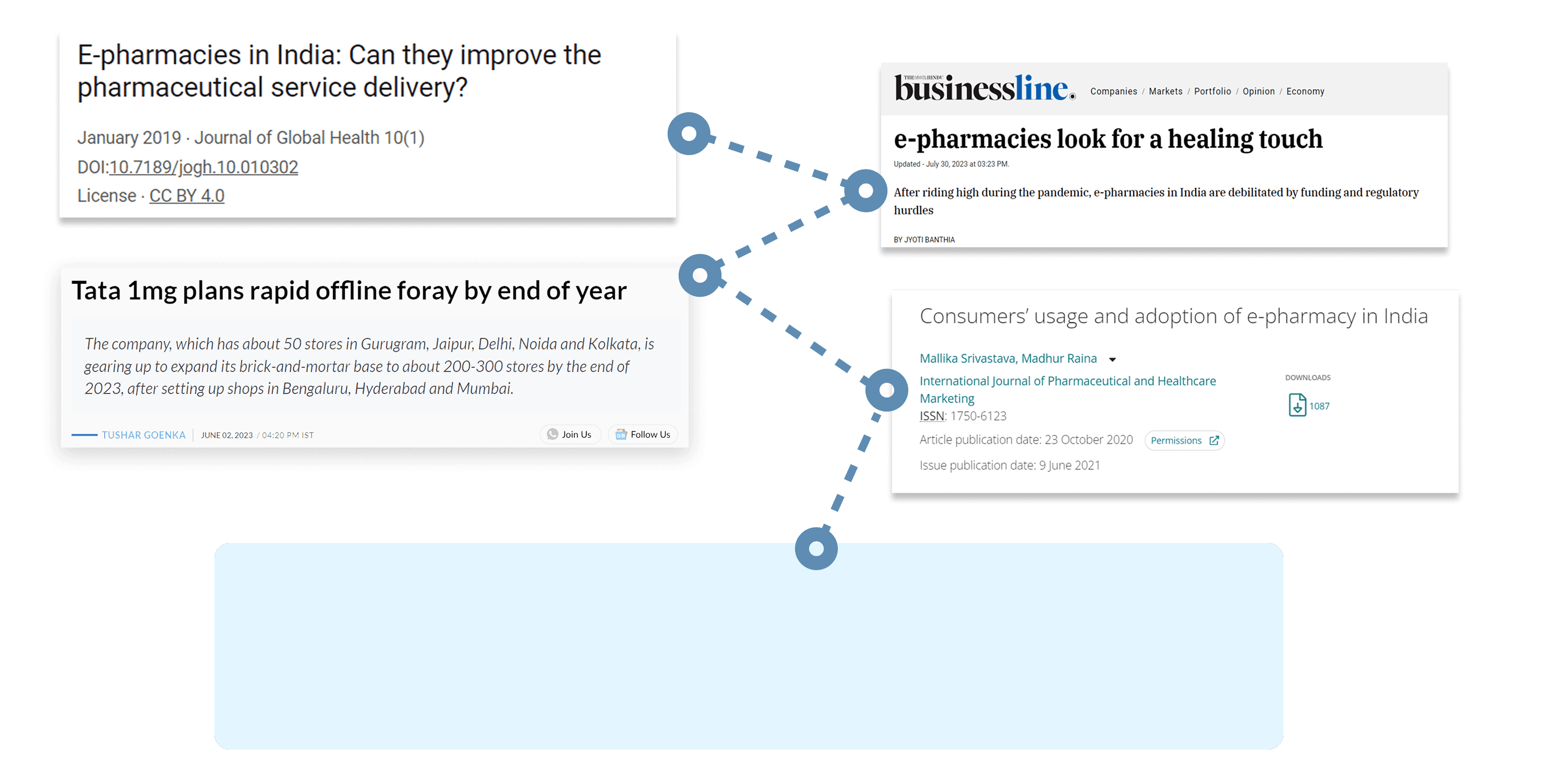
E-pharmacies are growing quickly, especially after the pandemic changed how people access healthcare. Many users now prefer getting medicines and services from home, so platforms like Tata 1mg are starting to offer more than just medications, including online doctor consultations.
By studying customer reviews, we mapped the key challenges users were facing and what they were hoping for instead. This helped us identify early themes and sharpen our focus before moving into a structured research plan.
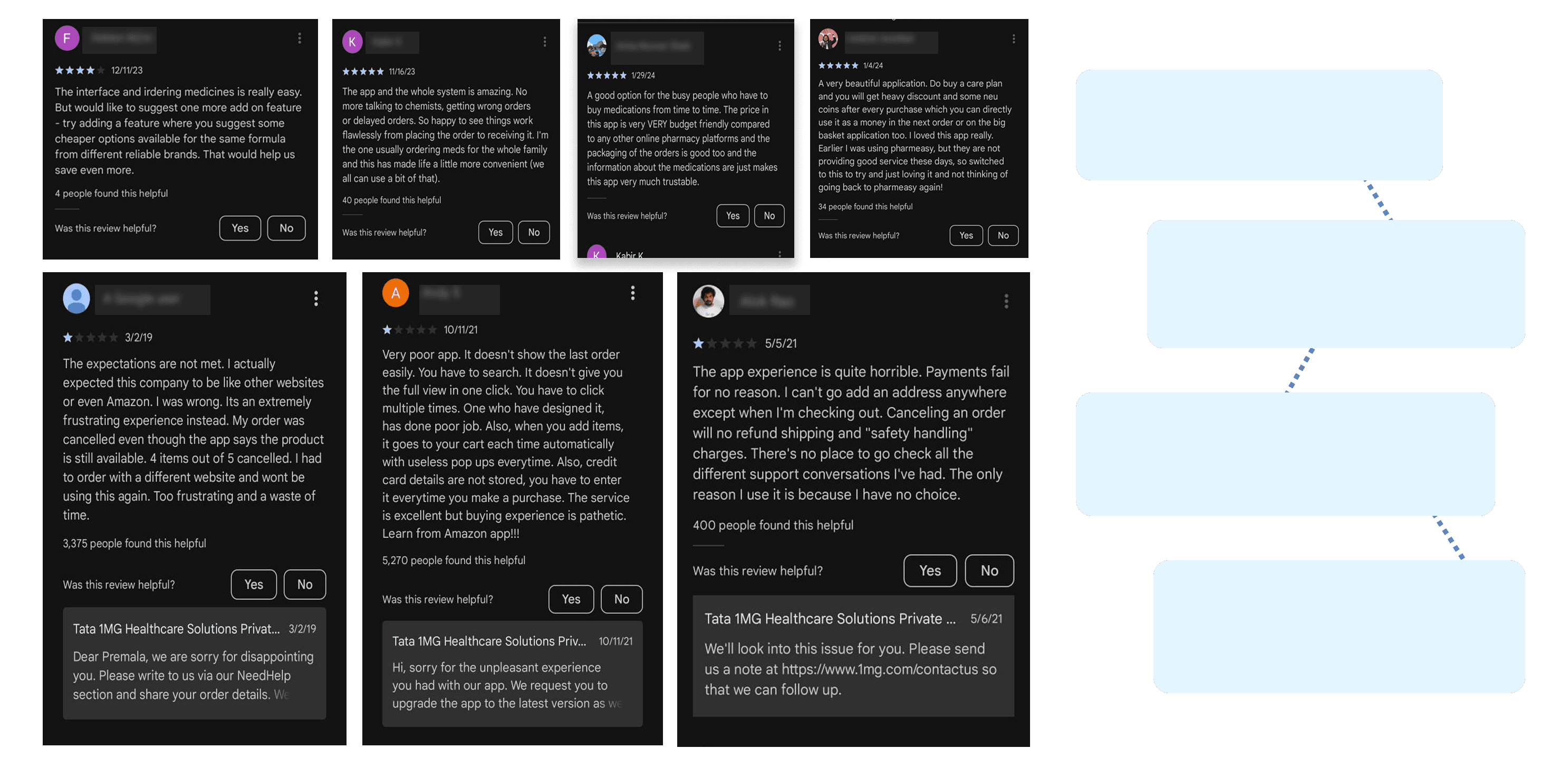
Order getting cancelled often
Order getting cancelled often
No proper support communication
Would be better if they showed cheaper products first
Hard to search previously bought items
Competitors Analysis
We examined Tata 1mg’s competitors across different scales to understand how online healthcare platforms are evolving. This helped us map recurring themes and patterns in stargey and services.

Redefining Scope
Tata 1mg offers services and products across diverse ranges and age groups, where each one demands its own unique strategy and user experience.
We focused on Tata 1mg's "Consult a Doctor Online" service, a relatively new feature with low adoption due to usability gaps. This gave us concrete room to improve it through targeted user research and iteration.
Understanding Layers of UX
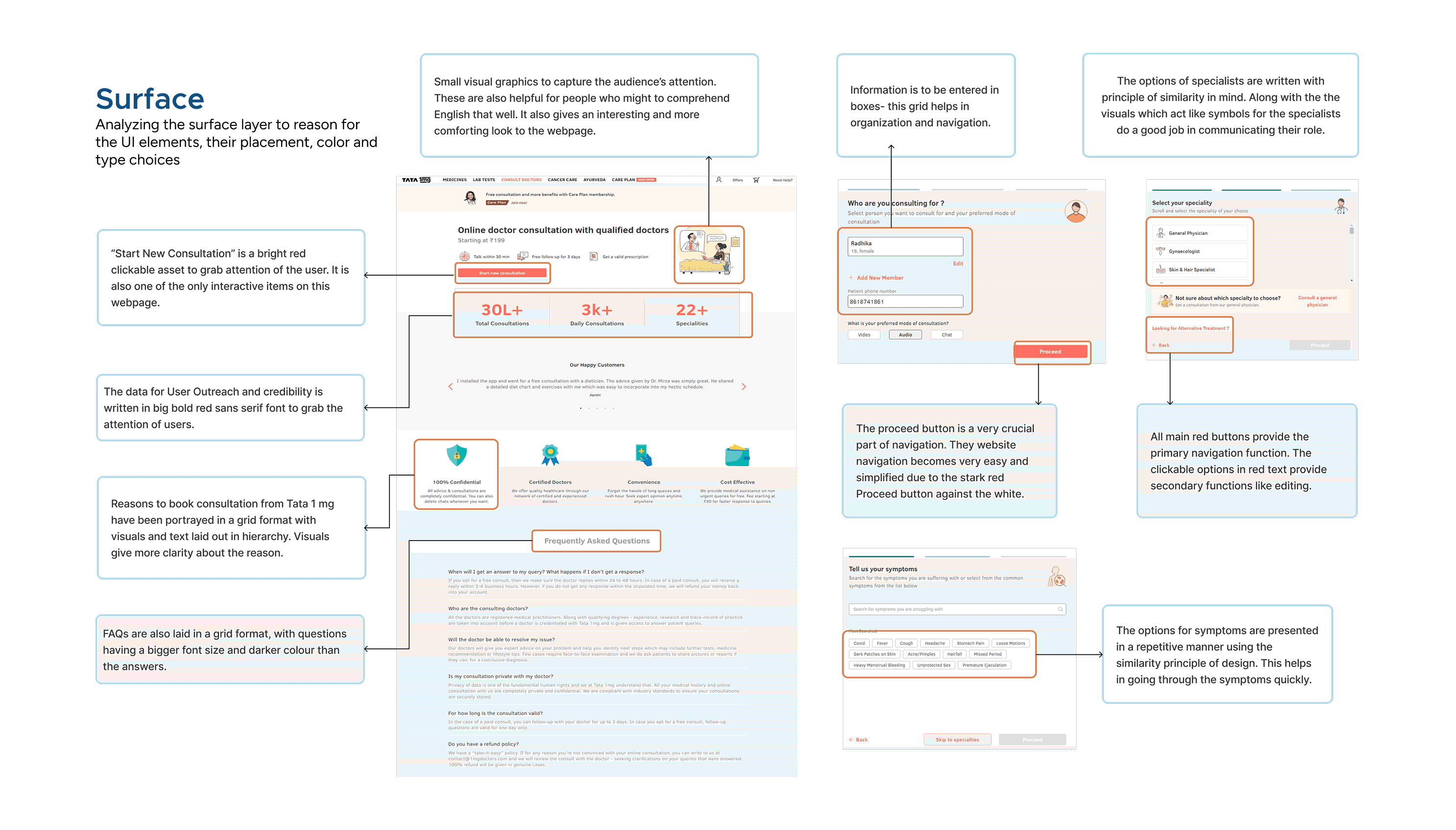
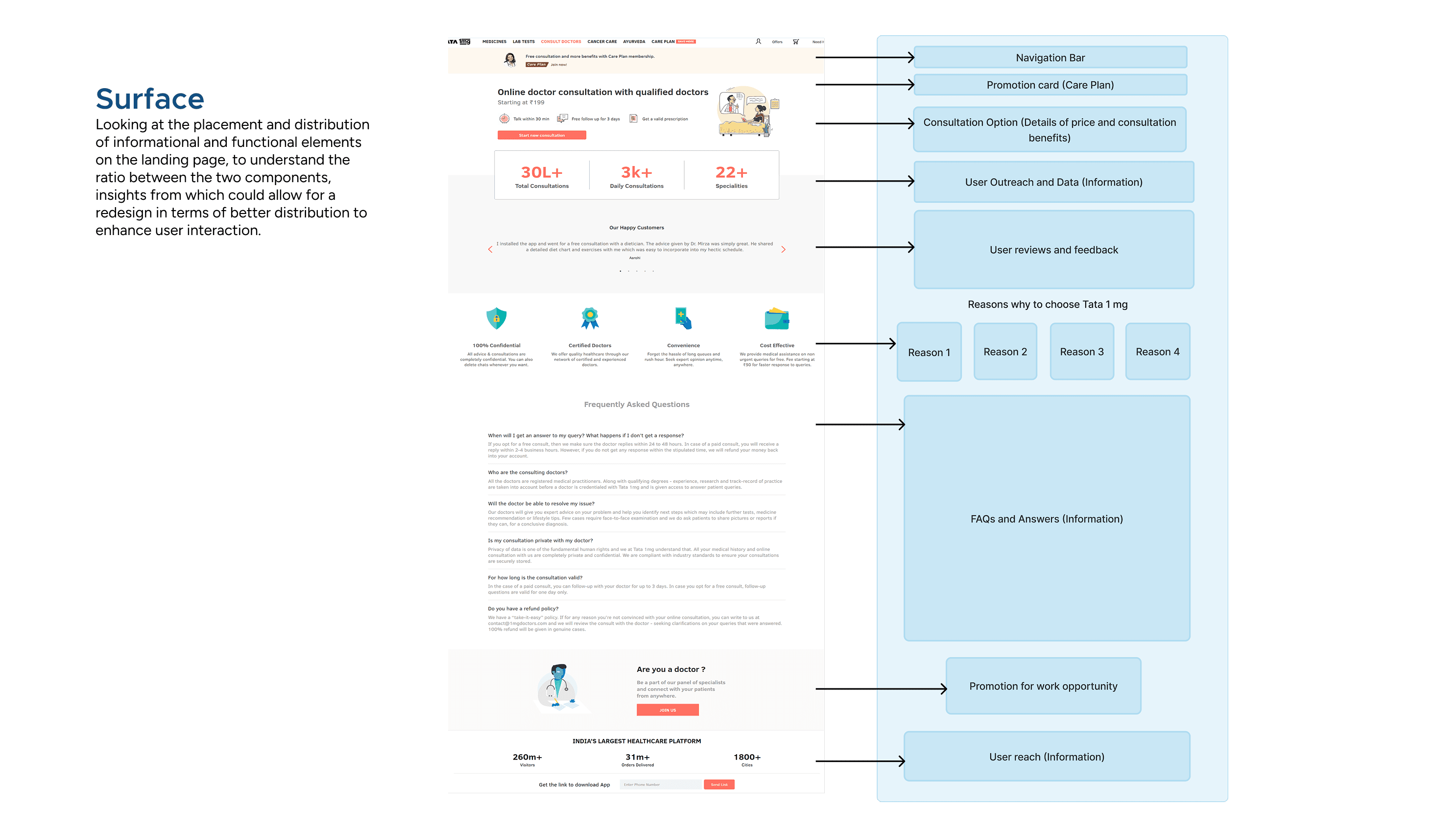
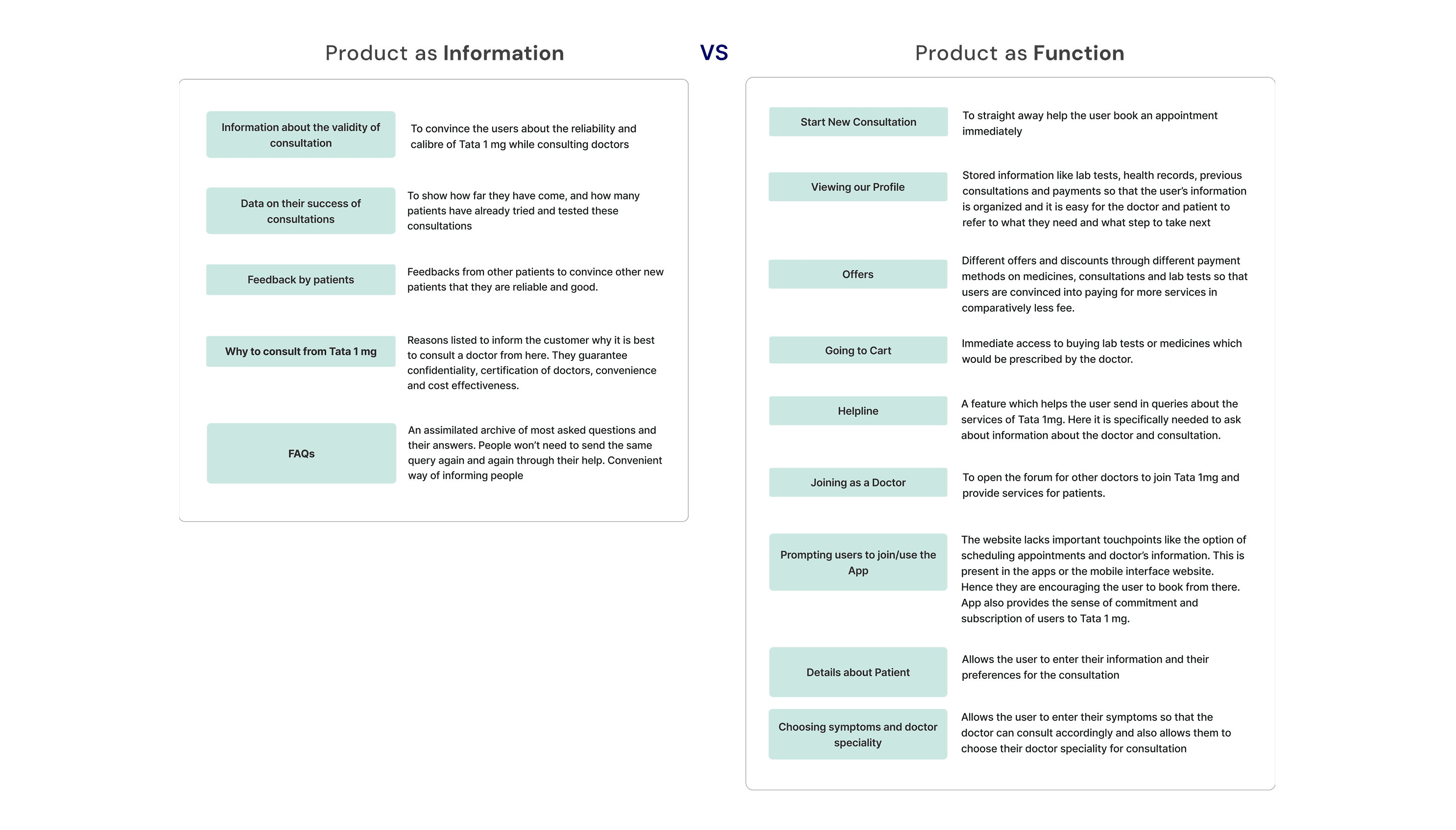
By first understanding how the information, experience is mapped out with the feature lead product by analyzing the UI features, the skeleton of the page, and the correlation between the Product as Information and Product as Function, we understood what and how tata 1 mg is trying to value and put together in the feature.
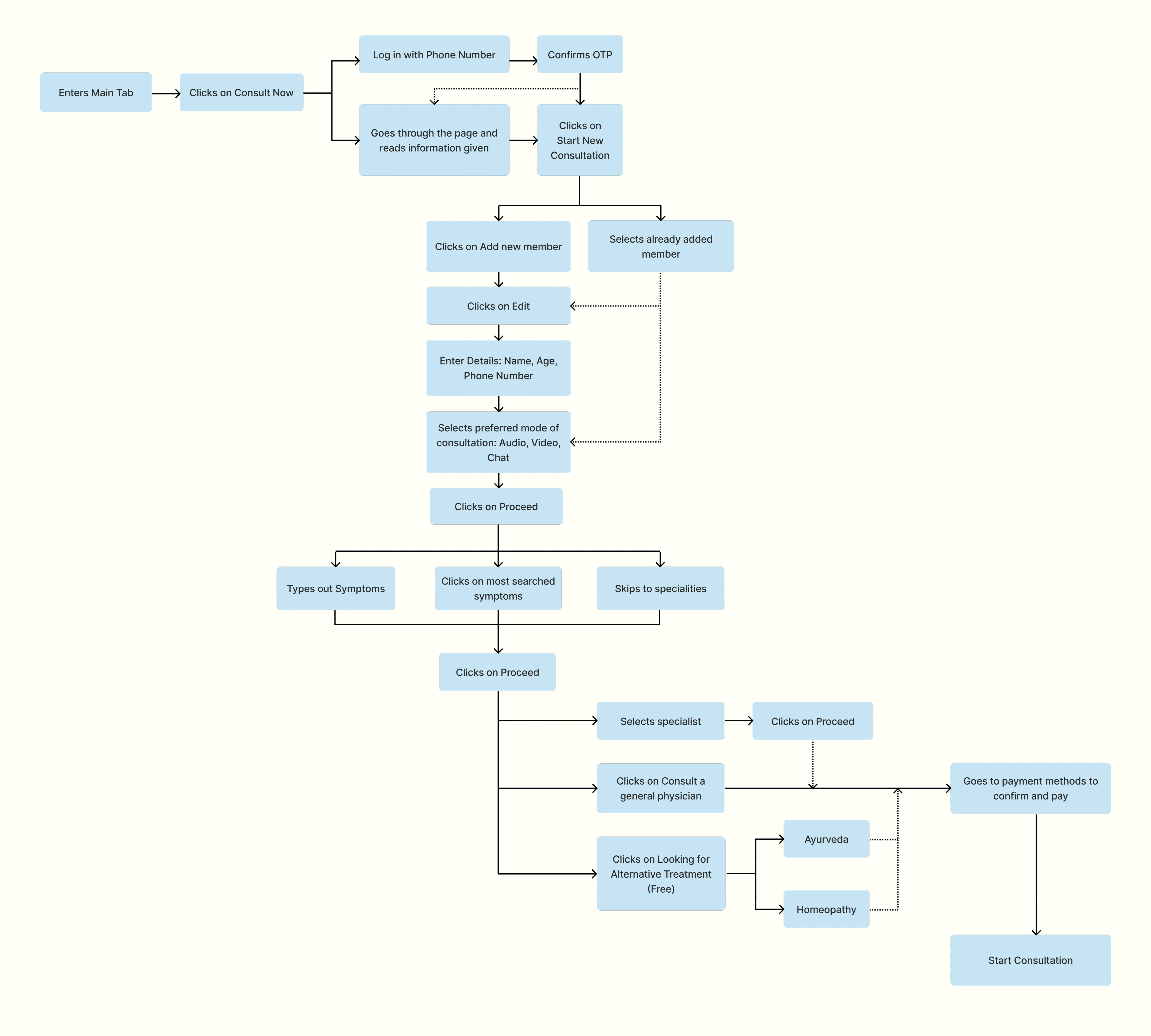
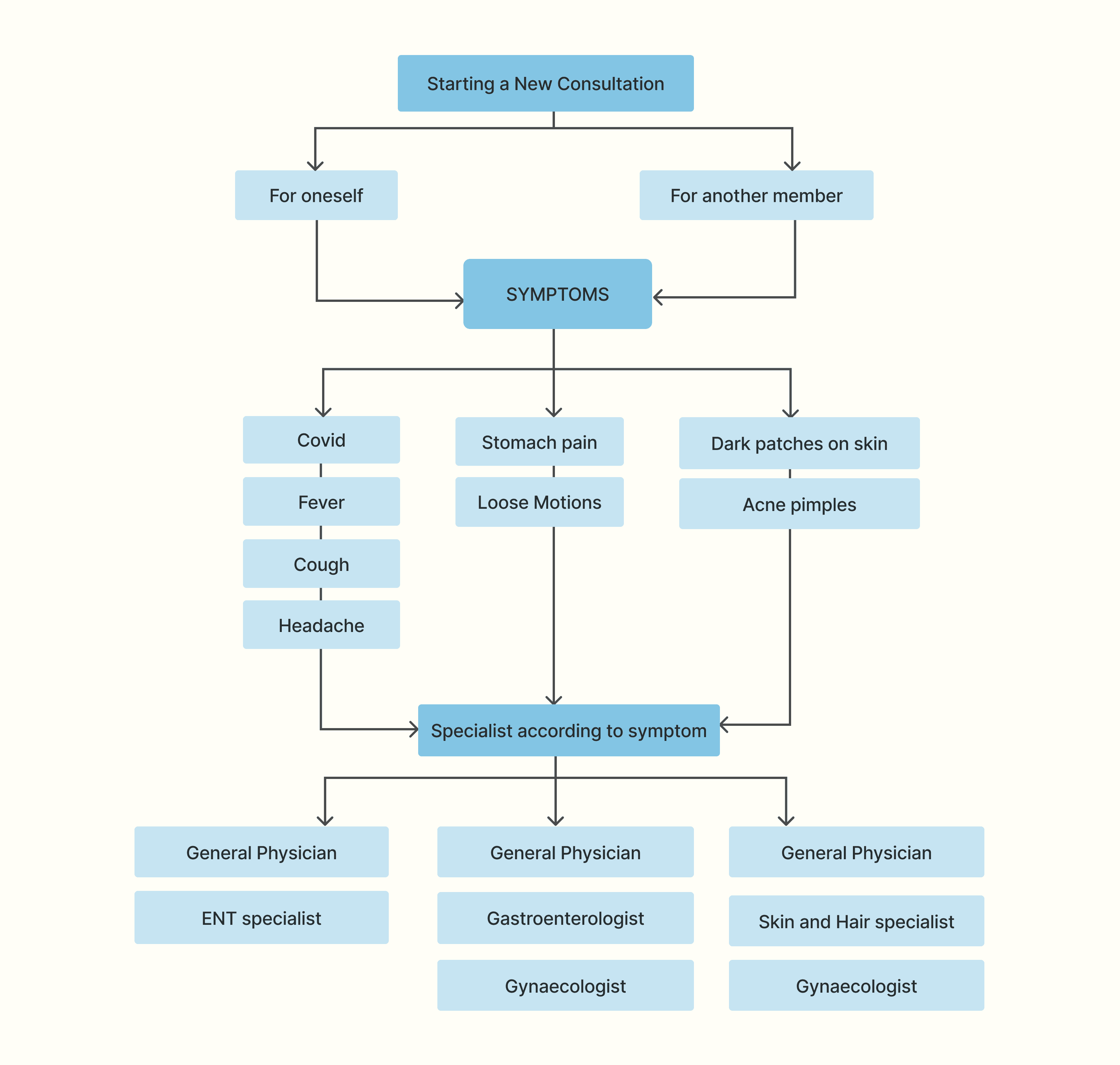
Current User flow
The current user flow is simple to navigate but lacks critical information like doctor credentials and timings. This leaves users feeling disconnected from the consultation process.
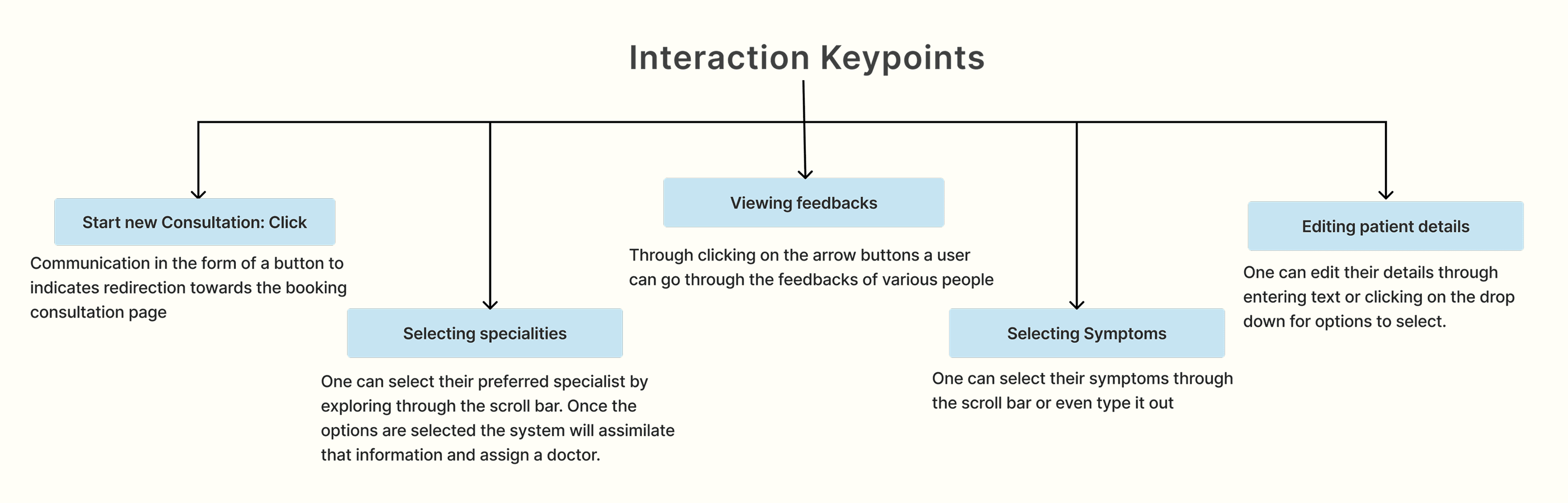
Interaction Key points
Current Information Architecture
The existing information architecture delivers only a narrow set of details, which limits user choices.
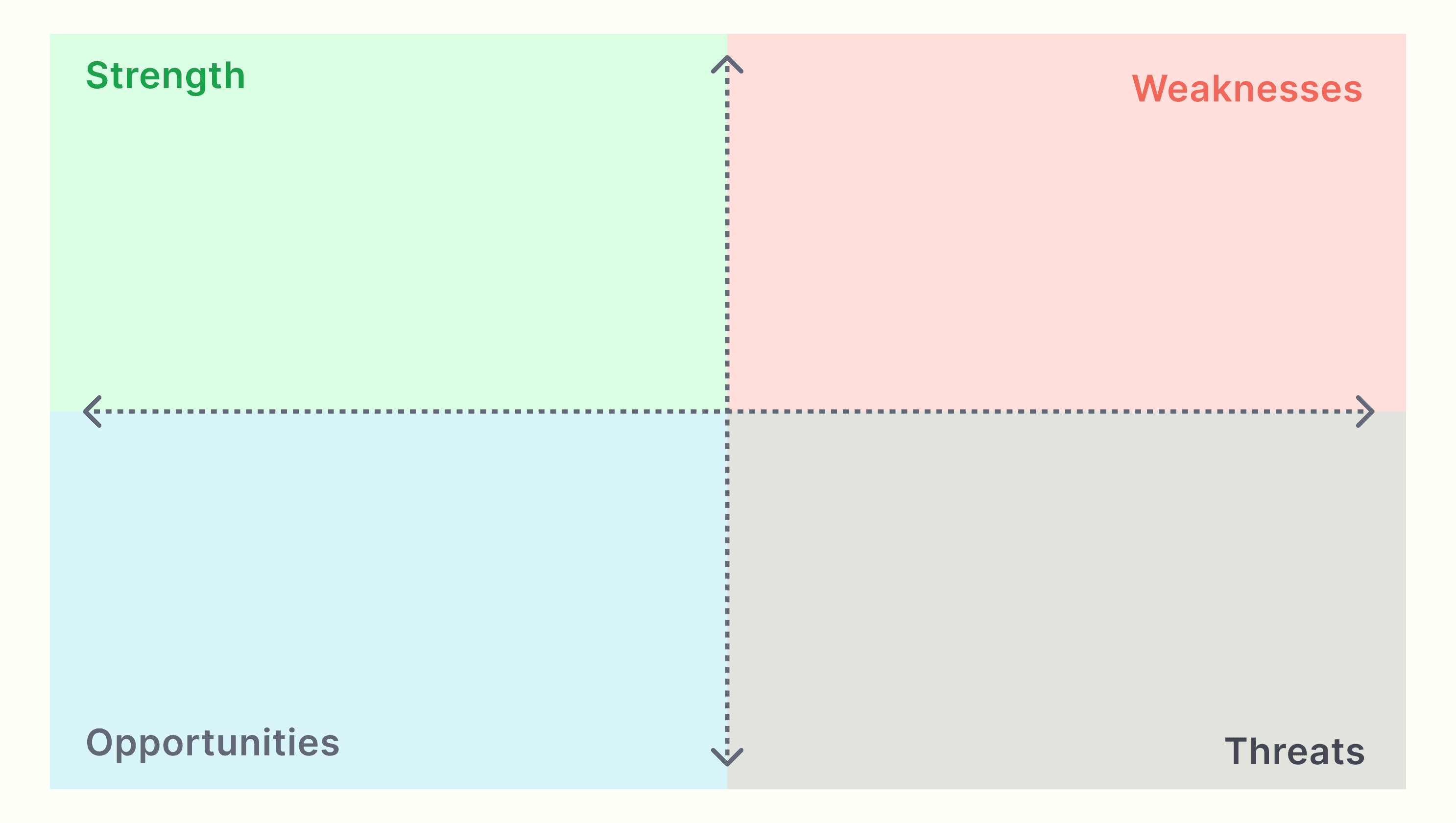
SWOT Anaylsis
Tata 1mg provides a lot of services and products but we wanted to focus on just one to make it better. We picked the "consult a doctor online" service because it's fairly new and not as many people are using it yet due to various reasons. This gives us scope to work on it better.
No ability to browse and choose doctors.
Confusing booking flow undermines Tata brand trust.
Personalized doctor suggestions using medical history
Single platform covers booking, consultation, prescriptions.
Consultation timing unclear; no option to book timeslot.
Users revert to offline doctors after dissatisfaction.
Ability to select a time slot.
Integrated notifications keep users informed about status.
Shows fee and consultation mode before payment.
Clear trust badges, experience background and spoken languages.
Stores consultation history for easy rebooking.
Reconsult and structured follow-up scheduling.
Competitors’ simpler flows raise usability expectations.
Consultation status after payment feels unclear.
Post‑consultation tasks fragmented across different sections.
Real-time queue position during waiting state.
Drop-offs before payment directly reduce consultations revenue.
Primary Research
Using a structured interview guide, we developed a task-based questionnaire focused on booking an online consultation through tata 1mg. We interviewed 8 participants aged 19-52 from Tier 1 and Tier 2 cities.
4
Parents
(Upper Middle class/Middle class)
3
Young adults
(College going students)
1
Elderly parents
(Grandparent from middle class)
Interview and Question Points
Interview Artifacts
We captured both encouraging and frustrating moments from participants' booking experiences, using them as evidence to validate our hypotheses and reveal key insights.

Pain Points
From our research, we mapped the main challenges and user expectations around booking online consultations on Tata 1mg.These pain points guided our redesign priorities, helping us focus on what mattered most to users.
Unknown Doctor Credibility Risk
Payment Required Before Slot Selection
Limited Doctor-Patient Context Building
Privacy and Identity Verification Gaps
Passive Platform Exploration
Research Insights

Trust Built Through
Professional Clarity
Patients evaluate doctors using professional signals, credentials, experience, reviews. Online healthcare removes these offline cues.

Appointment timing determines decision making
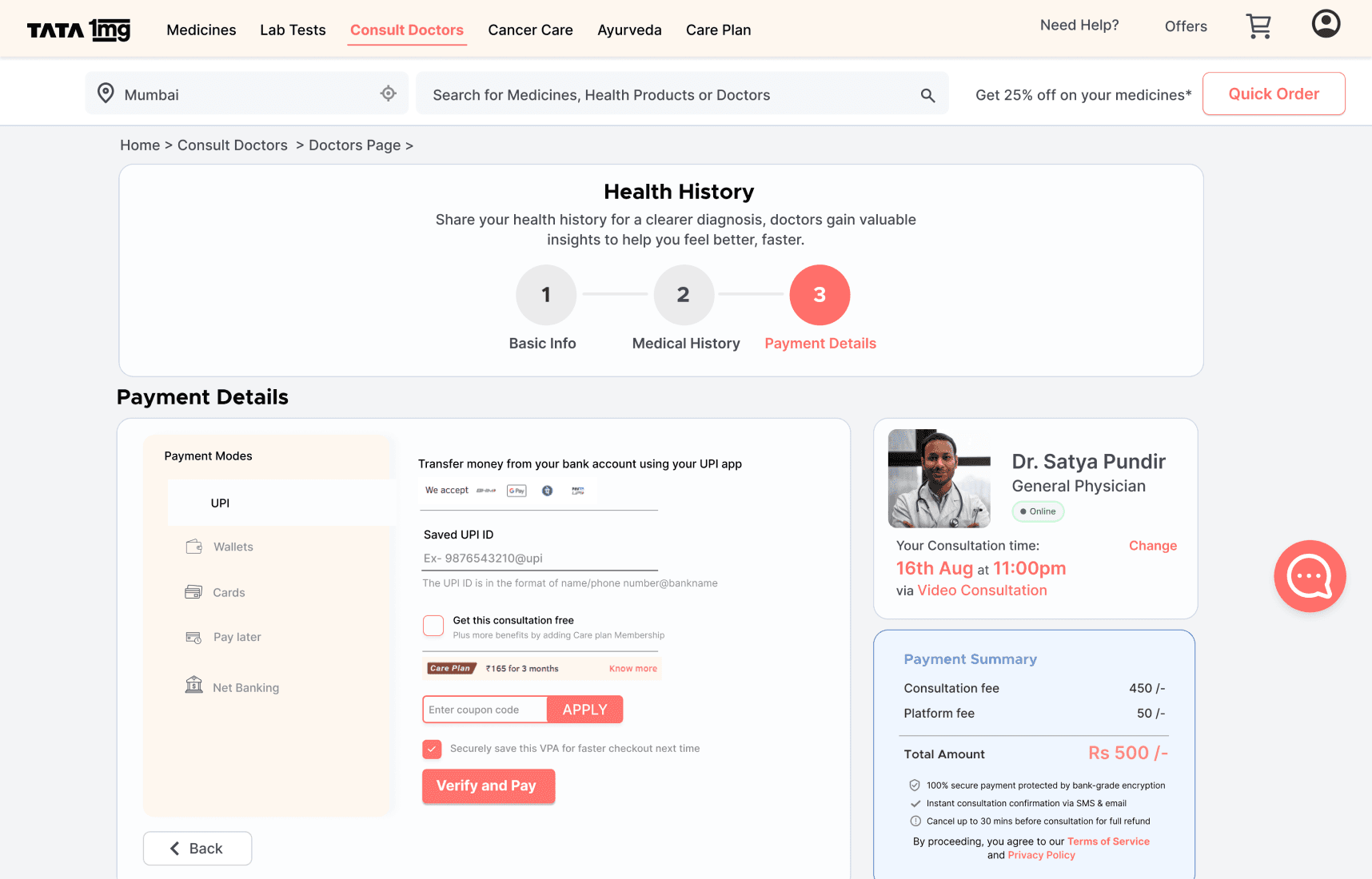
When payment comes before slot selection, users lose control over the primary decision factor, causing abandonment and regret.

Pre/post - Consultation Dialogue Builds Doctor-Patient trust
Enabling asynchronous pre/post consultation dialogue, where patients learn about doctor's approach and philosophy and ask questions builds trust.

Privacy Assurance converts skepticism into engagment
Explicit communication about data encryption, doctor verification, identity confirmation throughout the booking flow converts abstract worry into concrete reassurance and trust.
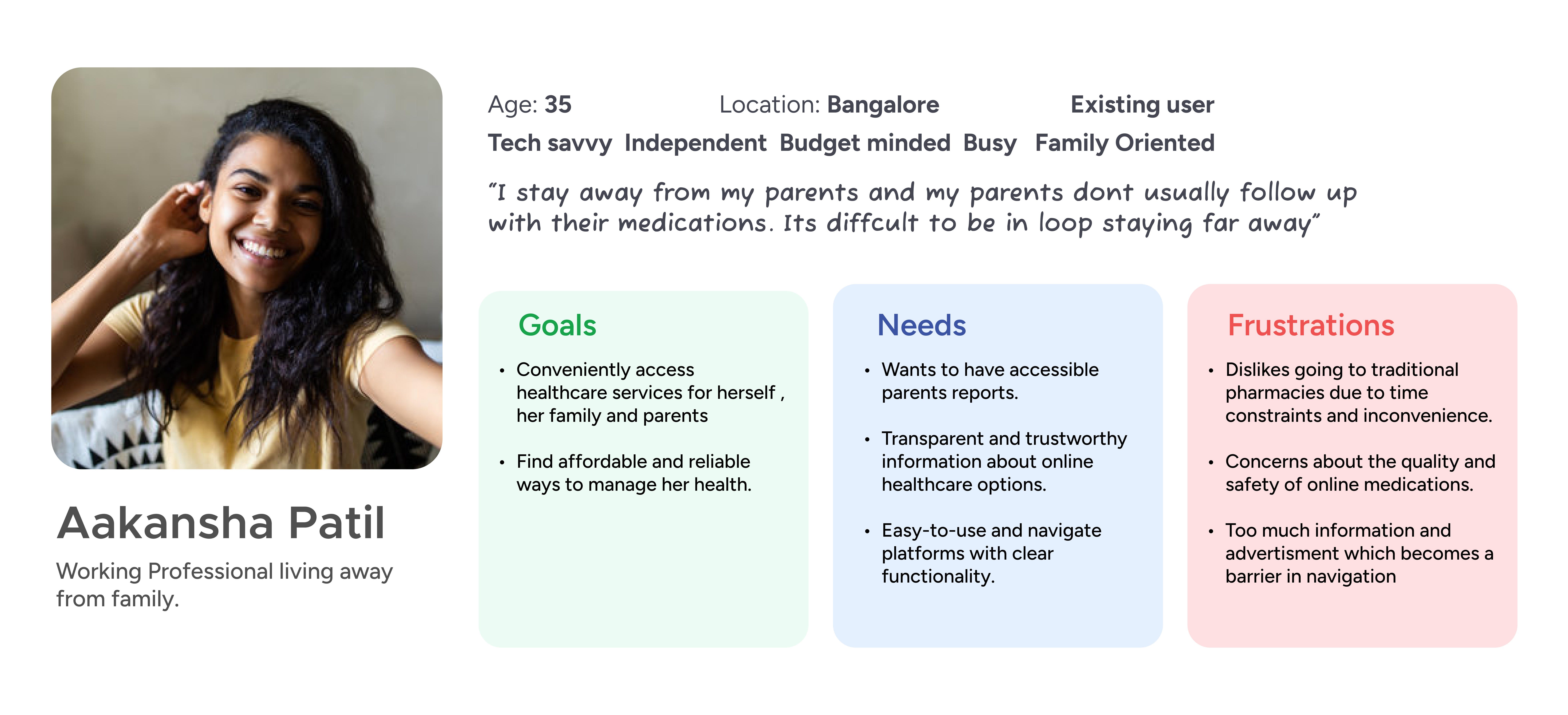
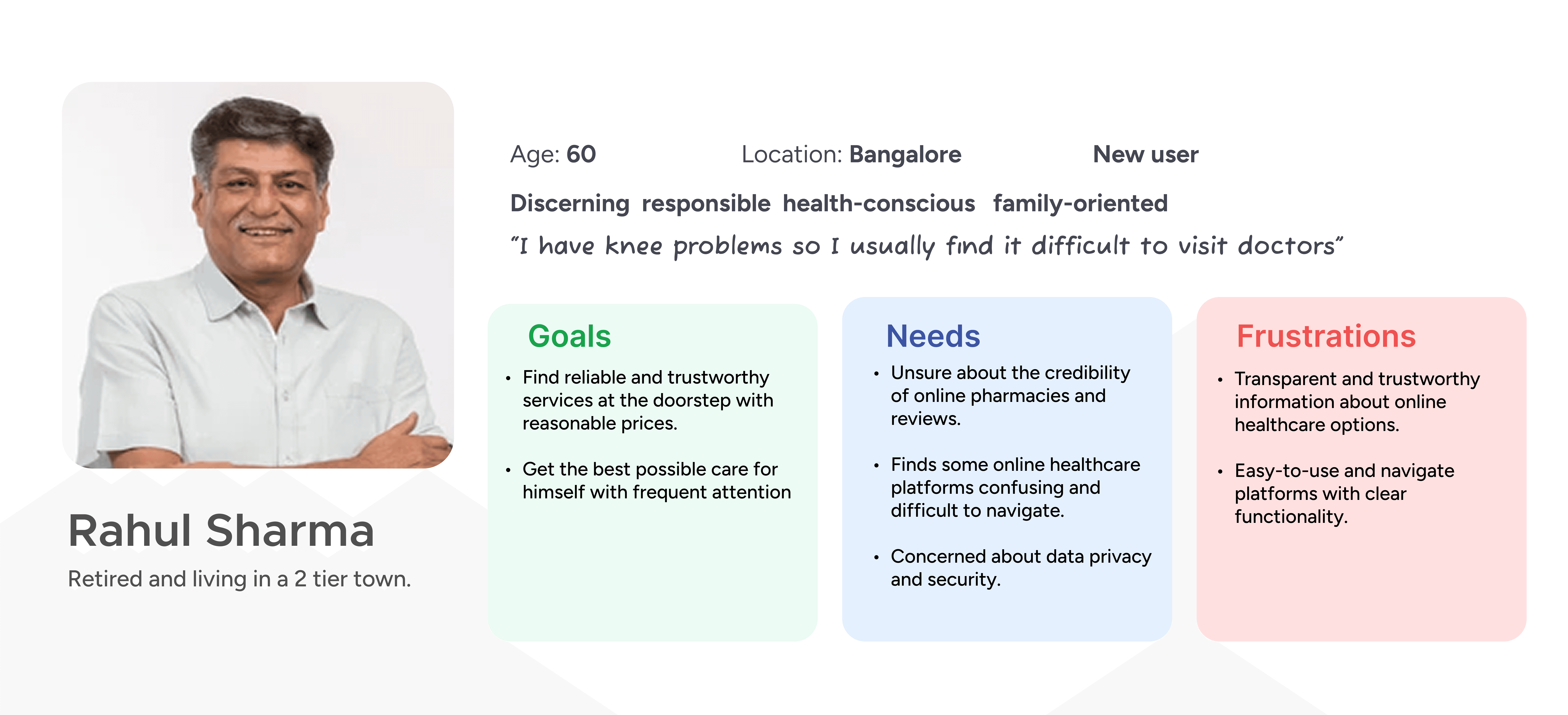
User Personas
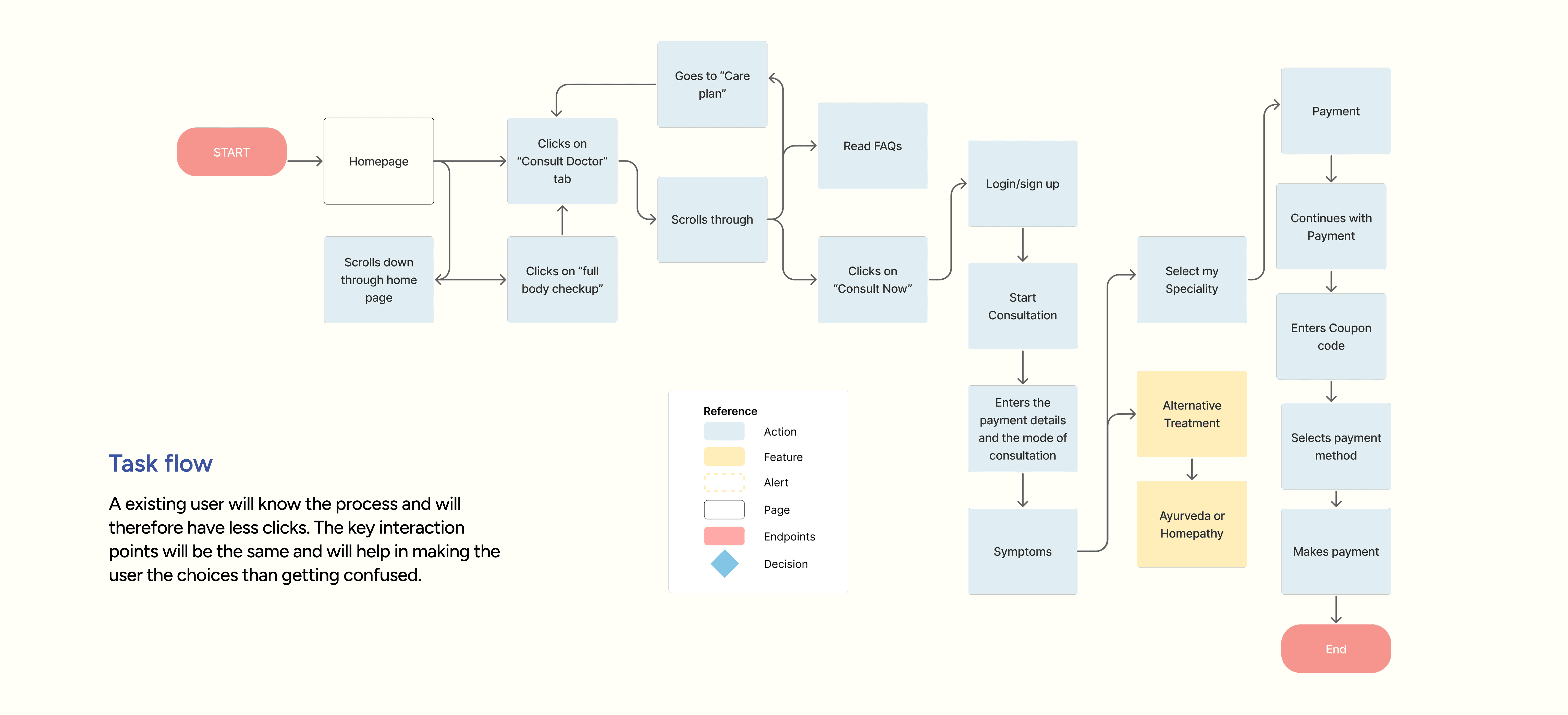
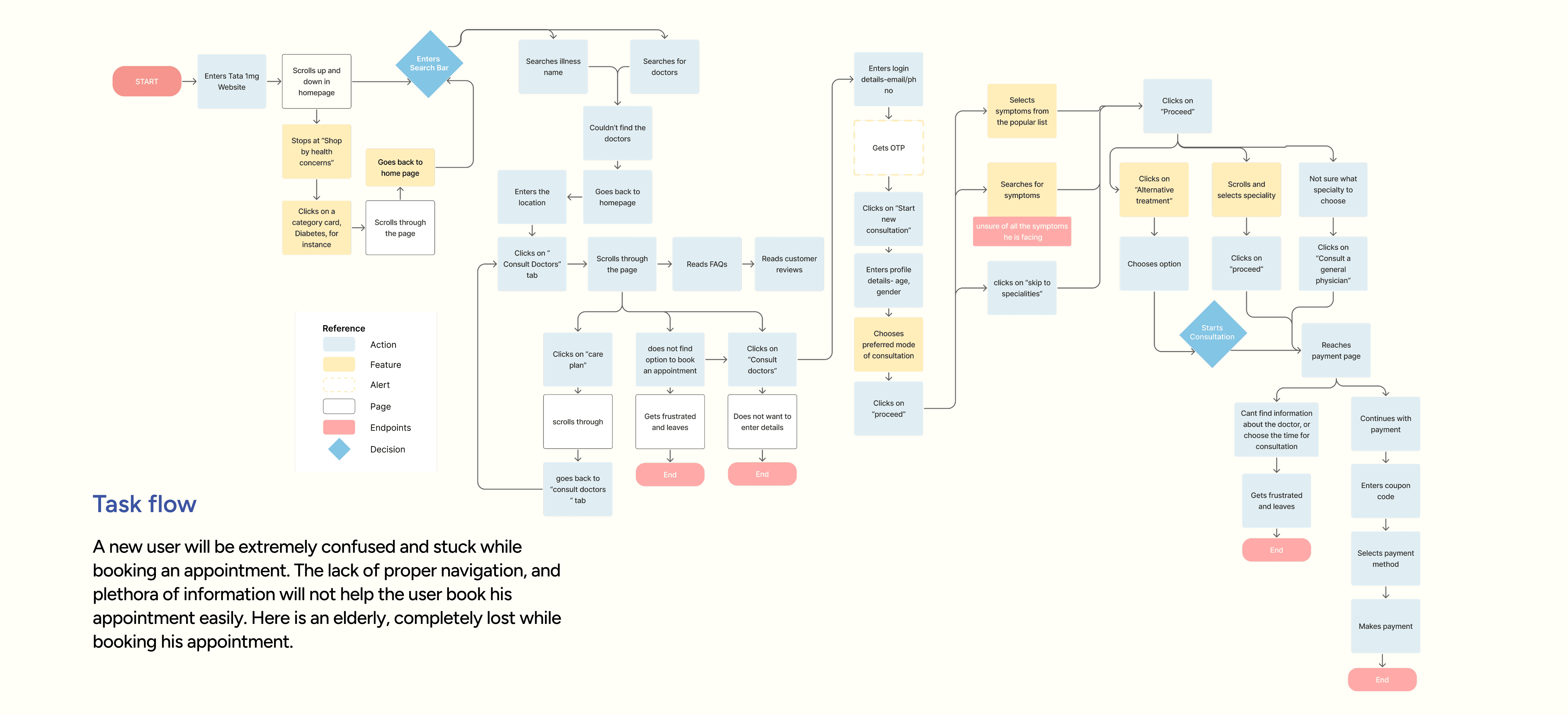
We created personas for two distinct age groups, each with unique motivations and habits. By mapping their task flows, we uncovered different use cases, edge cases, and key considerations to guide our redesign.
- Press Enter or Space to toggle zoom magnifier. Use arrow keys to move the magnifier. Press Escape to exit zoom mode.Zoom deactivated
- Press Enter or Space to toggle zoom magnifier. Use arrow keys to move the magnifier. Press Escape to exit zoom mode.Zoom deactivated
- Press Enter or Space to toggle zoom magnifier. Use arrow keys to move the magnifier. Press Escape to exit zoom mode.Zoom deactivated
- Press Enter or Space to toggle zoom magnifier. Use arrow keys to move the magnifier. Press Escape to exit zoom mode.Zoom deactivated
- Press Enter or Space to toggle zoom magnifier. Use arrow keys to move the magnifier. Press Escape to exit zoom mode.Zoom deactivated
- Press Enter or Space to toggle zoom magnifier. Use arrow keys to move the magnifier. Press Escape to exit zoom mode.Zoom deactivated
- Press Enter or Space to toggle zoom magnifier. Use arrow keys to move the magnifier. Press Escape to exit zoom mode.Zoom deactivated
- Press Enter or Space to toggle zoom magnifier. Use arrow keys to move the magnifier. Press Escape to exit zoom mode.Zoom deactivated
How might we?
"How can we create a trustworthy relationship with patients by creating a reliable booking experience from finding a doctor to the post-care consultation?
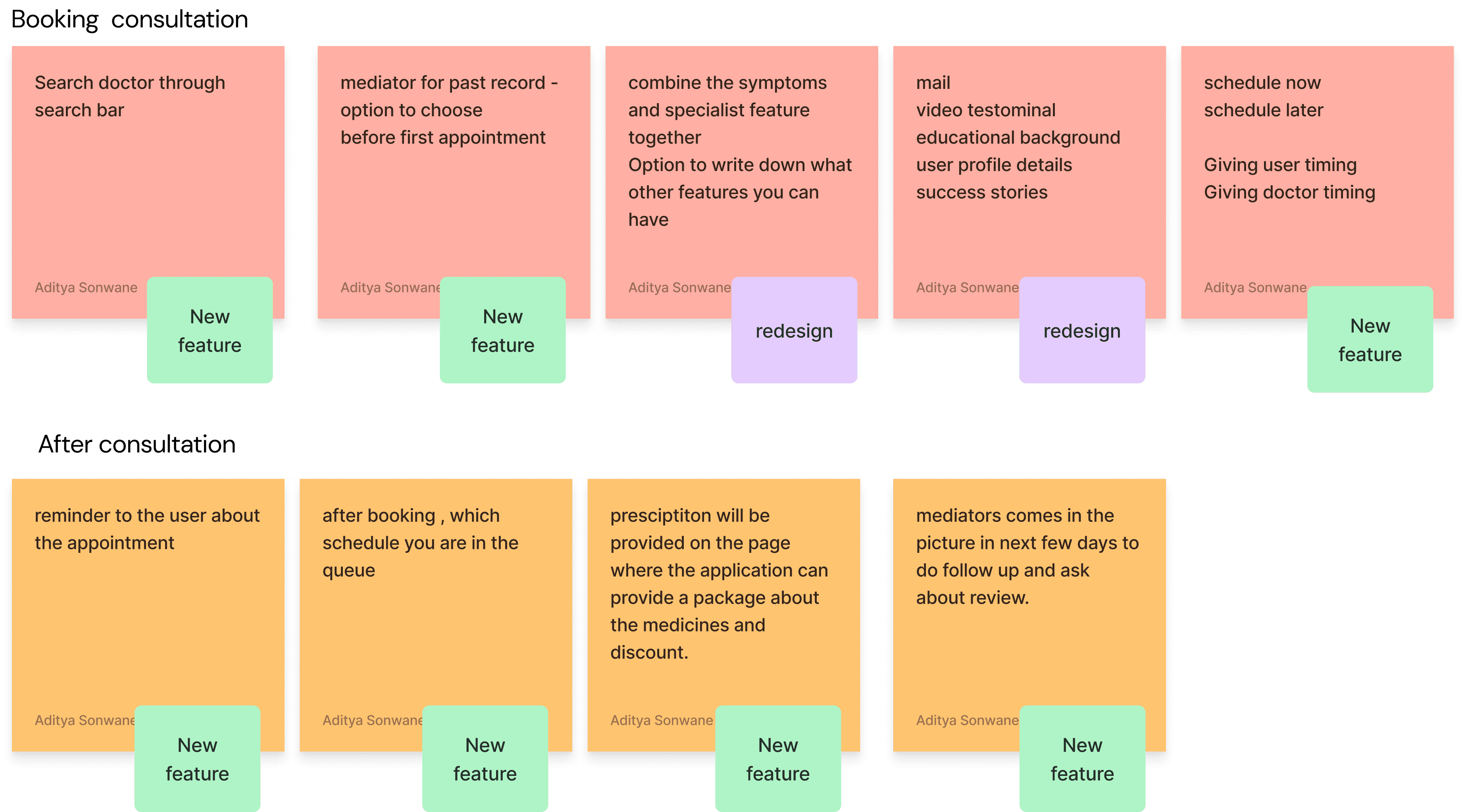
Ideations
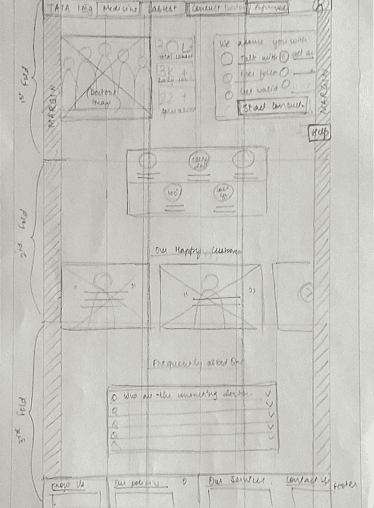
We brainstormed new features and redesigned filters based on pain points, use cases, and research insights. This was supplemented by secondary research reviewing features across healthcare and booking platforms.
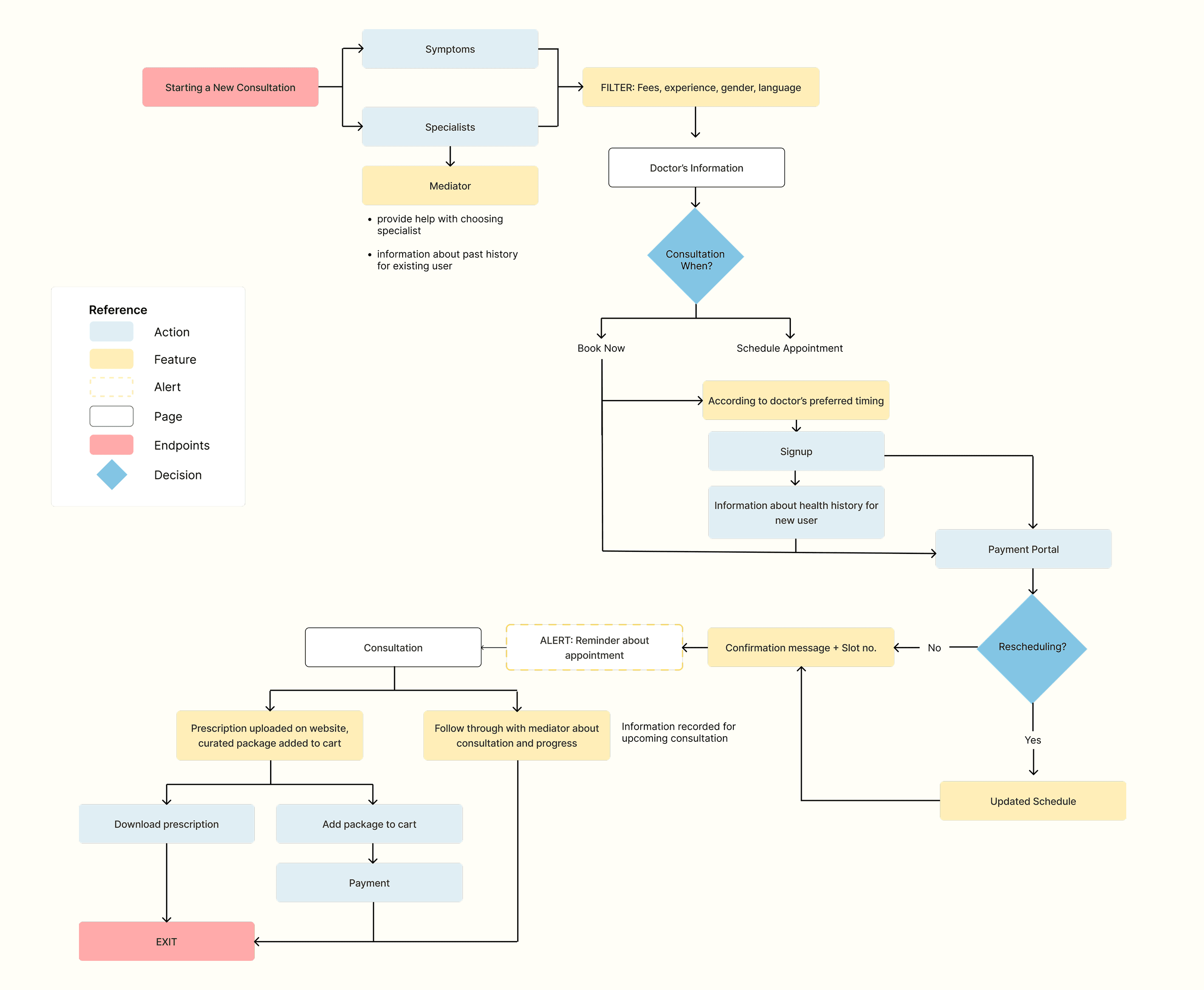
Proposed ( Ideal ) User Flow
By focusing on the key information and insights, we tried to create a smooth user flow keeping in mind the different use cases.
Proposed Information Architecture
We reorganized information across sections and pages with clearer hierarchies, creating a more comprehensive information architecture for the feature.
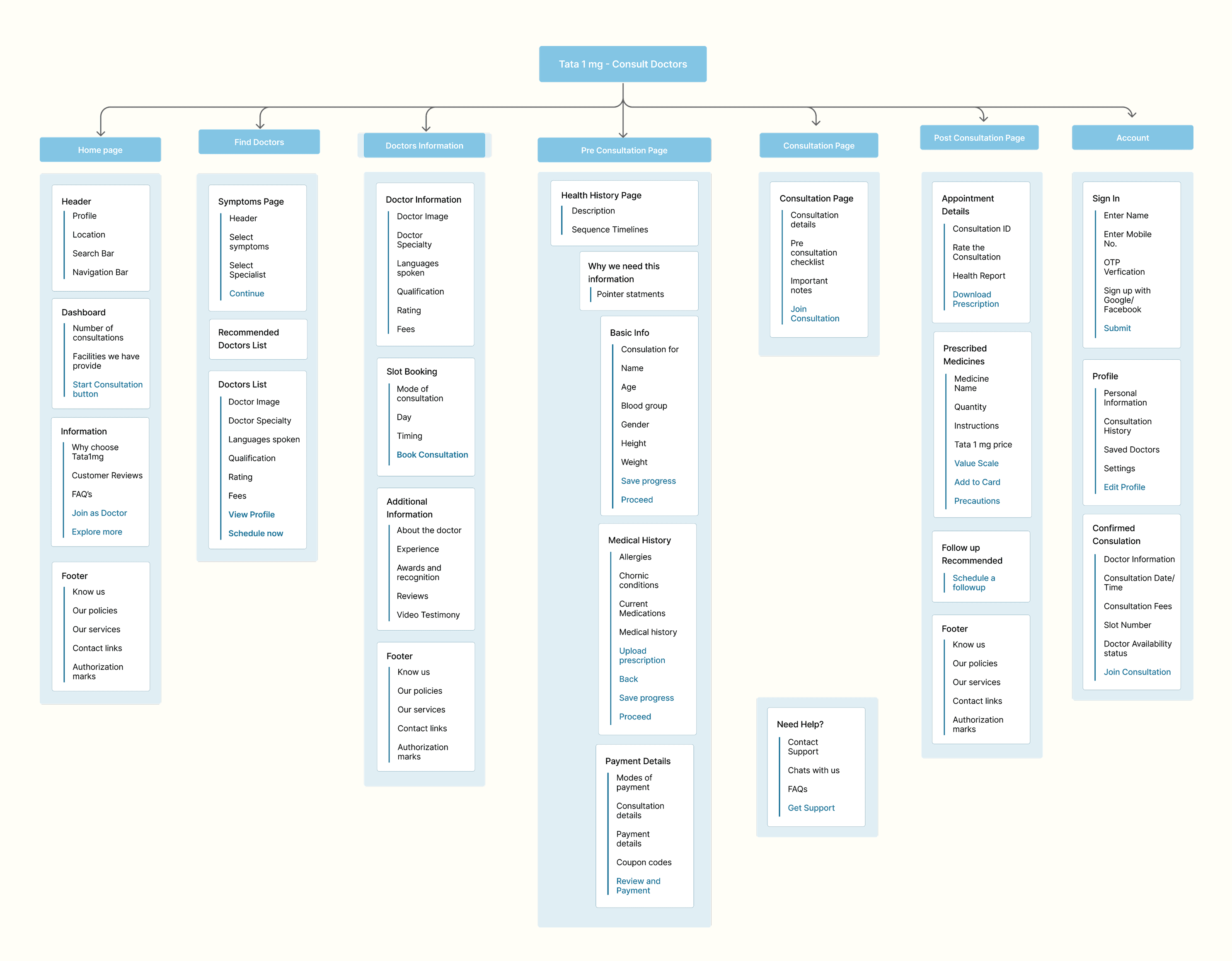
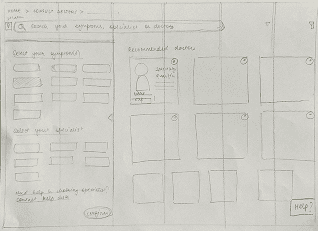
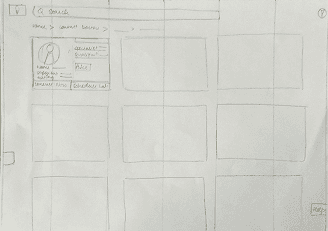
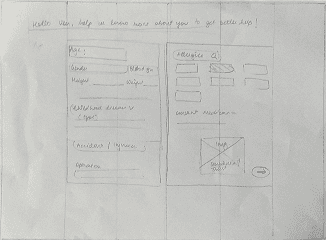
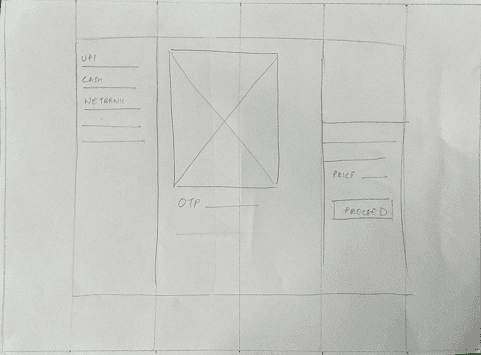
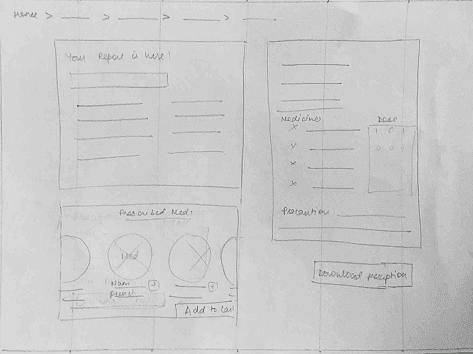
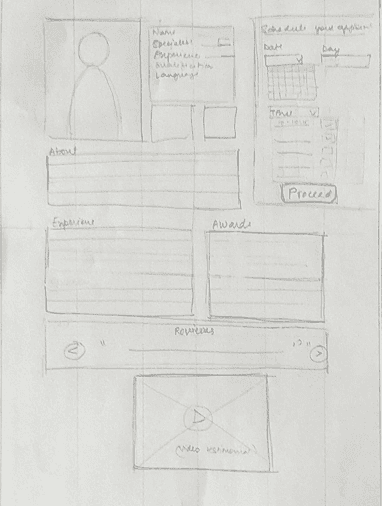
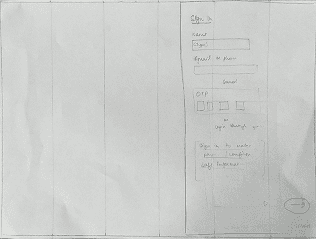
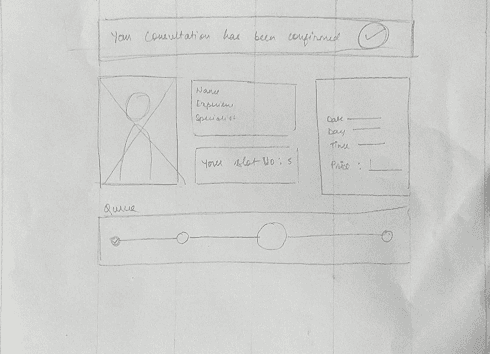
Paper prototypes

Redesigned design system
The existing design system lacked colors and features that could build user trust and smooth navigation. We experimented with a more diverse color palette to create a stronger, trustworthy design system.
User testing
We tested screens with 6 users using time-on-task metrics and usability checkpoints. This revealed major and minor challenges, helping us refine a more trustworthy approach.
UX Features
Doctor Info Card
The user testing revealed more nuanced user parameters to assess doctors credentials while choosing doctors.
As a busy teacher and mom, I really need to know a few things right away. First, the doctor's specialization and how many years of experience they have, that builds trust. Then, I'd definitely look at their patient ratings and reviews to see what others say, and of course, their availability and consultation fee are super important for my schedule and budget.
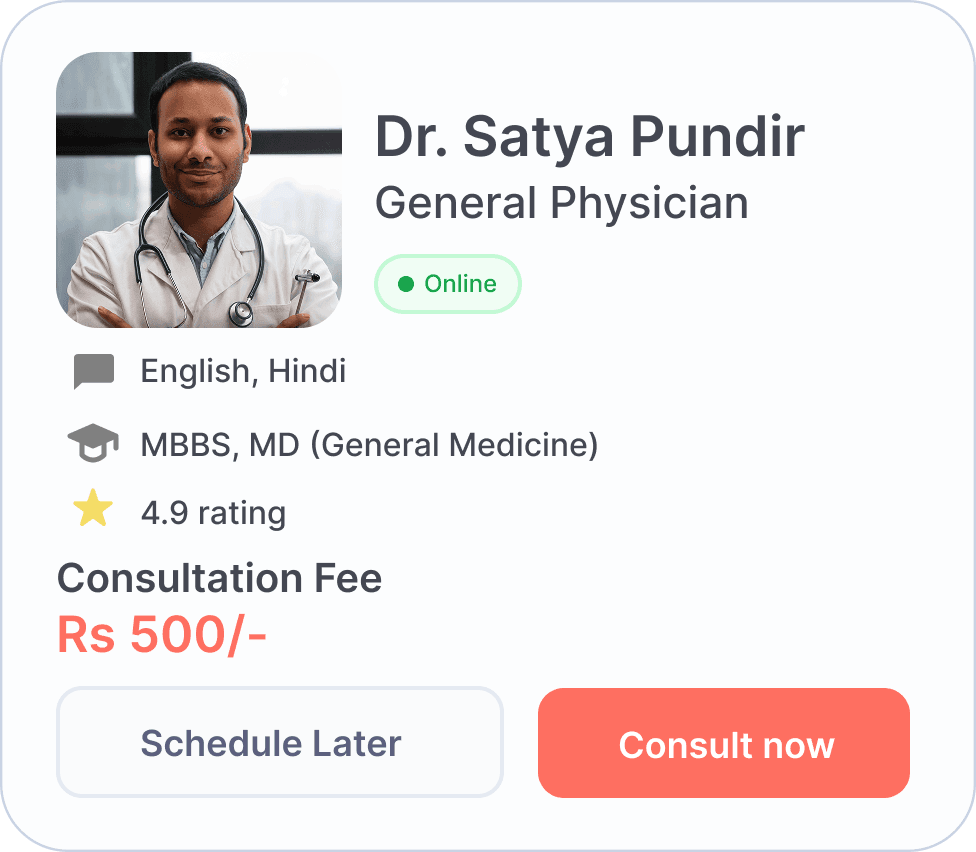
Older version
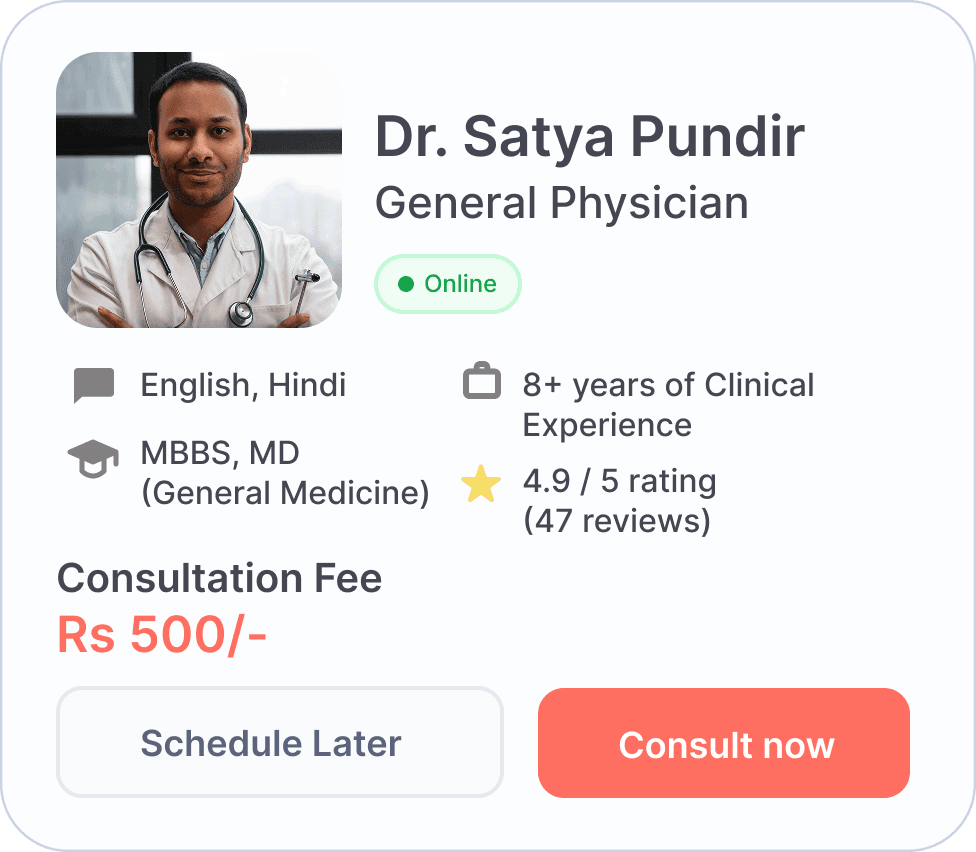
Iterated Version
With listing of experience and
revised ratings and reviews.
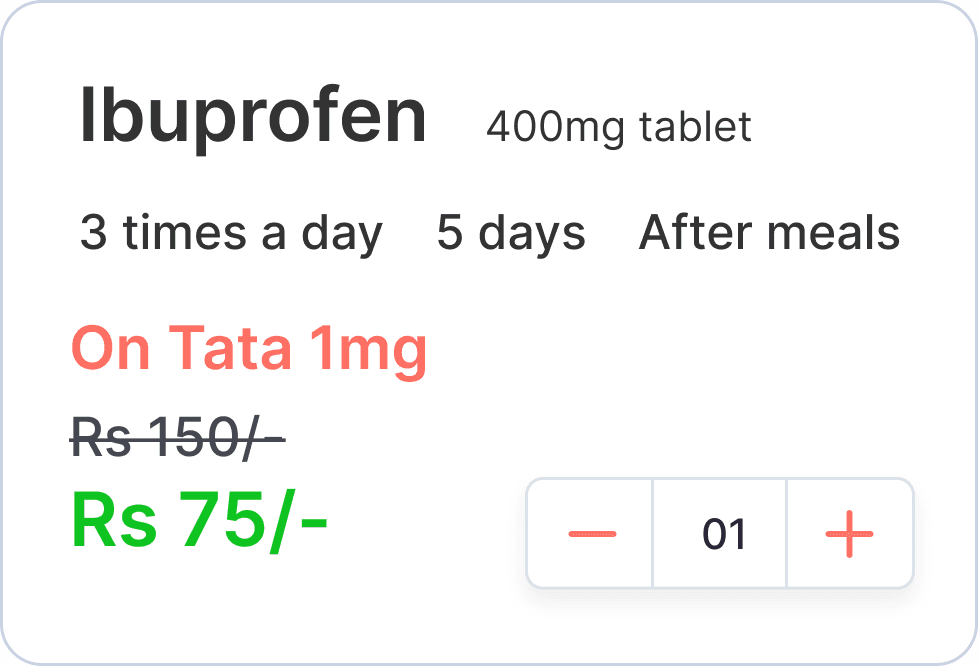
Medicine listing Info Cards
The medicine listing after consultation serves as the key gateway to Tata 1mg's product services. It needs to communicate both information and functionality clearly to guide users effectively.
The layout for Ibuprofen is pretty clear with the dosage and how to take it, like 3 times a day and after meals. That's helpful for remembering for my kids or parents. But I'd really like to know *why* this medicine is for, like what it treats, and maybe a link to the product. Also I would like to know how many tablets will come in that price!
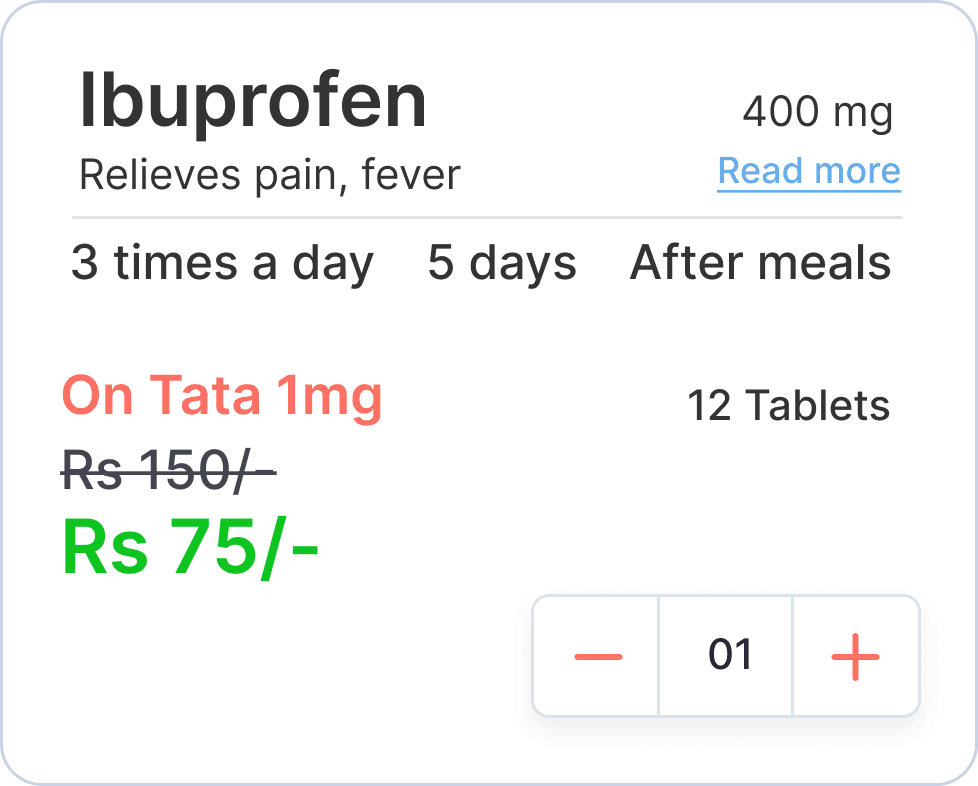
With listing of reasoning, link of the product
and number of tablets.
Edge case scenarios
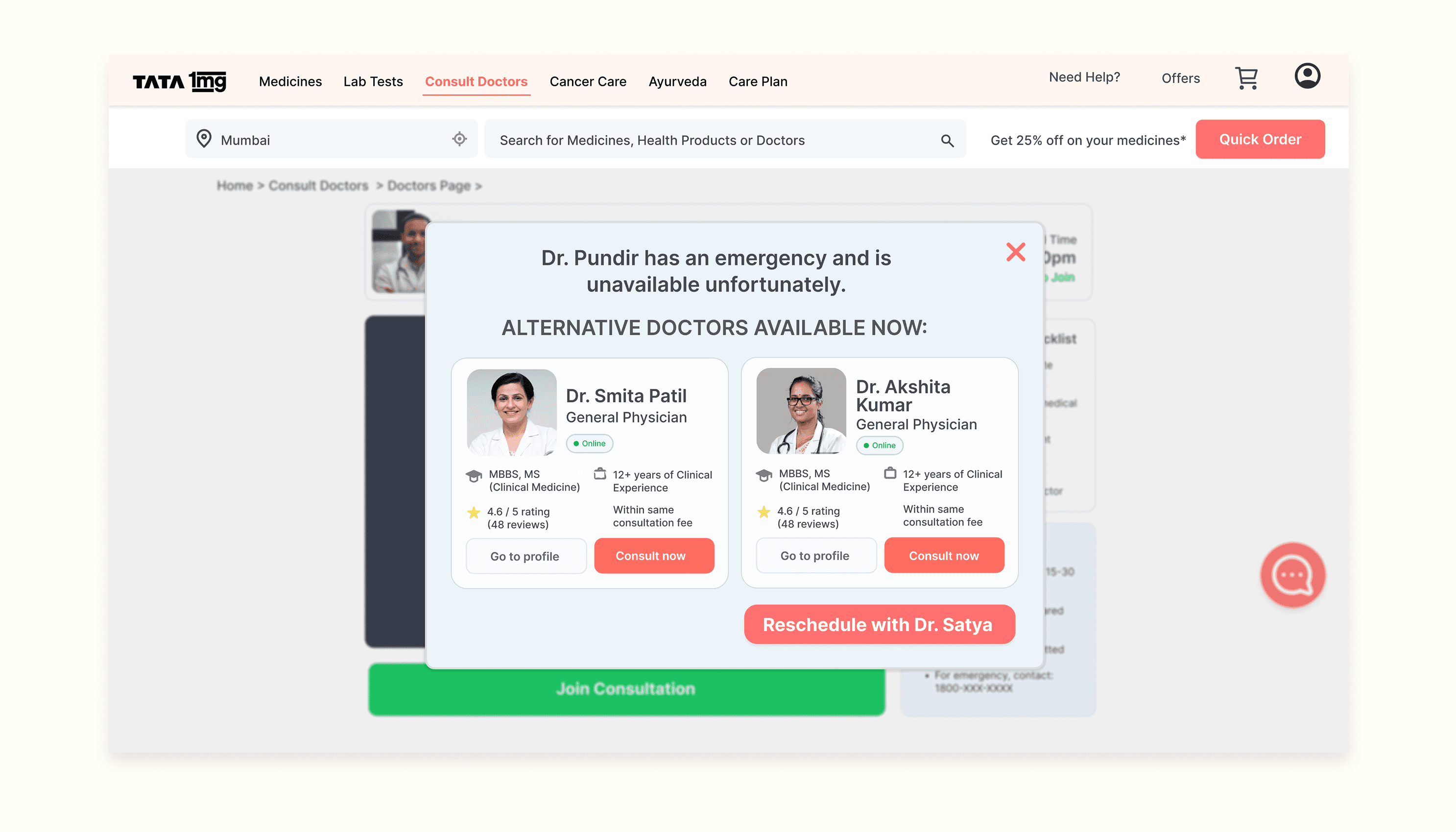
What if the Doctor cancels Last minute?
By providing the different doctors leading the users with more options to
UX writing
A existing user will know the process and will therefore have less clicks. The key interaction points will be the same and will help in making the user the choices than getting confused.
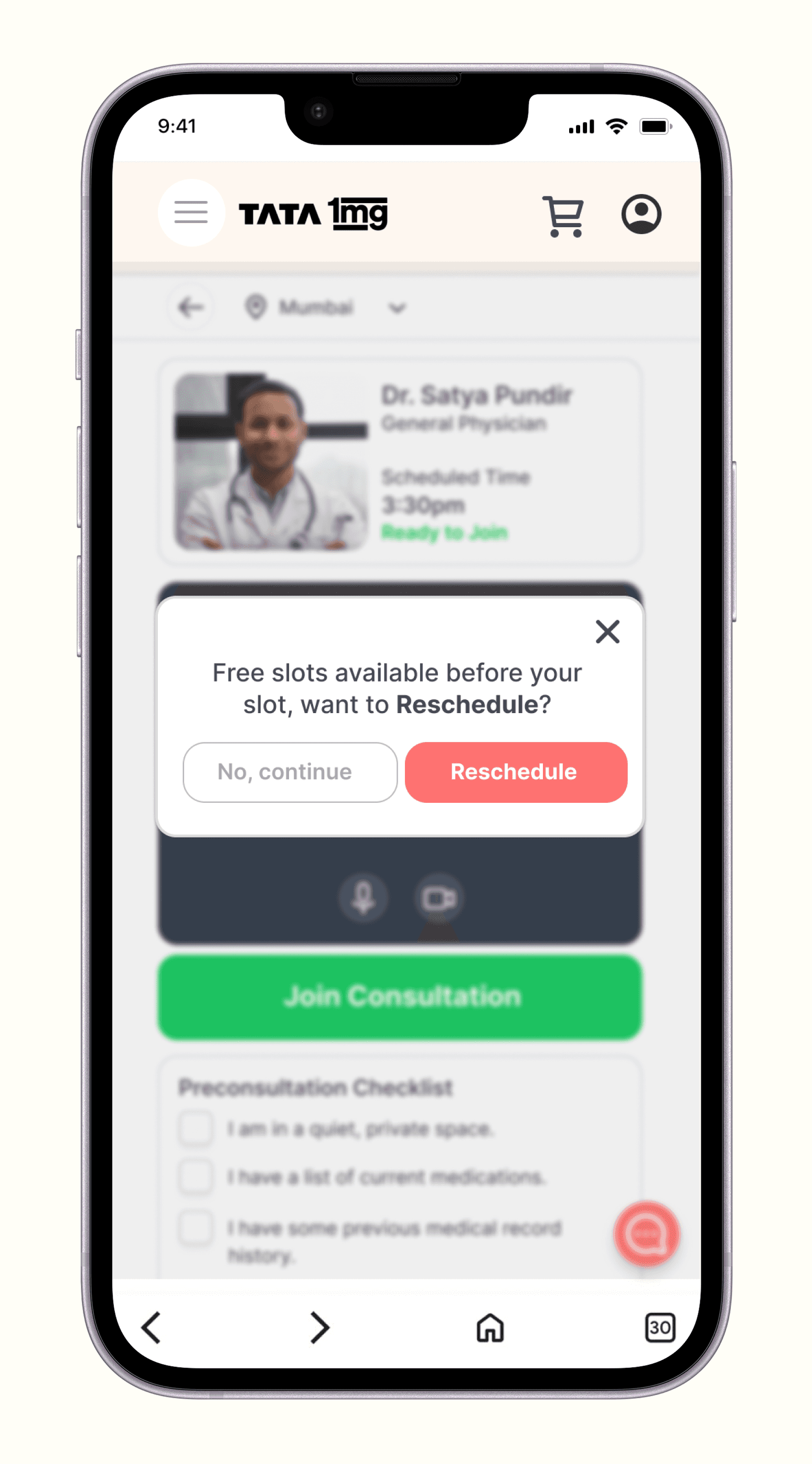
Option A With listing of reasoning
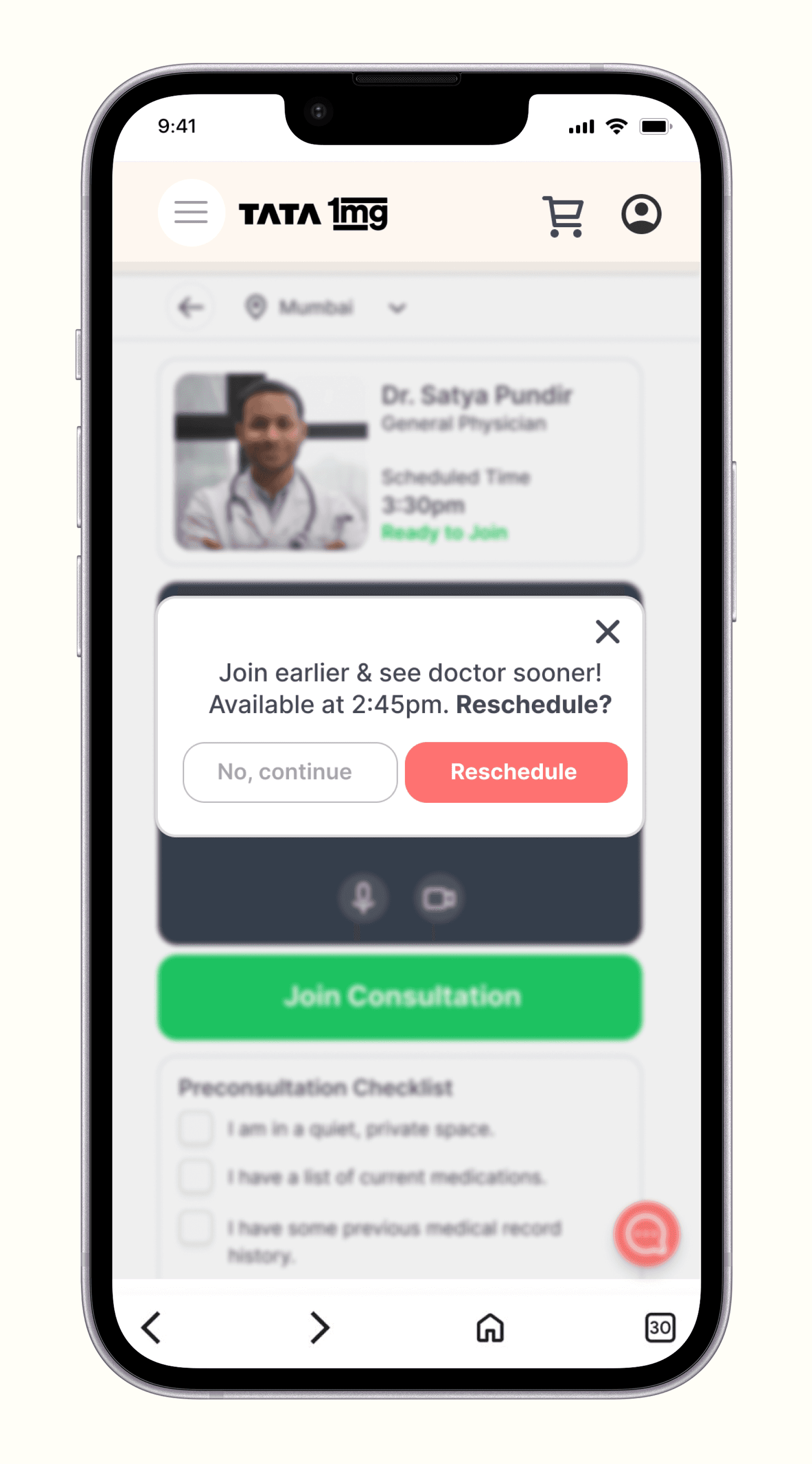
Option B With listing of reasoning
High fidelity Screens
A existing user will know the process and will therefore have less clicks. The key interaction points will be the same and will help in making the user the choices than getting confused.
Desktop Browser Versions
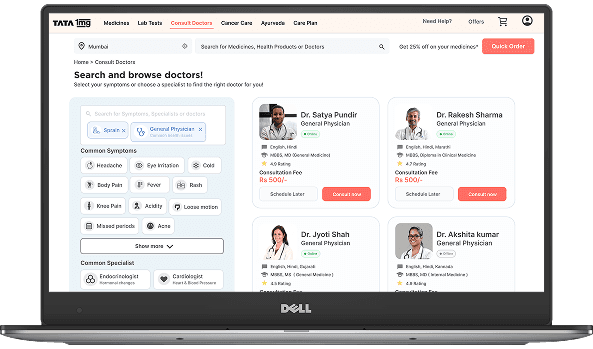
Browsing Doctors
With a feature to update and filter out doctors based on the selected symptoms and specialist, users can then easily find out which doctors suits their needs creating a efficient user flow.
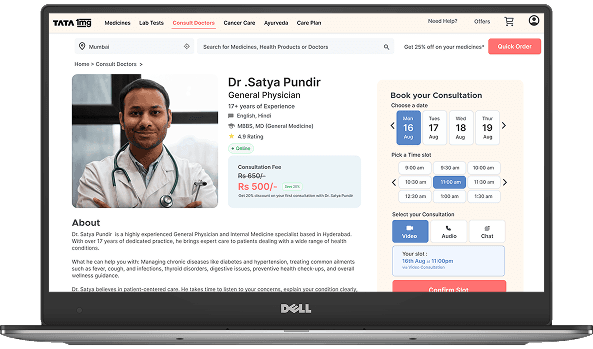
Reading Doctors About page
With Credible information about the doctor's qualification, experience, patients testimony, doctors video testimony, users can then make an efficient decision.
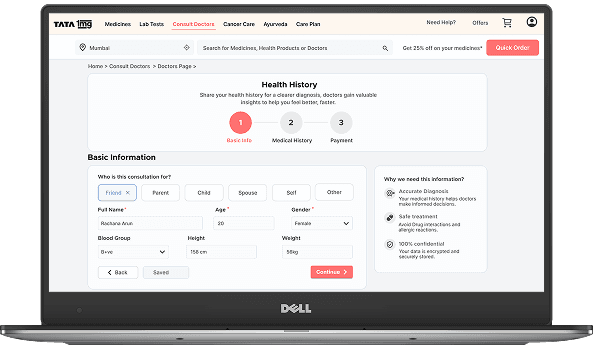
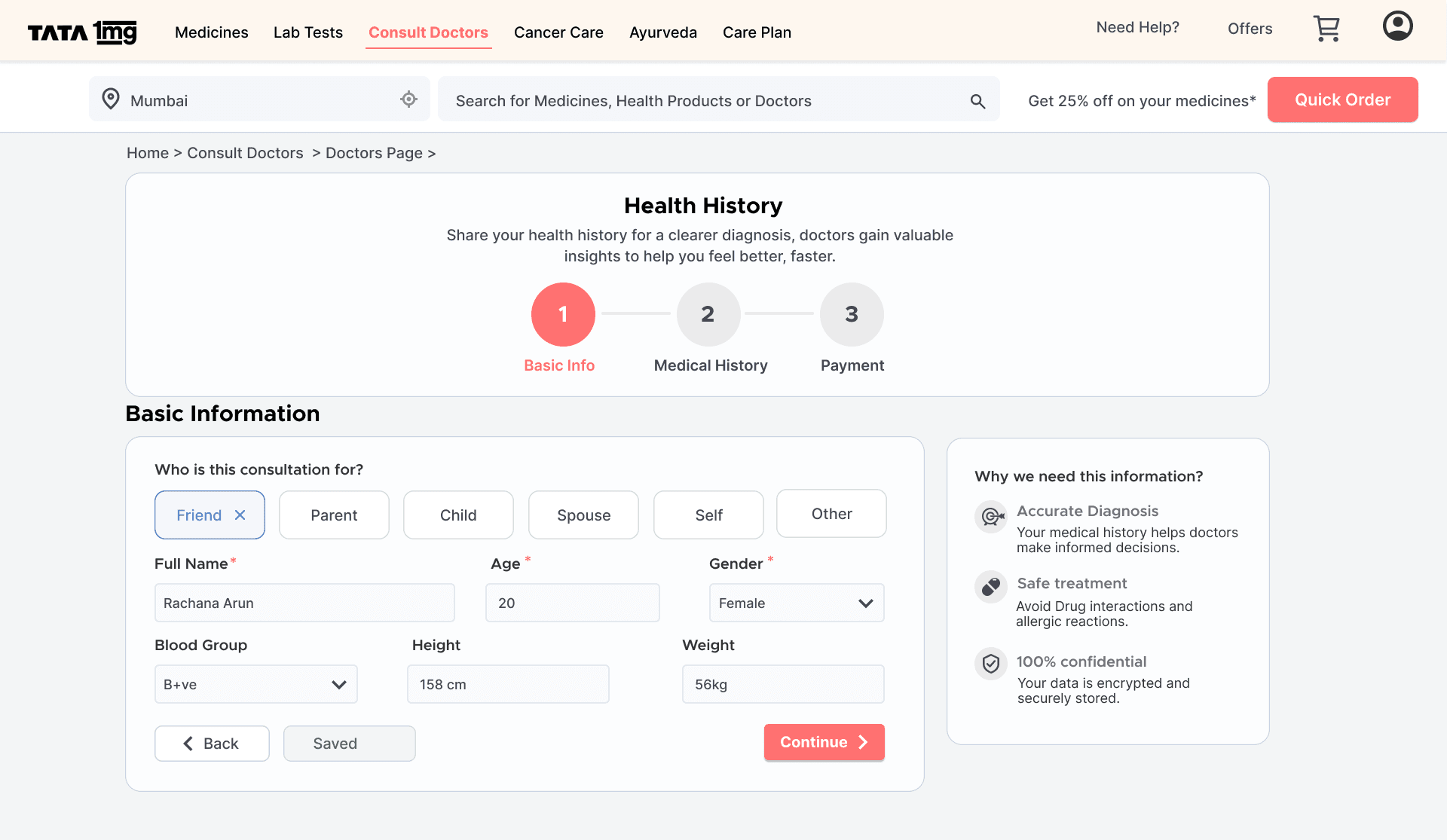
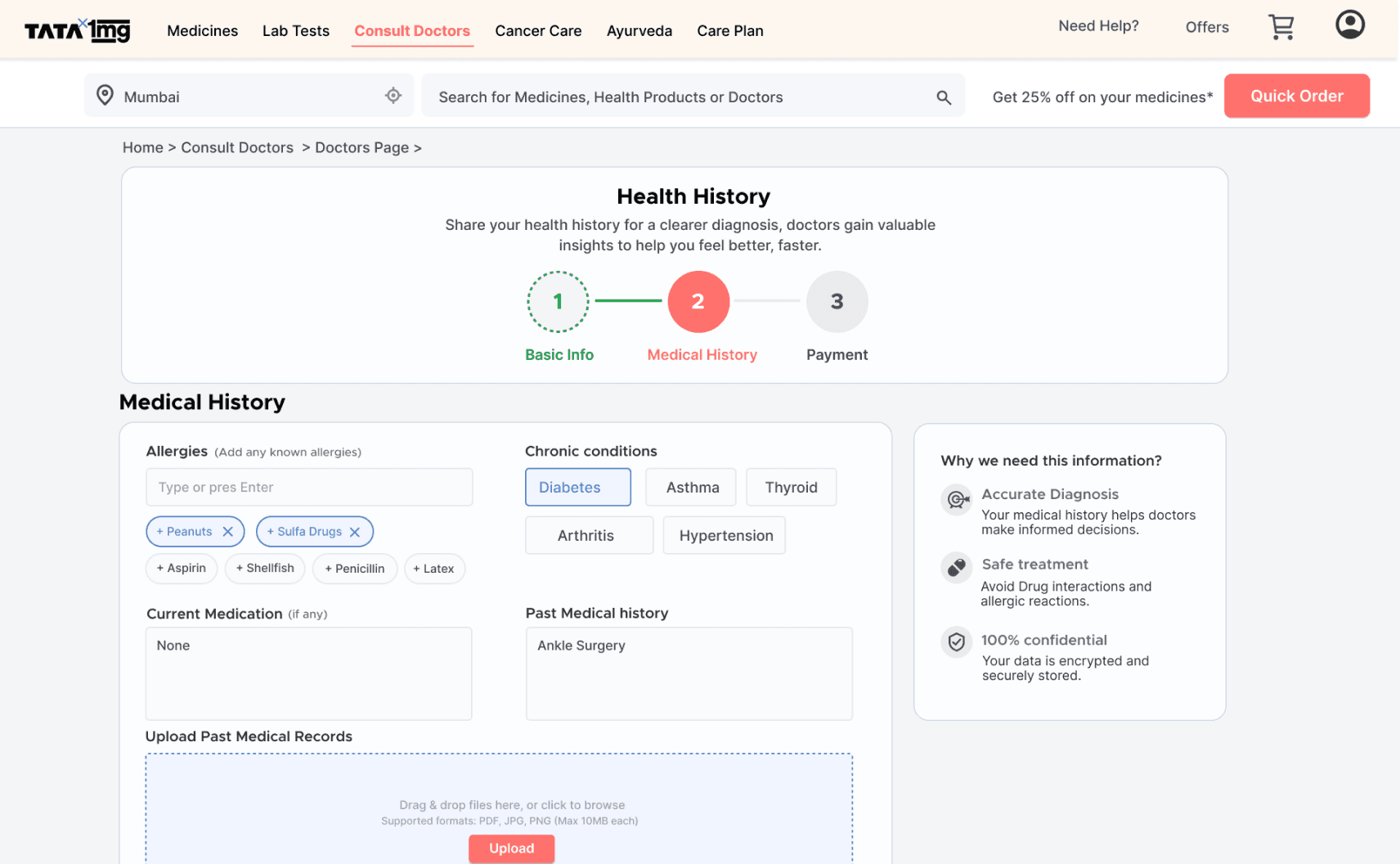
Health history Signup
With segregated and systematic health history form, the users can then easily complete the steps creating a frictionless important step.
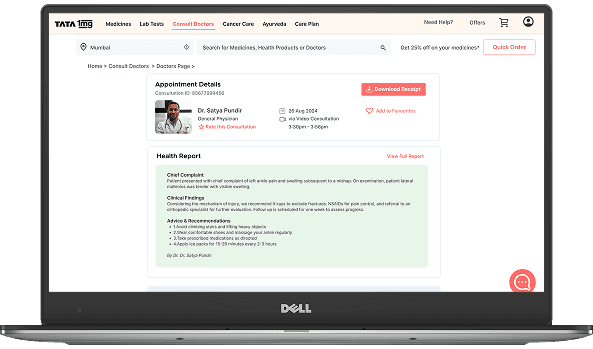
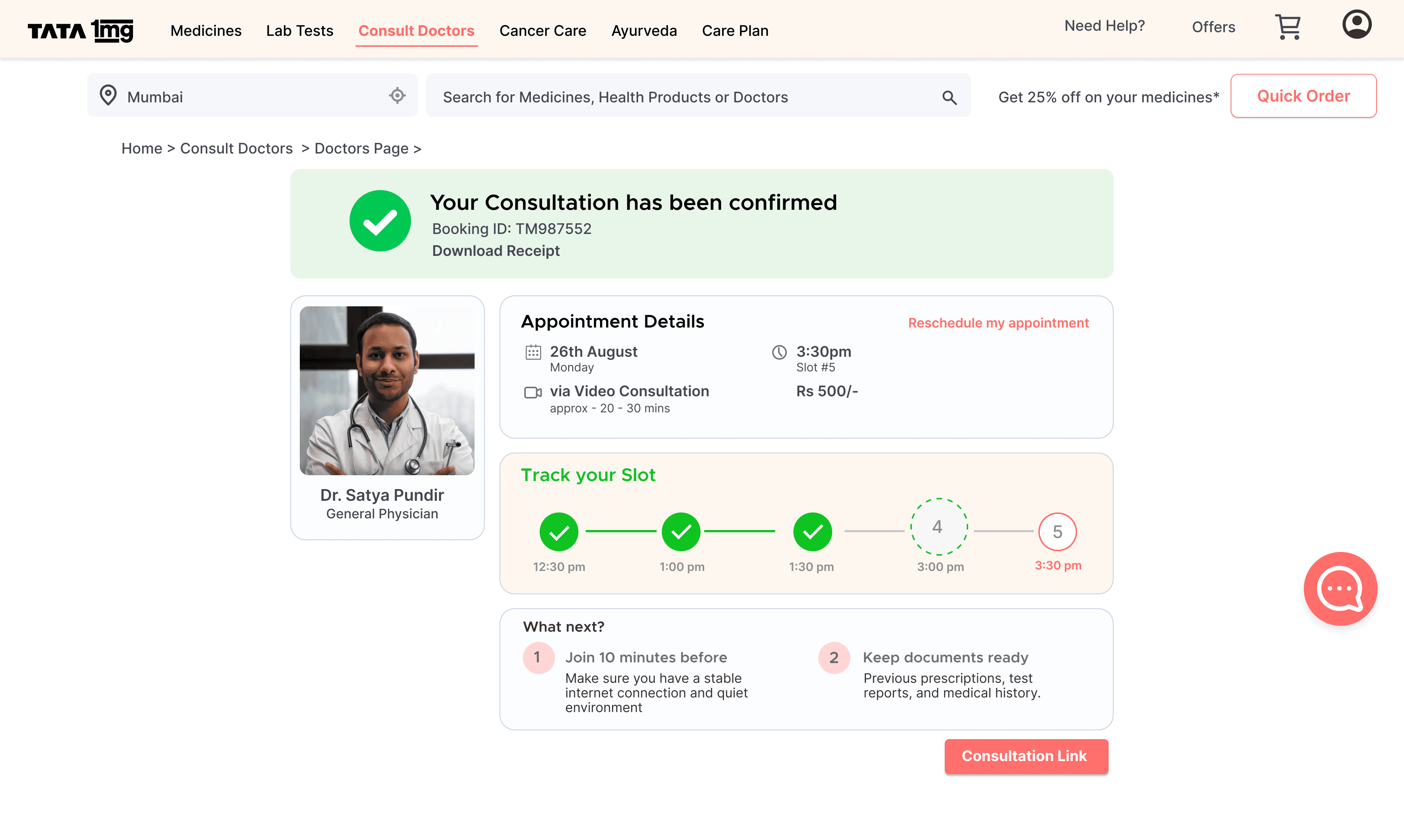
Post Consultation
The users receive a detailed prescription with medicine availability, cost which helps them get the same offline consultation experience.
Mobile Versions
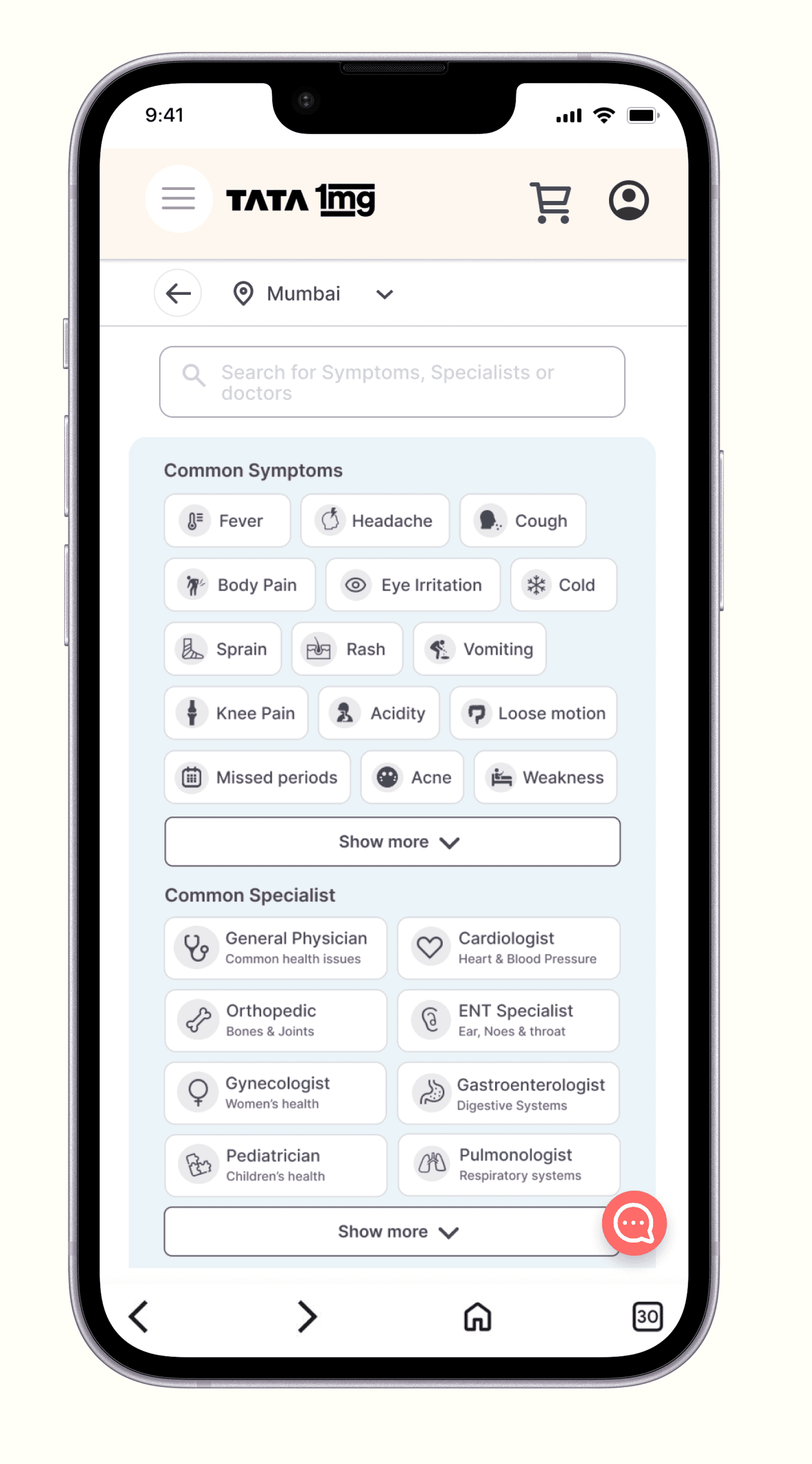
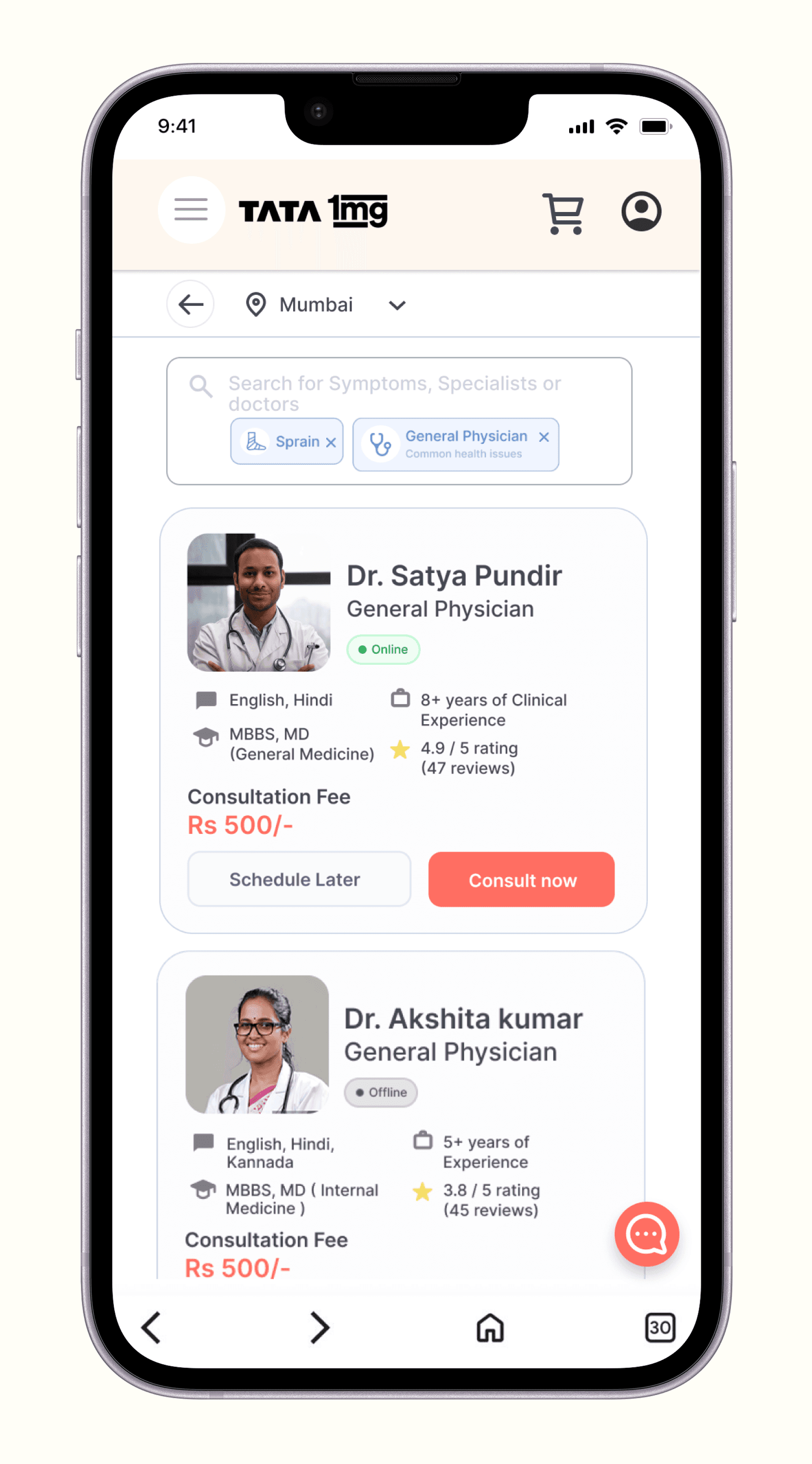
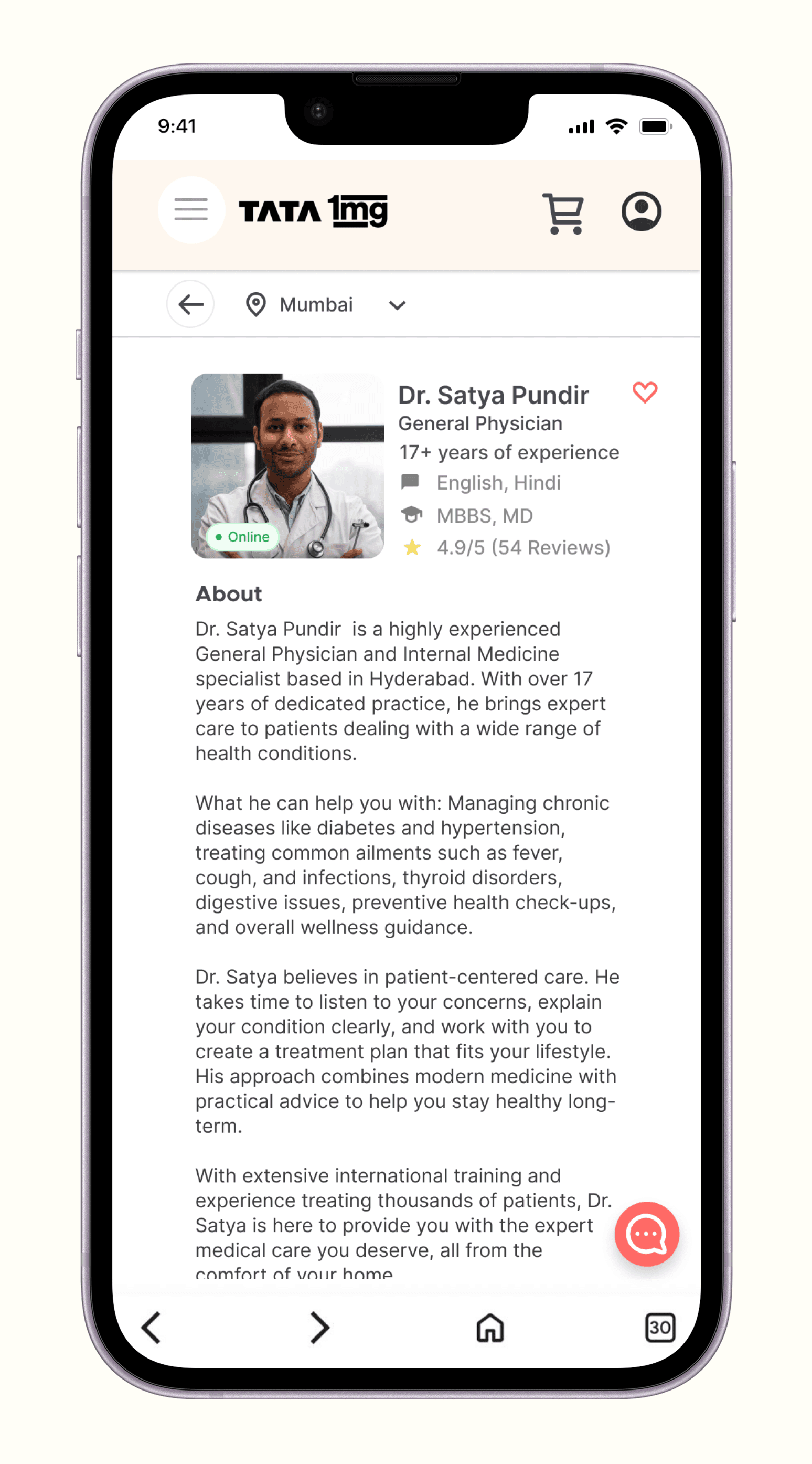
User story
We tried to have a small Sequenital Narrative of how the user might use the redesigned app! Enjoy :)
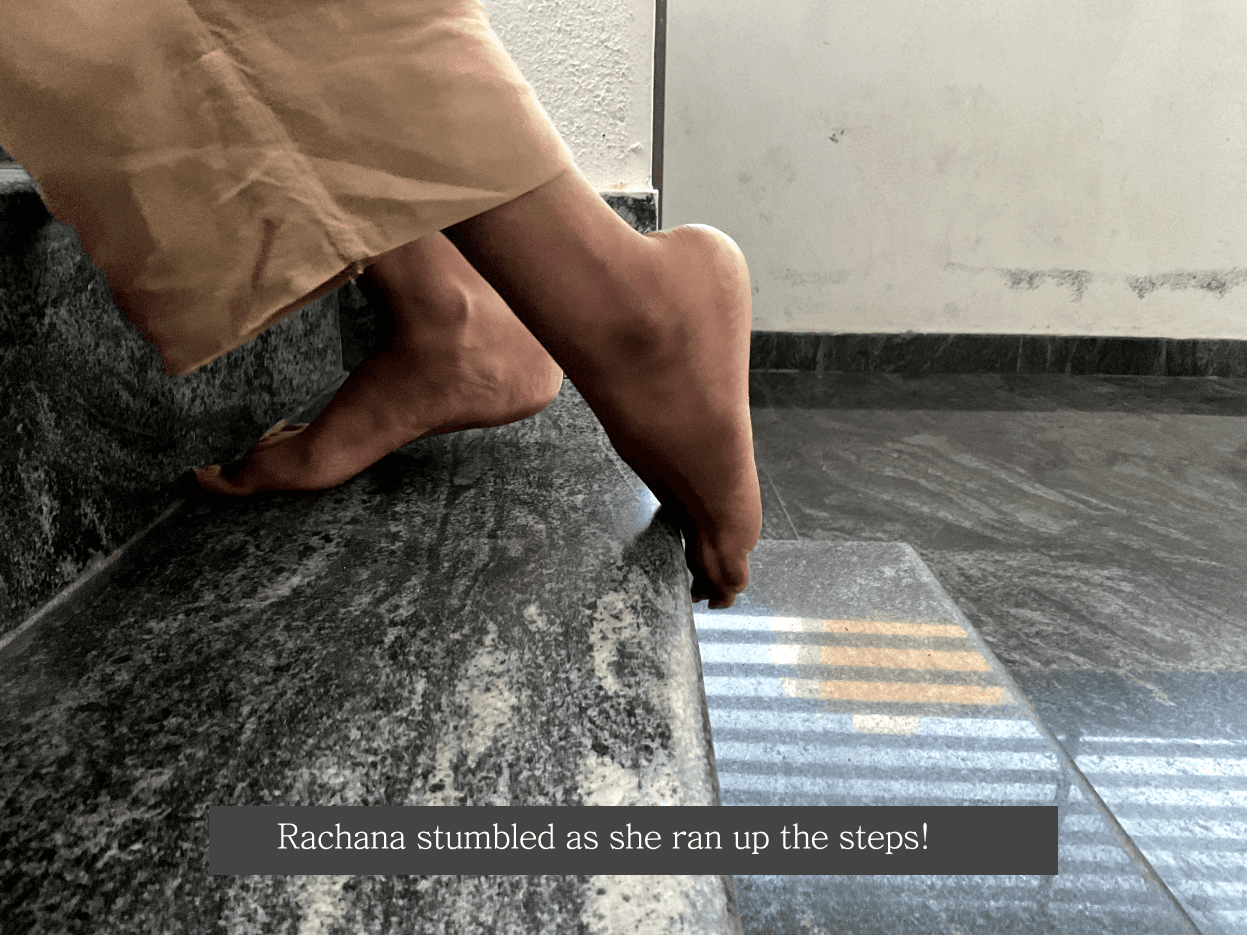
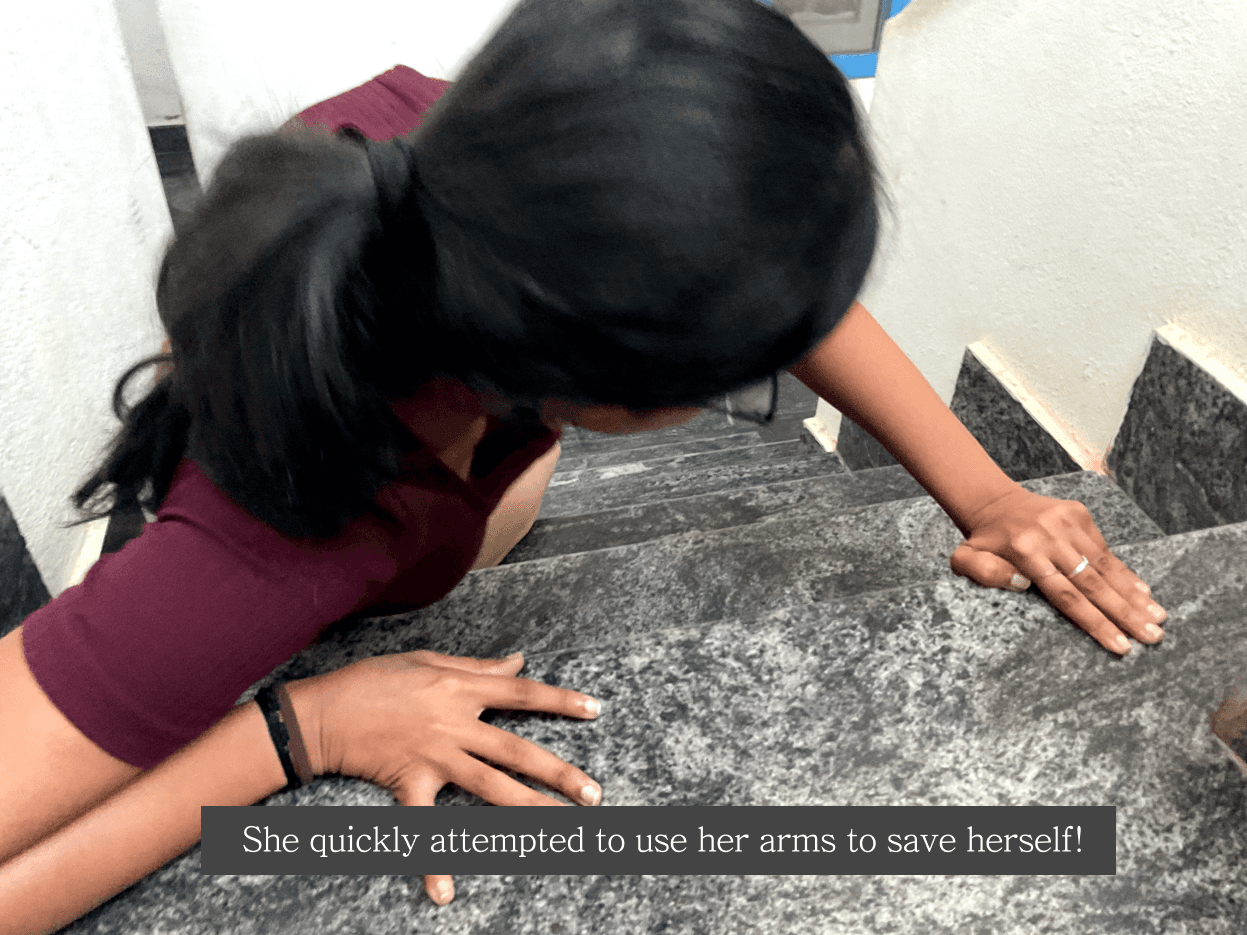
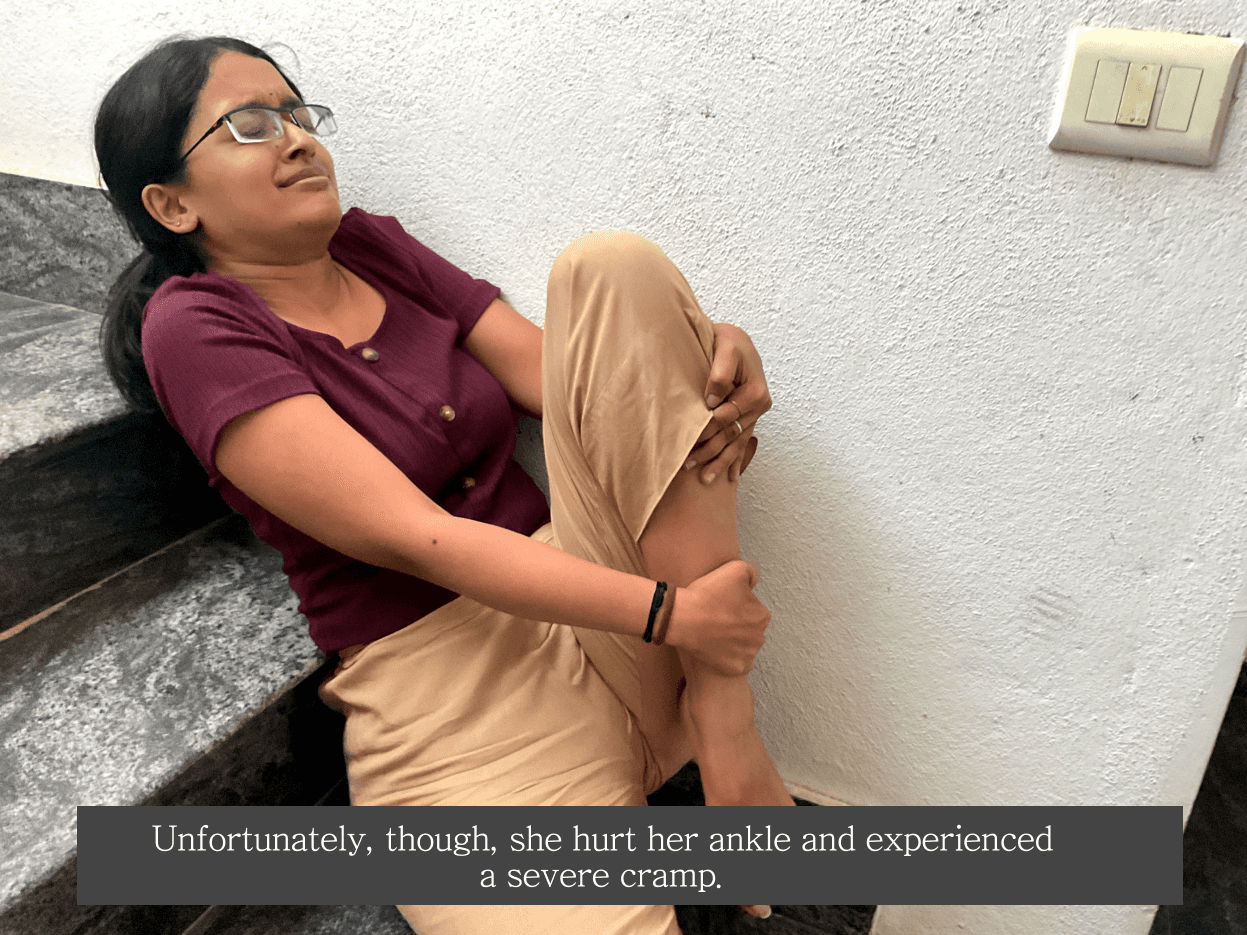
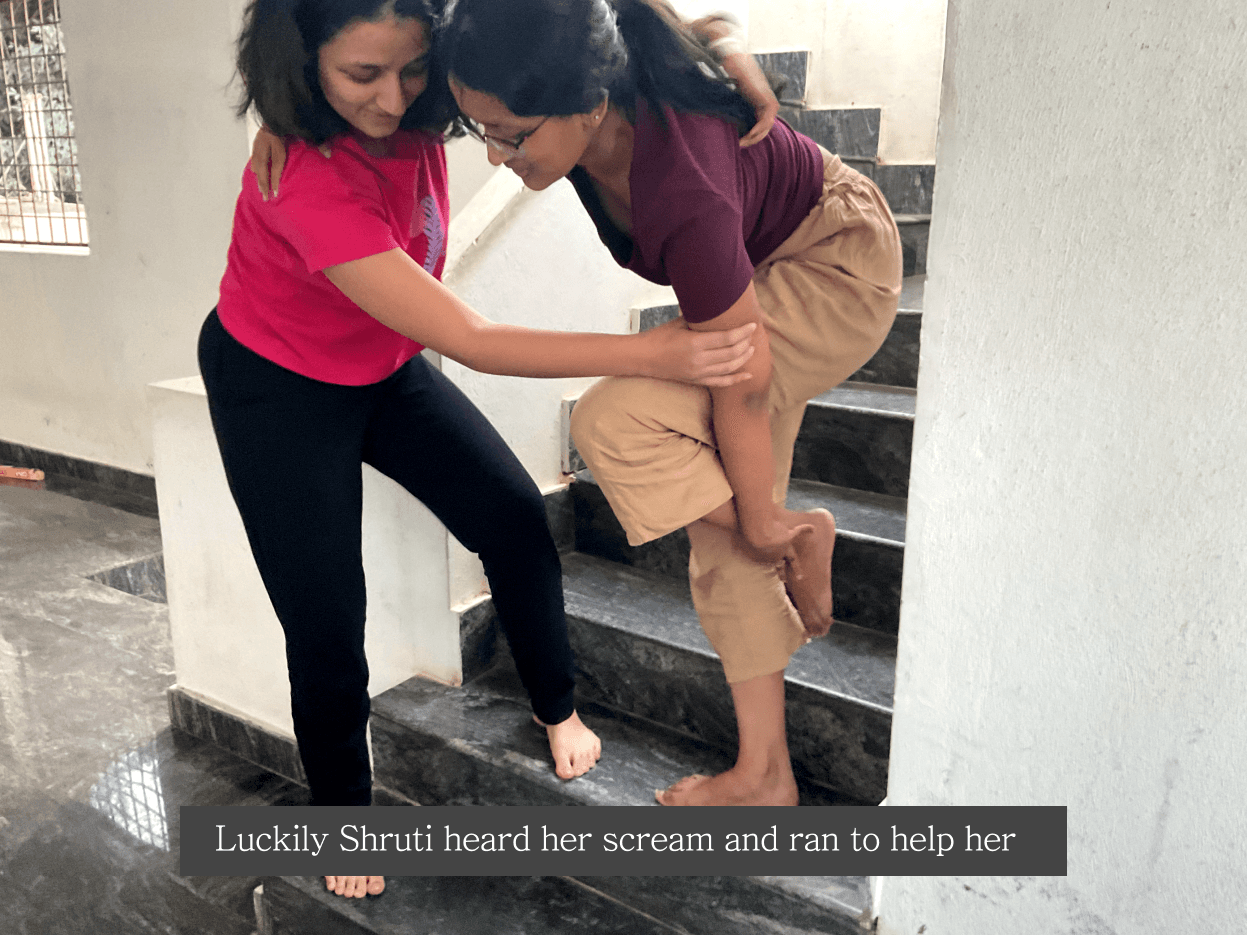
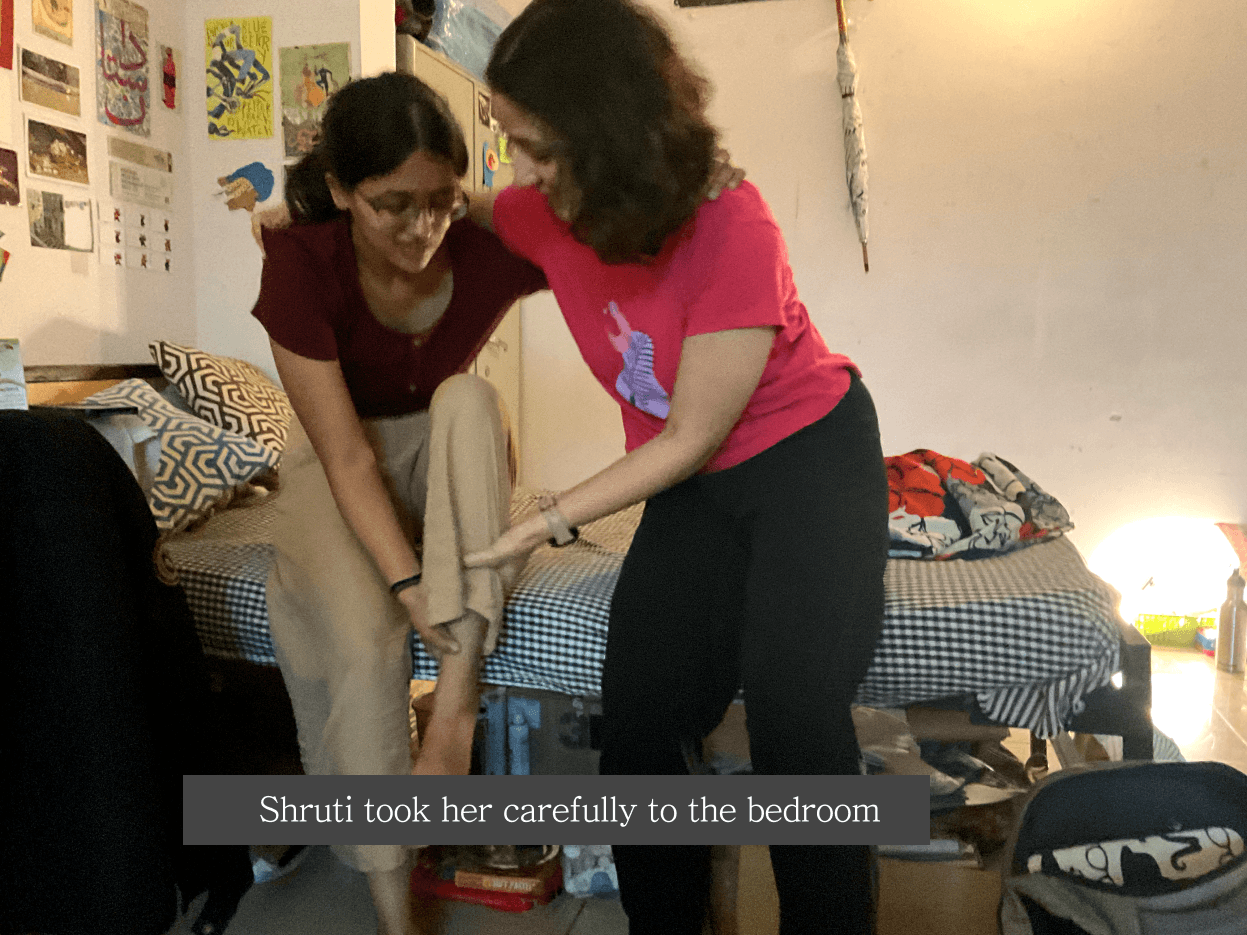
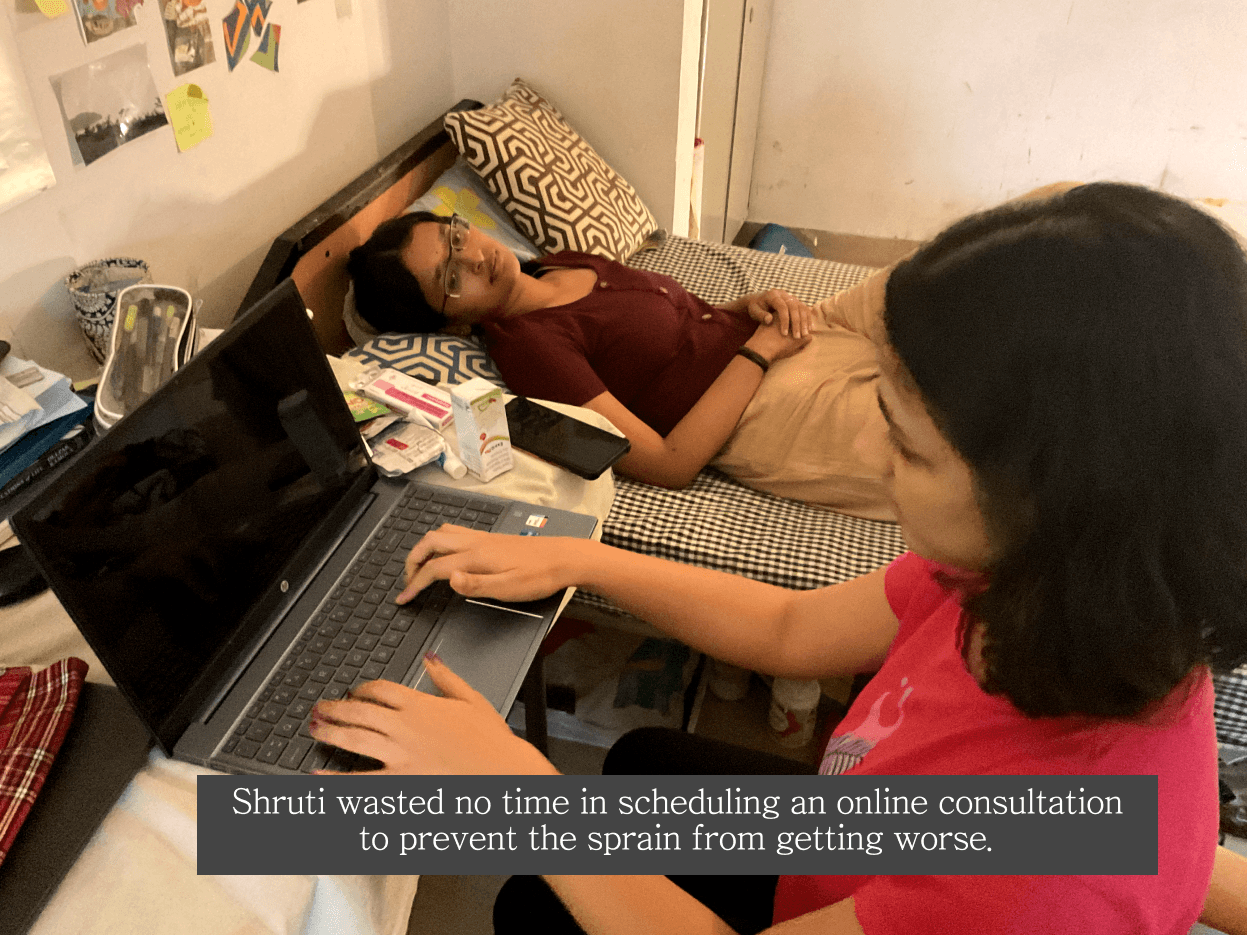
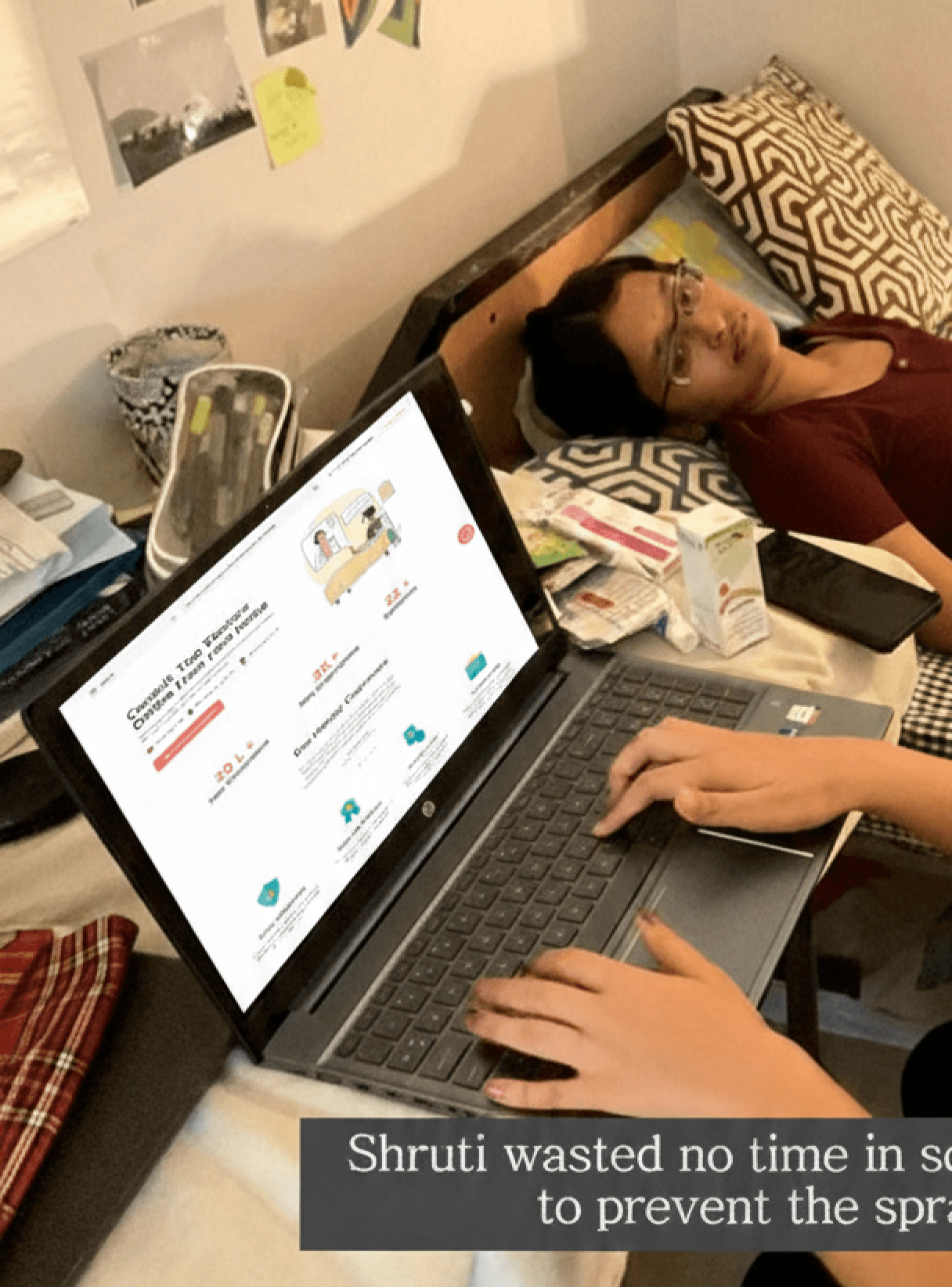
Shruti wasted no time in scheduling the online consultation from tata 1 mg before the sprain gets worst!
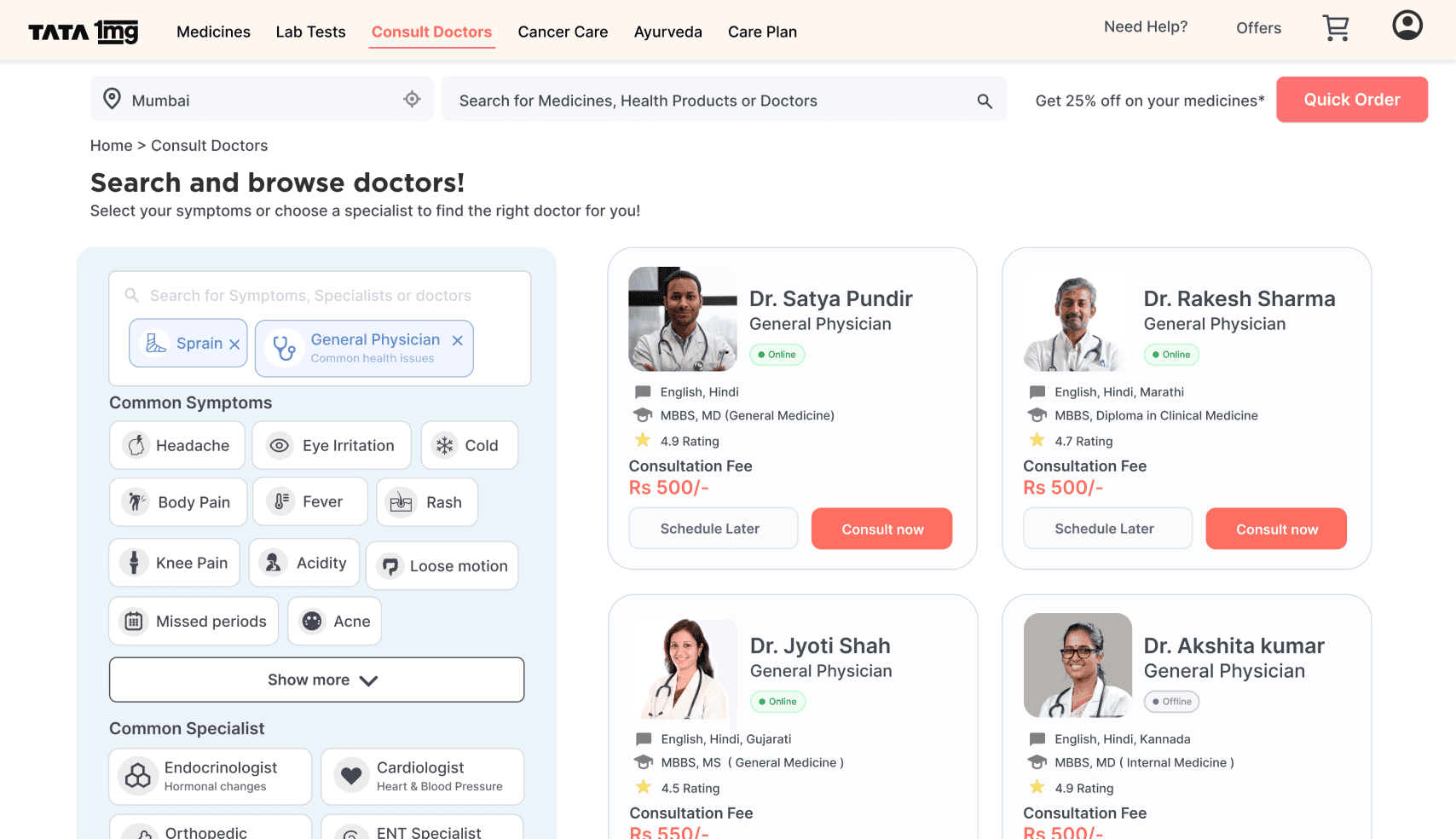

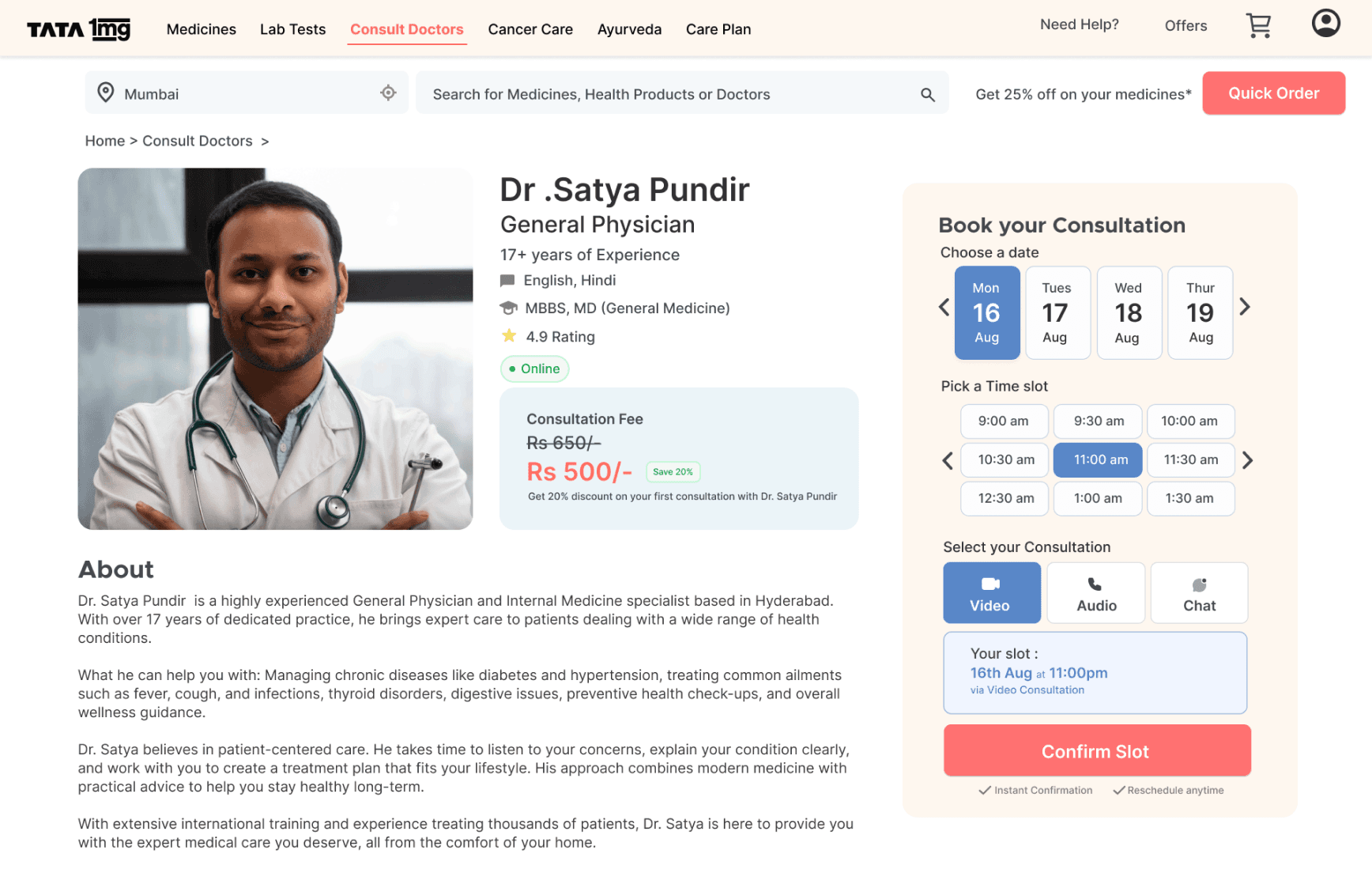
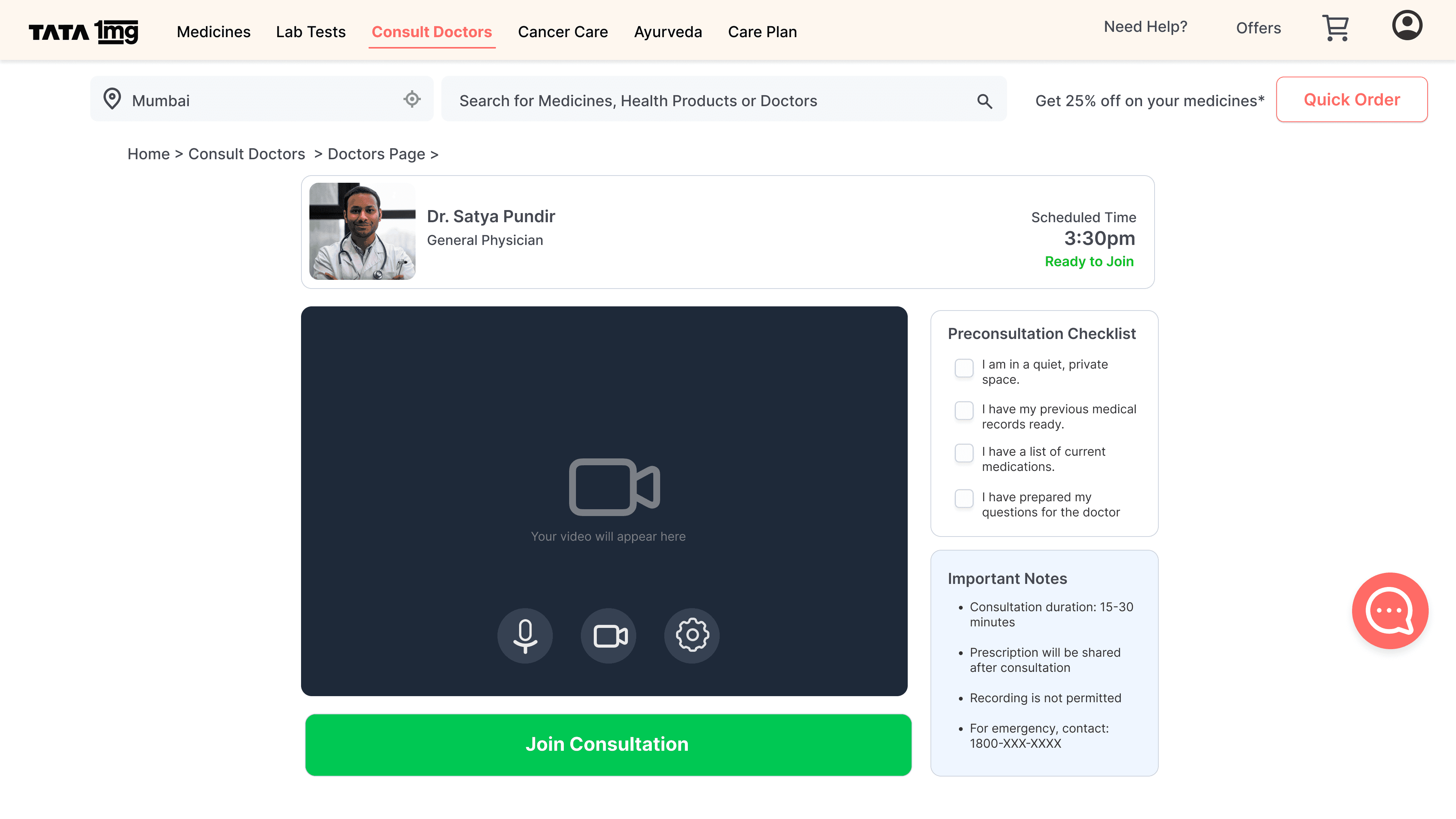
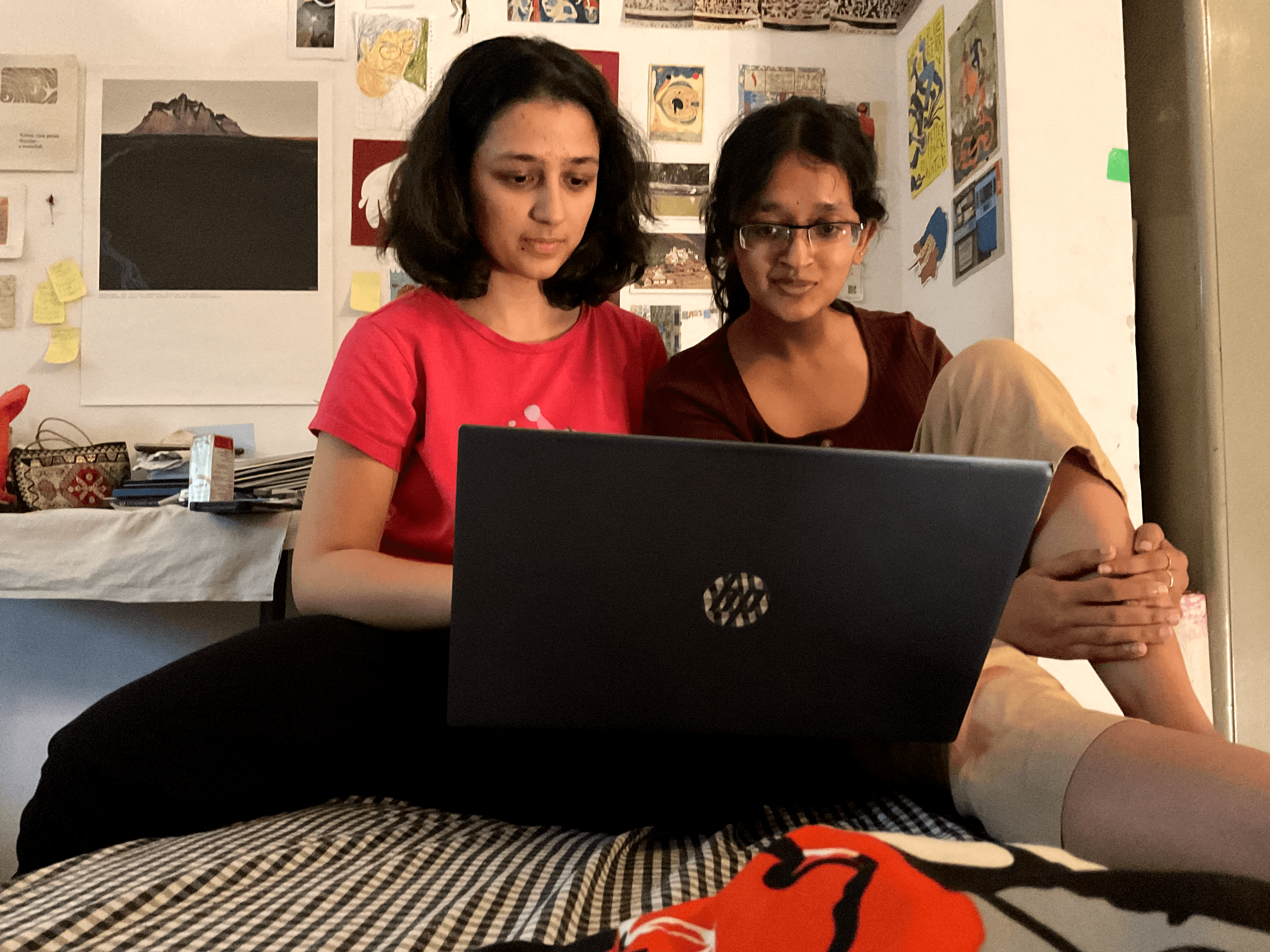
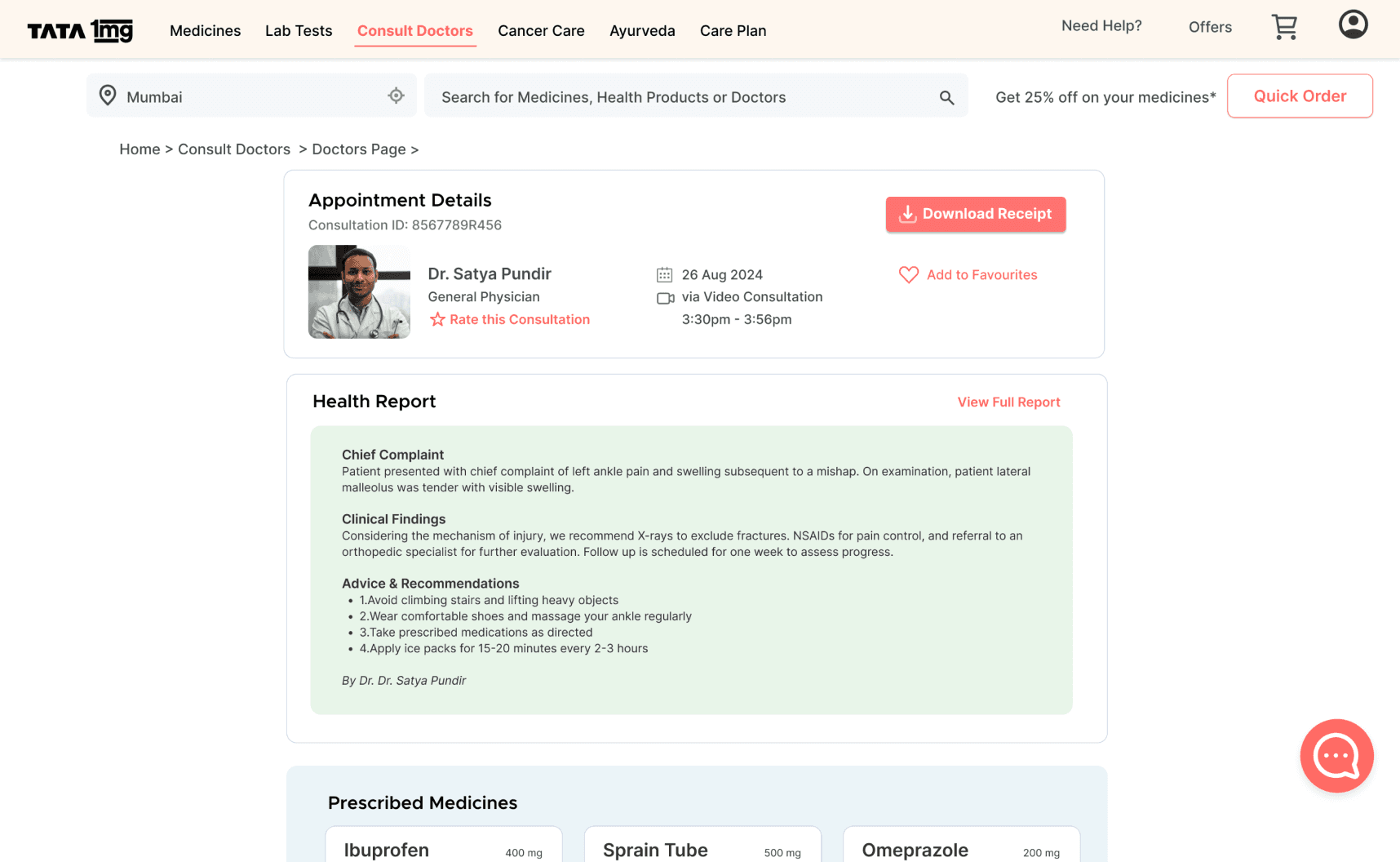
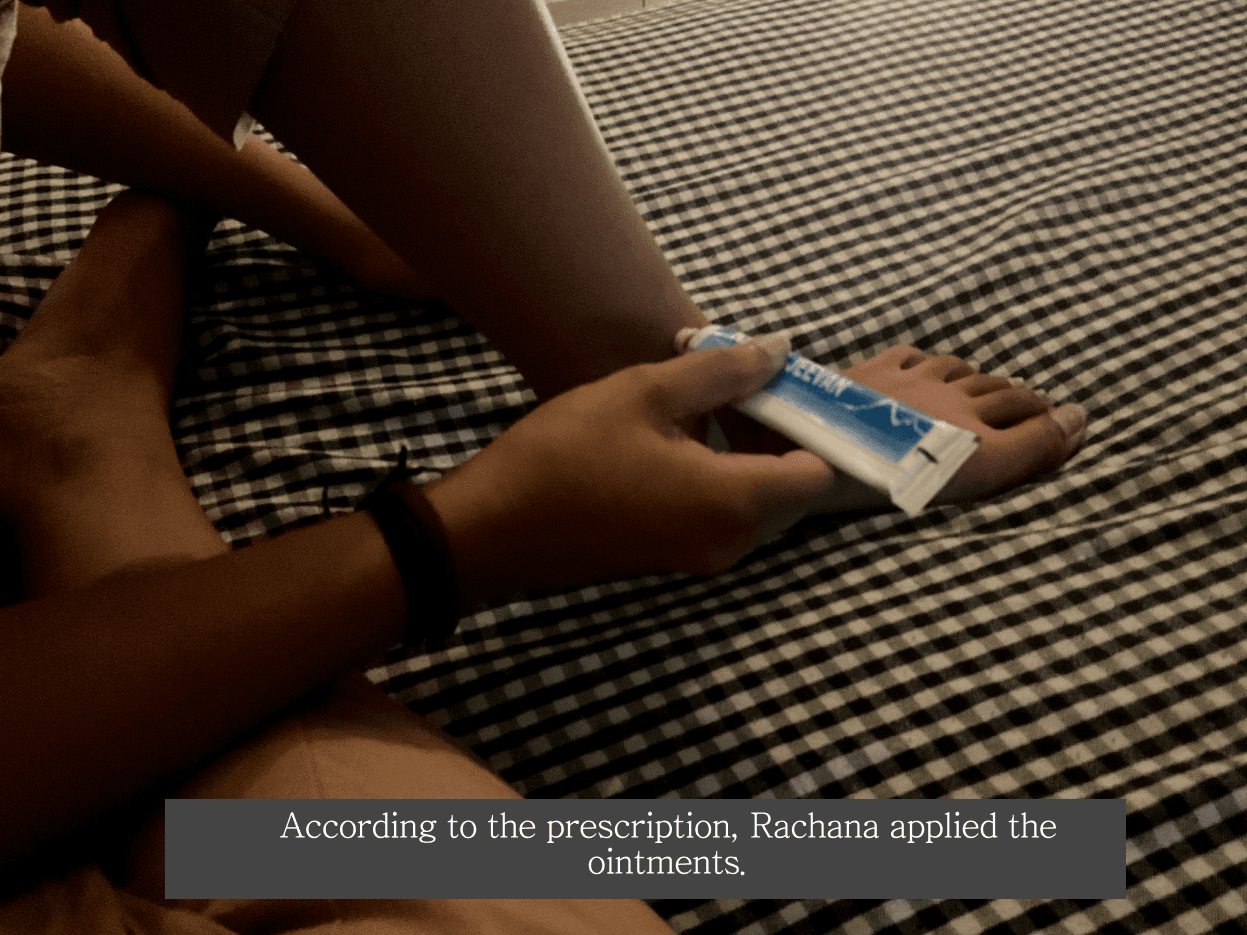
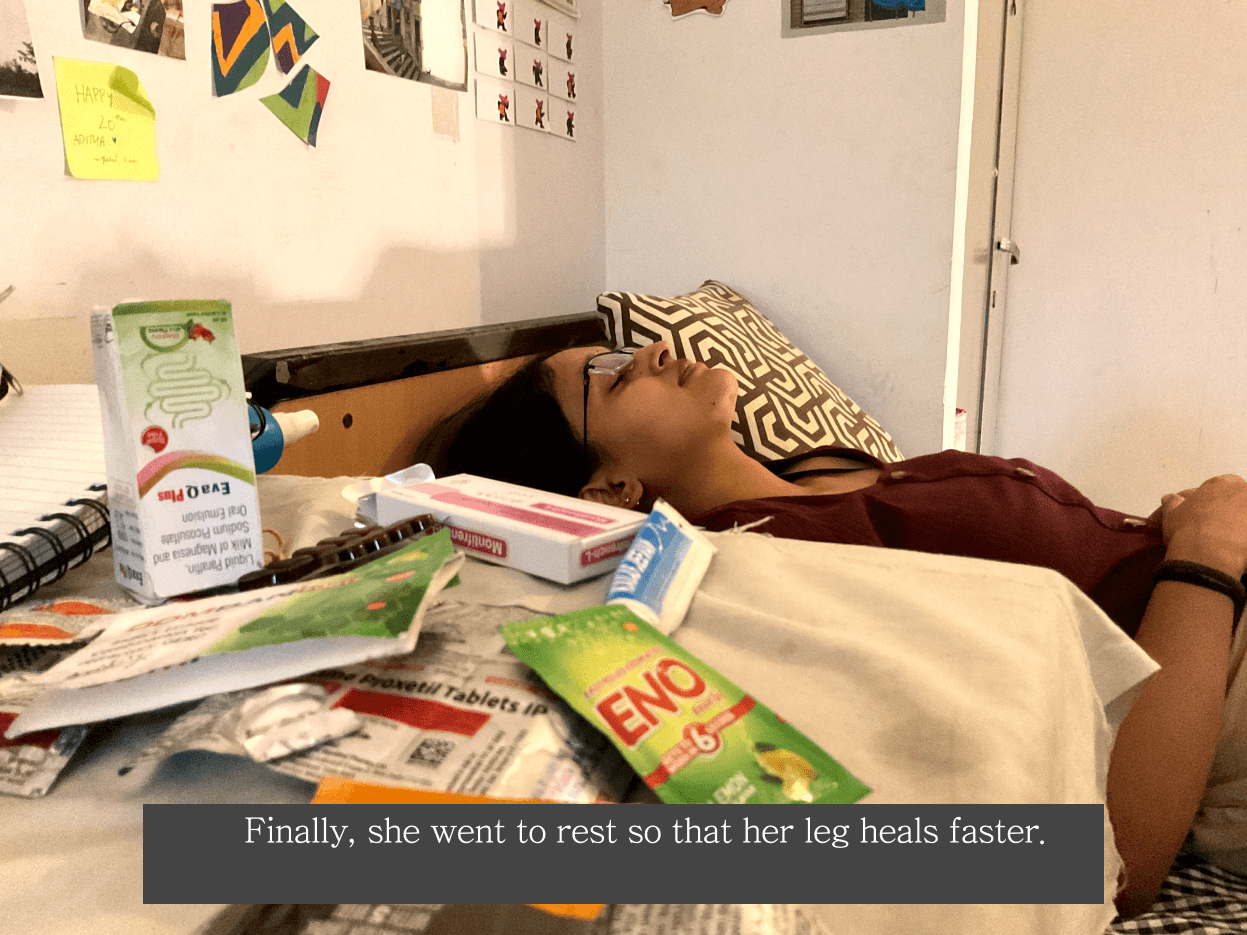
Shruti wasted no time in scheduling the online consultation from tata 1 mg before the sprain gets worst!
Shruti wasted no time in scheduling the online consultation from tata 1 mg before the sprain gets worst!
Shruti wasted no time in scheduling the online consultation from tata 1 mg before the sprain gets worst!
Learnings!
Mapping Diverse Use Cases
While brainstorming constantly thinking from different perspective and different use cases is the most crucial as there can the user flow should be able to cater to majority ( if not all ) use cases. It was often the most exhausting part of the process but definitely the most important one to learn!
The Language of Trust
We spent a lot of time researching how trust is actually built through a screen. Secondary research showed us that clear UX writing and thoughtful interface elements are what make a user feel safe. It taught me that trust is earned in the small, and transparency of the experience.
IK, that was a long Scroll !
Here are some other projects

We know this is not ideal but the mobile version of this project is WIP!
You can view the project on desktop!
We know this is not ideal but the mobile version of this project is WIP!
You can view the project on desktop!
We know this is not ideal but the mobile version of this project is WIP!
You can view the project on desktop!
We know this is not ideal but the mobile version of this project is WIP!
You can view the project on desktop!