How can we rethink nature education programs to make them effective in deeply local contexts?
How can we rethink nature education programs to make them effective in deeply local contexts?
How can we enable youth from Northeast to turn their local ecosystems into living curricula? How can we foster children’s connection to nature through place-based teaching and build local leadership and collaboration with cultural institutions? This project aims to answer these questions by designing a grassroot level led toolkit that documents the Nature education program in Changlangshu, Nagaland and creates a framework for contextual Nature Education programs.
How can we enable youth from Northeast to turn their local ecosystems into living curricula? How can we foster children’s connection to nature through place-based teaching and build local leadership and collaboration with cultural institutions? This project aims to answer these questions by designing a grassroot level led toolkit that documents the Nature education program in Changlangshu, Nagaland and creates a framework for contextual Nature Education programs.

Toolkit Design
Learning Experience Design
Visual Design
Toolkit Design
Learning Experience Design
Visual Design
My Role
Learning Experience
Designer
My Role
Learning Experience
Designer
Timeline
10 Weeks
Timeline
10 Weeks
Collaborators
Canopy Collective
Green Hub
Collaborators
Canopy Collective
Green Hub
We know this is not ideal but the mobile version of this project is WIP!
You can view the project on desktop!
We know this is not ideal but the mobile version of this project is WIP!
You can view the project on desktop!

Contextual Inquiry
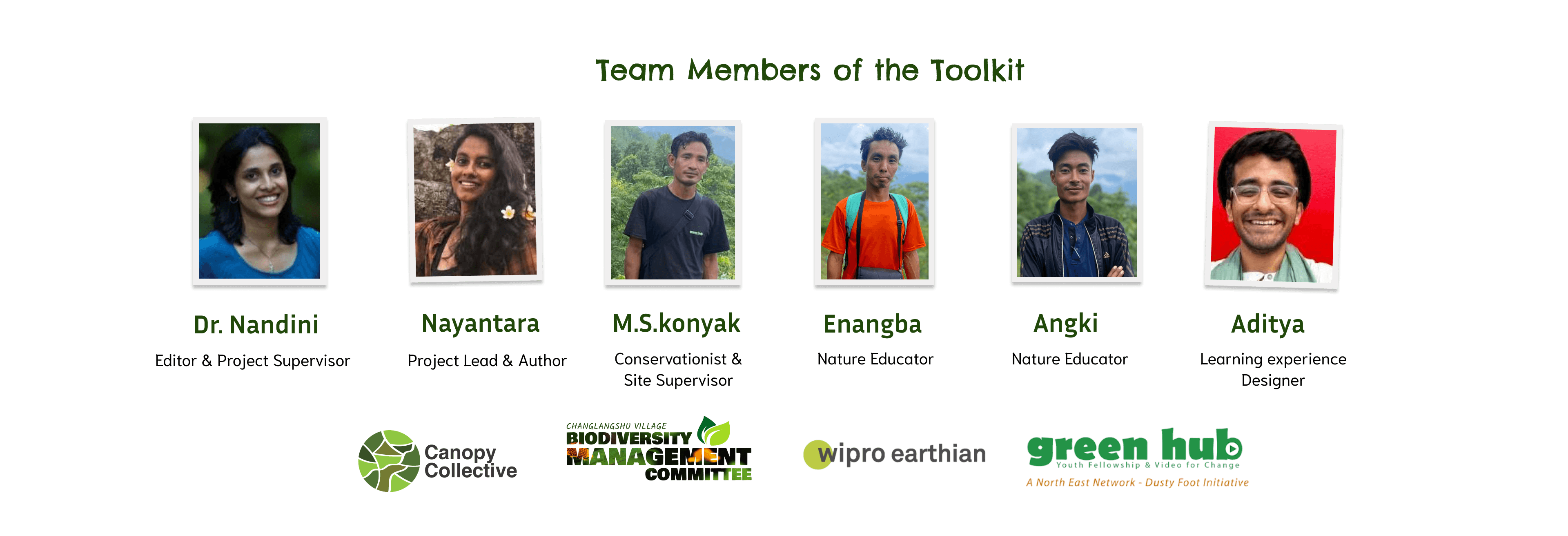
Nayantara Siruguri received Inlaks Ravi Sankaran Small Grants to run a Nature education program in Changlangshu, Nagaland. Under the direction of Dr. Nandini Velho and MS Knoyak, Nayantara led a nature education program in Changlangshu with the local community members at the restoration site throughout the grant period as a apart of Canopy collective project. The idea of creating a grassroots toolkit at the program's conclusion allows for the documentation of process insights and the developing of frameworks for other educators in northeast India who would like to work on associated initiatives. This is a small effort to document the process of making the toolkit.
Positionality Statement
This articulation and documentation is done by Aditya Sonwane (he/him), a third-year Creative Education Design student at Srishti Manipal Institute of Art, Design and Technology. Aditya worked as a design intern with Canopy Collective under the guidance of Nayantara Siruguri and Dr. Nandini Velho during this project. Throughout the process, Aditya critically reflected upon the design thinking tools used while making the toolkit and plans to use his learnings in his future design projects.

What is the toolkit about?
Who is this toolkit for?
Document journey and process of designing, implementing, and reiterating the place-based nature education program in Changlangshu.
Transform insights from the process into toolkit for practitioners attempting something similar in the Northeast region of India.
Aims to equip other educators in Northeast India, helping them run nature education programs tailored to their unique communities and skills.
What is Nature education ? and How do you assess Nature education?
Nature education is about helping people, especially children, connect with the natural world. It involves teaching them about plants, animals, ecosystems, and the ways everything in nature is interconnected. By engaging with nature, students can build a sense of respect, curiosity, and responsibility toward the environment.
Design thinking can create nature education that respects cultural perspectives by understanding diverse views, defining challenges, brainstorming ideas, and testing solutions.
Assessment can go beyond tests; it should consider students' attitudes toward nature, their connection with it, and their understanding of ecology.
Personal experiences in nature foster a stronger appreciation for its beauty and complexity.
In India, nature is deeply rooted in cultural beliefs, seen as divine or essential for survival.
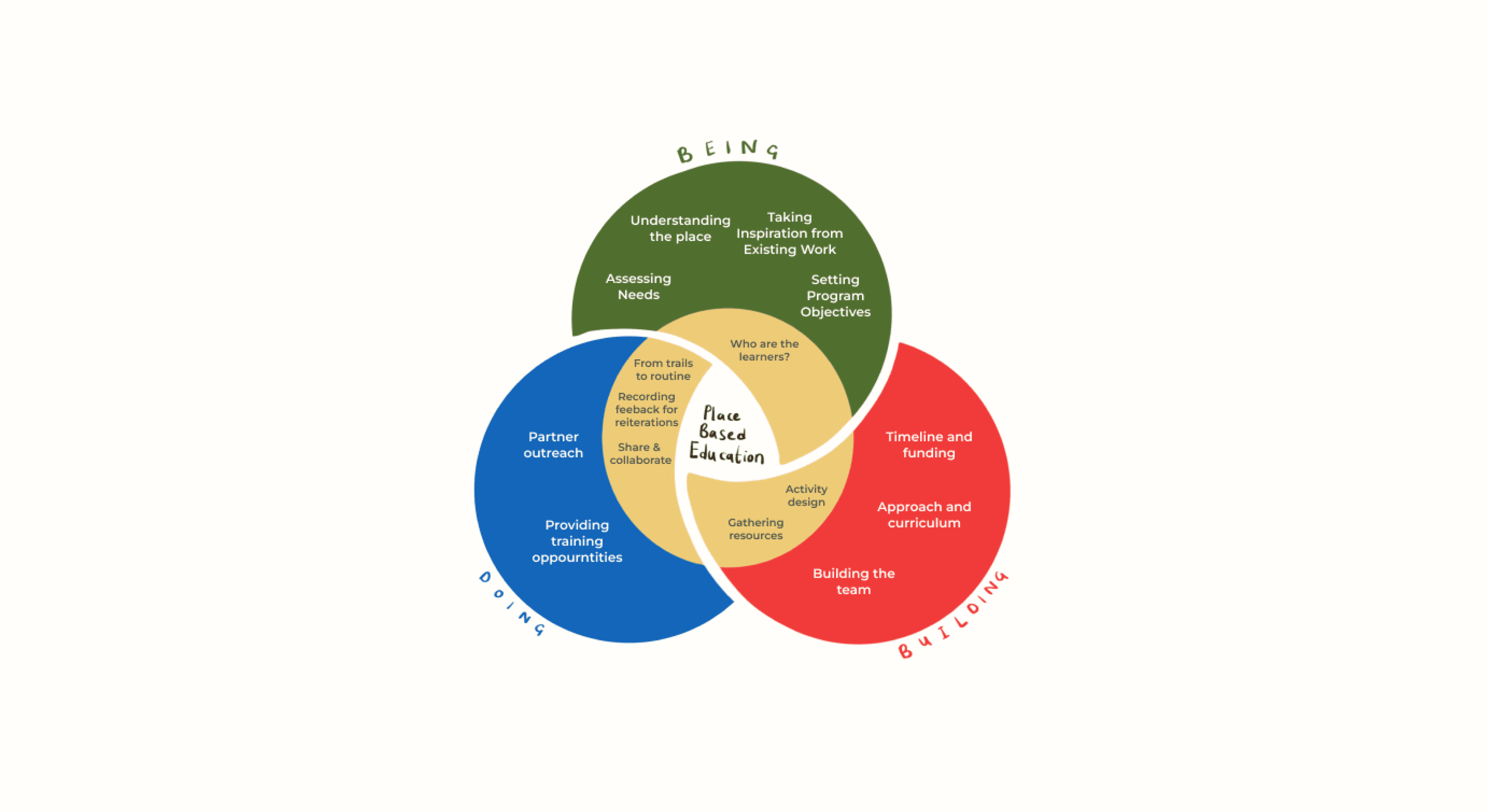
Nature Education Framework
This framework was developed by Nayantara Siruguri, grounded in her lived experiences and insights.
After conducting a Nature Education program with community kids in Changlangshu, Nayantara and her team gathered insights that led to a framework for guiding future programs. This framework focuses on three key areas: Being, Building, Doing.
Being refers to the foundational aspects of the program. Consider the context, such as the location, time, and community involved. Understanding the purpose and goals of the program is also crucial.
Doing is the actual implementation of the program. It involves conducting the planned activities, facilitating learning experiences, and evaluating the program's effectiveness.
Building involves creating the resources and connections necessary for the program's success. This includes designing and creating materials, building relationships with relevant organizations or individuals, and developing a detailed plan for the program's activities and lessons.
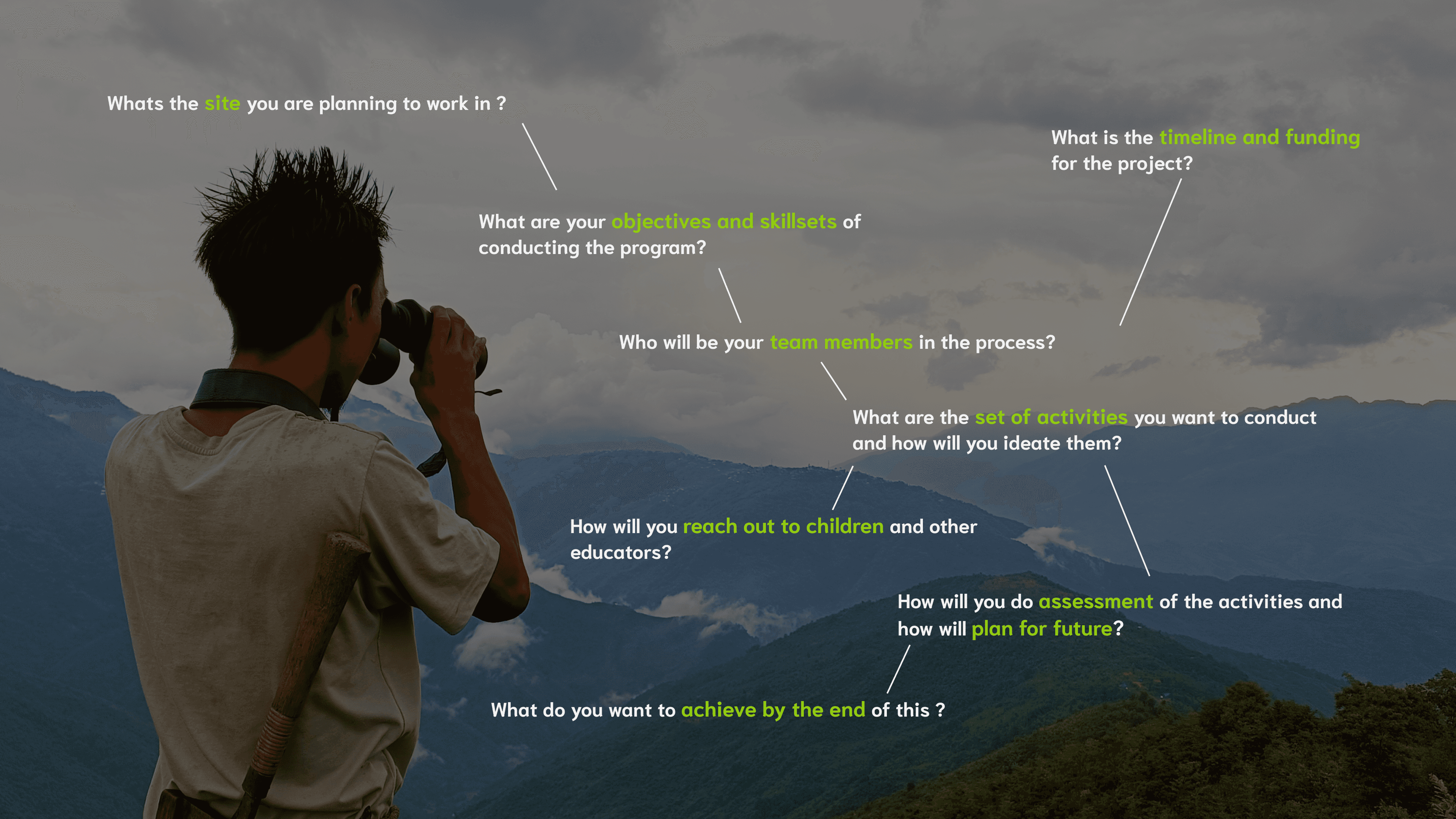
Picture taken by Nayantara and Team
Reflection through Practice
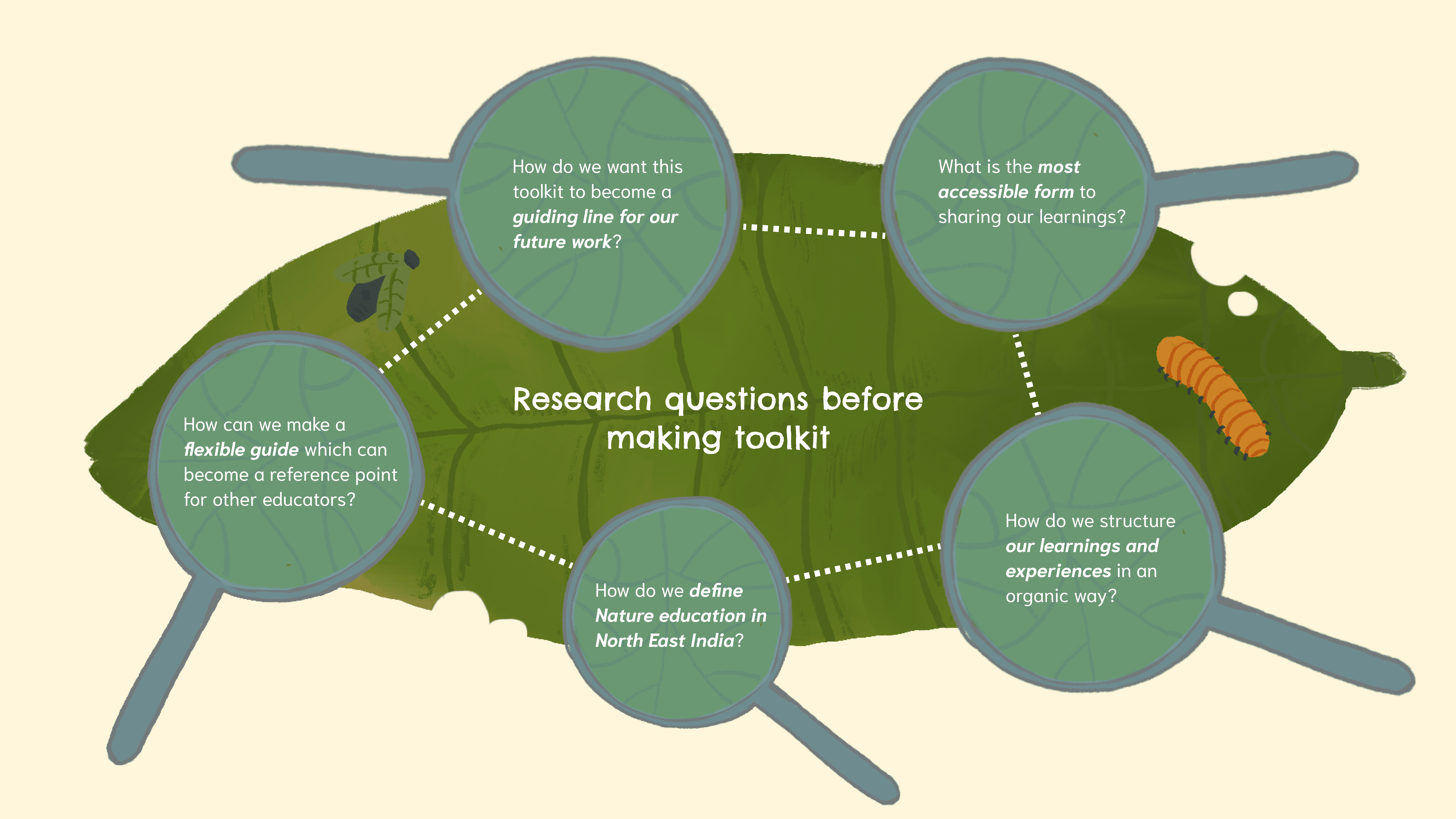
How do I design for experiences that I haven't participated in and build something that will inspire them to solve? How can we provide educators with a contextual and universal framework at the same time? and what should they possess at the end of the toolkit?
Throughout the process, we were constantly defining these goals was incredibly important. Additionally, since I'm an outsider, how can I get over my prejudices and gain more knowledge about the community?
Starting out
How do I design for experiences that I haven't participated in and build something that will inspire them to solve? How can we provide educators with a contextual and universal framework at the same time? and what should they possess at the end of the toolkit?
Throughout the process, we were constantly defining these goals was incredibly important. Additionally, since I'm an outsider, how can I get over my prejudices and gain more knowledge about the community?
How do I design for experiences that I haven't participated in and build something that will inspire them to solve? How can we provide educators with a contextual and universal framework at the same time? and what should they possess at the end of the toolkit?
Throughout the process, we were constantly defining these goals was incredibly important. Additionally, since I'm an outsider, how can I get over my prejudices and gain more knowledge about the community?

Insights and Ideation of the worksheets
We could break down the planning process into sections and group several processes to produce a framework for the worksheets based on our own experiences running the program for the entire year. Educators from various backgrounds will be able to develop a fundamental and basic program outline with the help of the worksheets. During the toolkit creation process, this was the most substantial and critical step.
Worksheet Flow
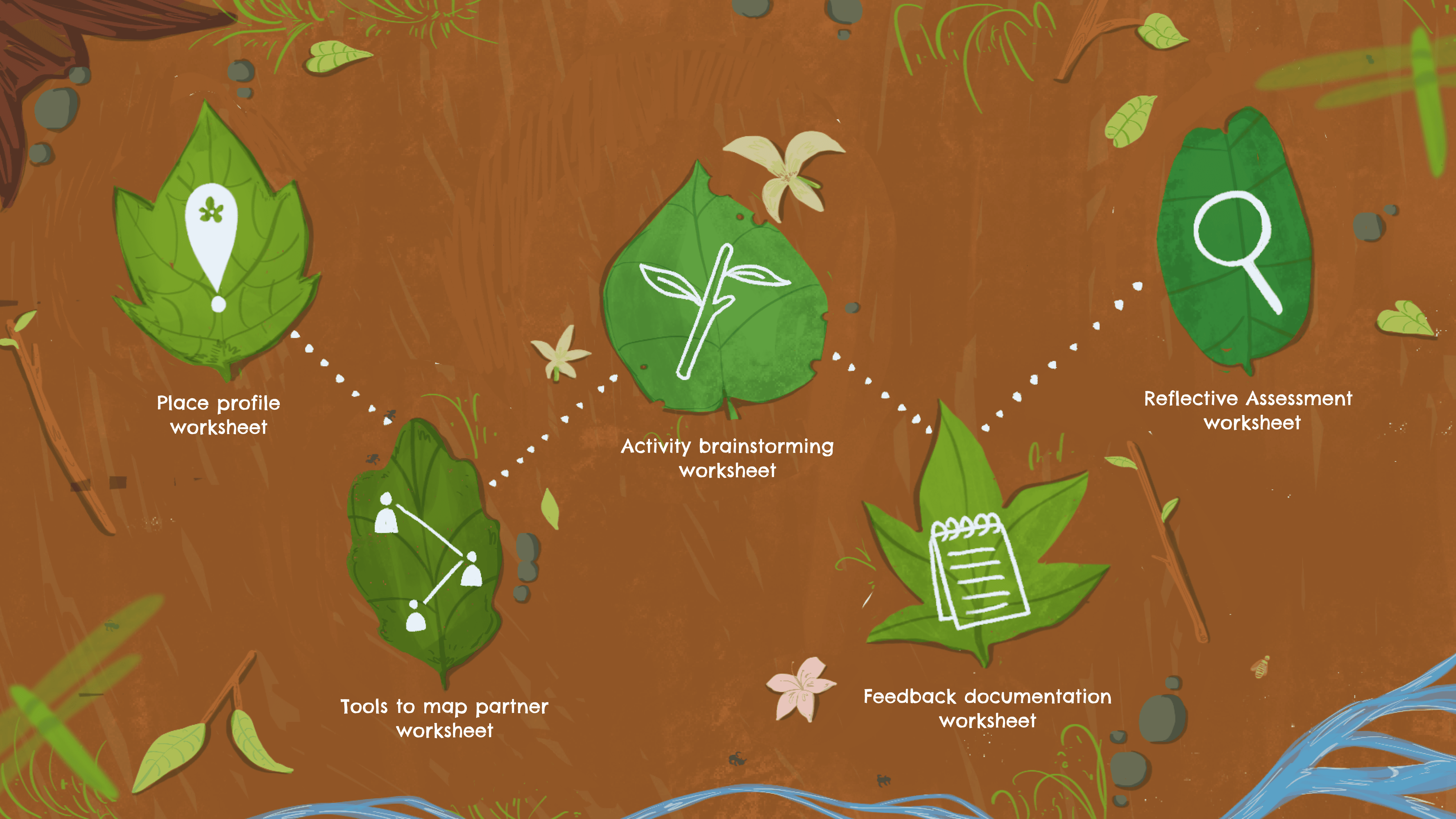

1st Iterations of the worksheet
We aimed to address all assessment parameters comprehensively, combining both qualitative and quantitative approaches. However, this led to an extensive amount of text, making the questions complex and difficult to interpret.
Narrative-style questions
Use of illustrations for effective communication
Integration of quantitative aspects within qualitative questions
Lengthy and complex questions
Overwhelming amount of instructions
More contextual parameters to guide responses accurately
What worked?
What didnt work?
Reflection through Practice
I became conscious of my prejudices and preconceived ideas about what evaluation should be through the first version of the worksheet. I was attempting to adapt what I had learned in an urban setting to a totally different setting which resulted into gap of understanding.
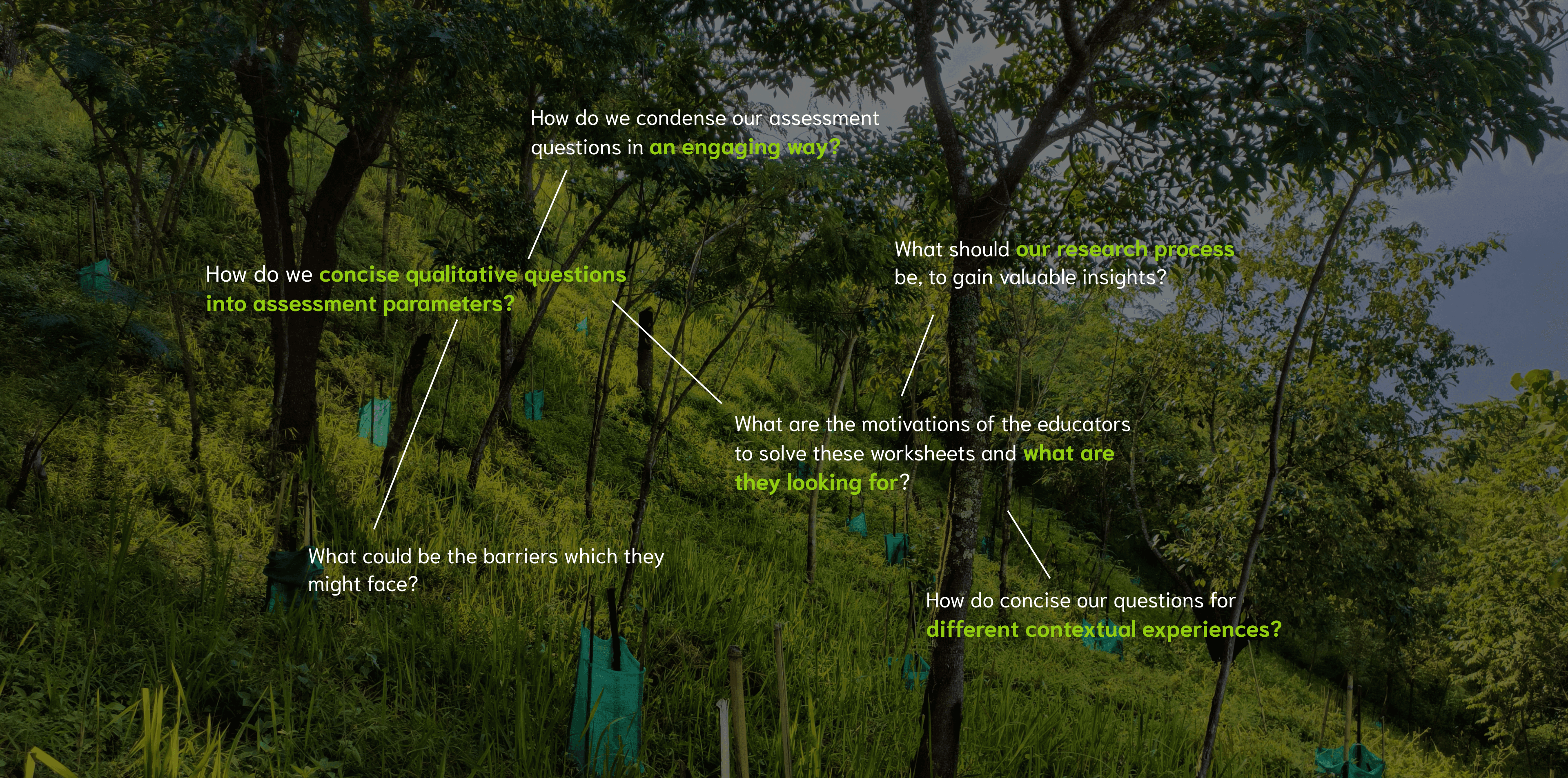
Understanding our First Users
Since our site's educators would be our initial users, it was a good idea to understand their goals and limitations before beginning the second iteration. The second draft's development hinges on the change of perspective from designers to educators. It was also vital to reflect about the most suitable format for a nature education evaluation, as this helped to shape the questions.
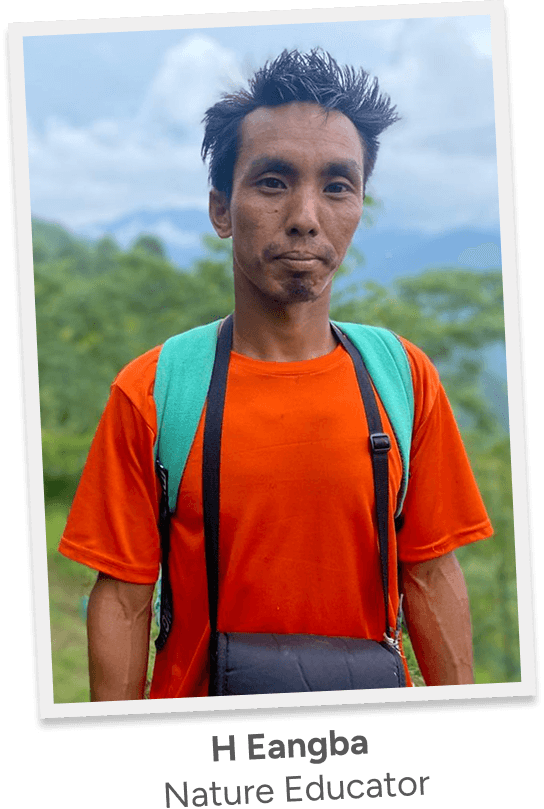
Eangba is a very talented, driven, and capable individual with many leadership traits. He needs assistance articulating concepts, but he is willing to try out new session ideas. He could benefit from using a flexible and qualitative framework and is good at following directions.

Angki has alot of community building skills and very well network within the community. He communicates ideas and activities engagingly with the kids. He requires motivational triggers to be consistent. He could benefit from a framework which enables him to reflect and create those motivational triggers for himself.
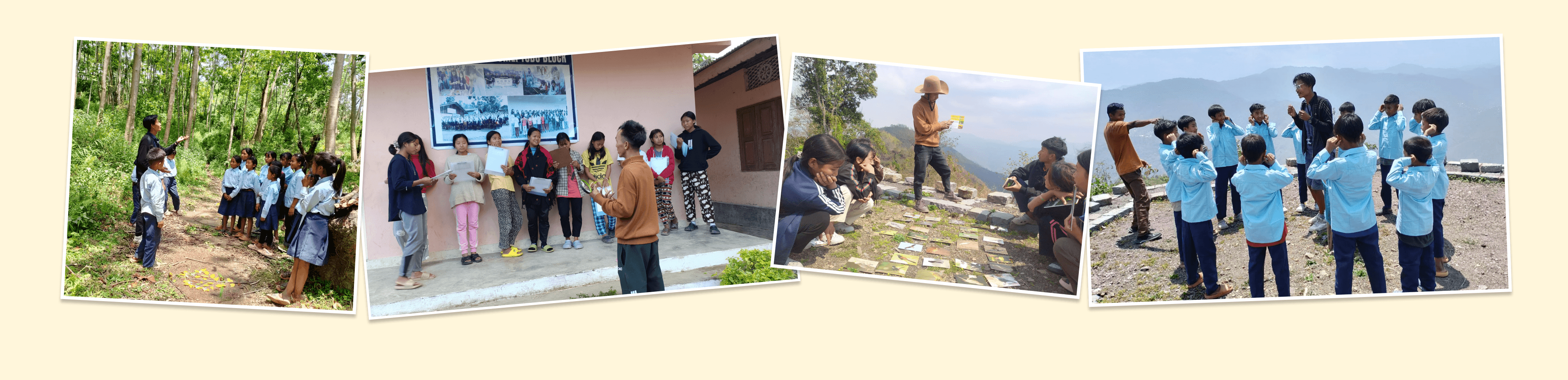
Educators teaching at the Restoration site
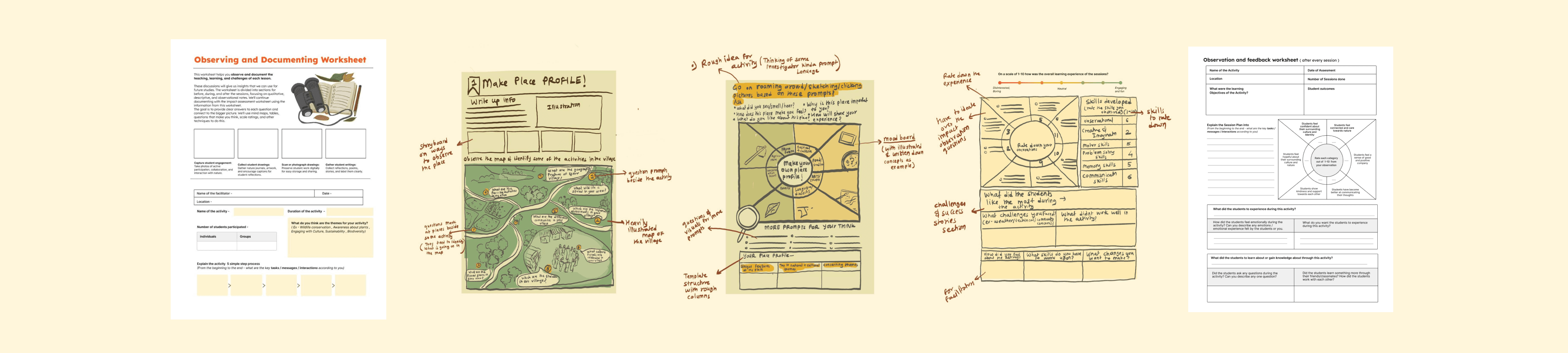
Ideation Sketches

Understanding the objectives and driving forces of our educators helped us to develop assessment frameworks and contextualize our questions within their experiences. We wanted the educators to actively look at and consider their motivations and problems in a fun and engaging way using these worksheets. During the site visit, the second version of the feedback worksheet was used for user testing.
2nd Iterations of the worksheet
User Testing and Evaluation
A round of testing and evaluation was done with Nayantara, Angki, Engba after conducting a soundscape session activity with 18 kids near the restoration site. The Feedback form was conducted with constant reflection and discussion of what's working, and what could be better.


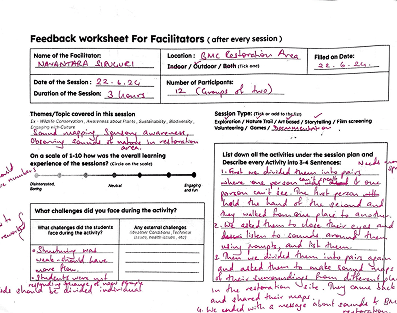


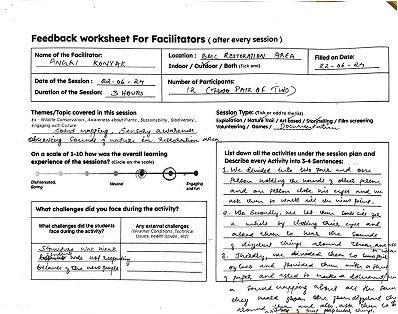
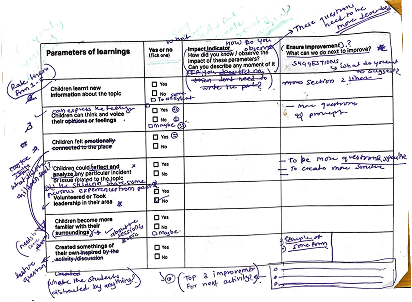

Conducted and Picture taken by Aditya Sonwane
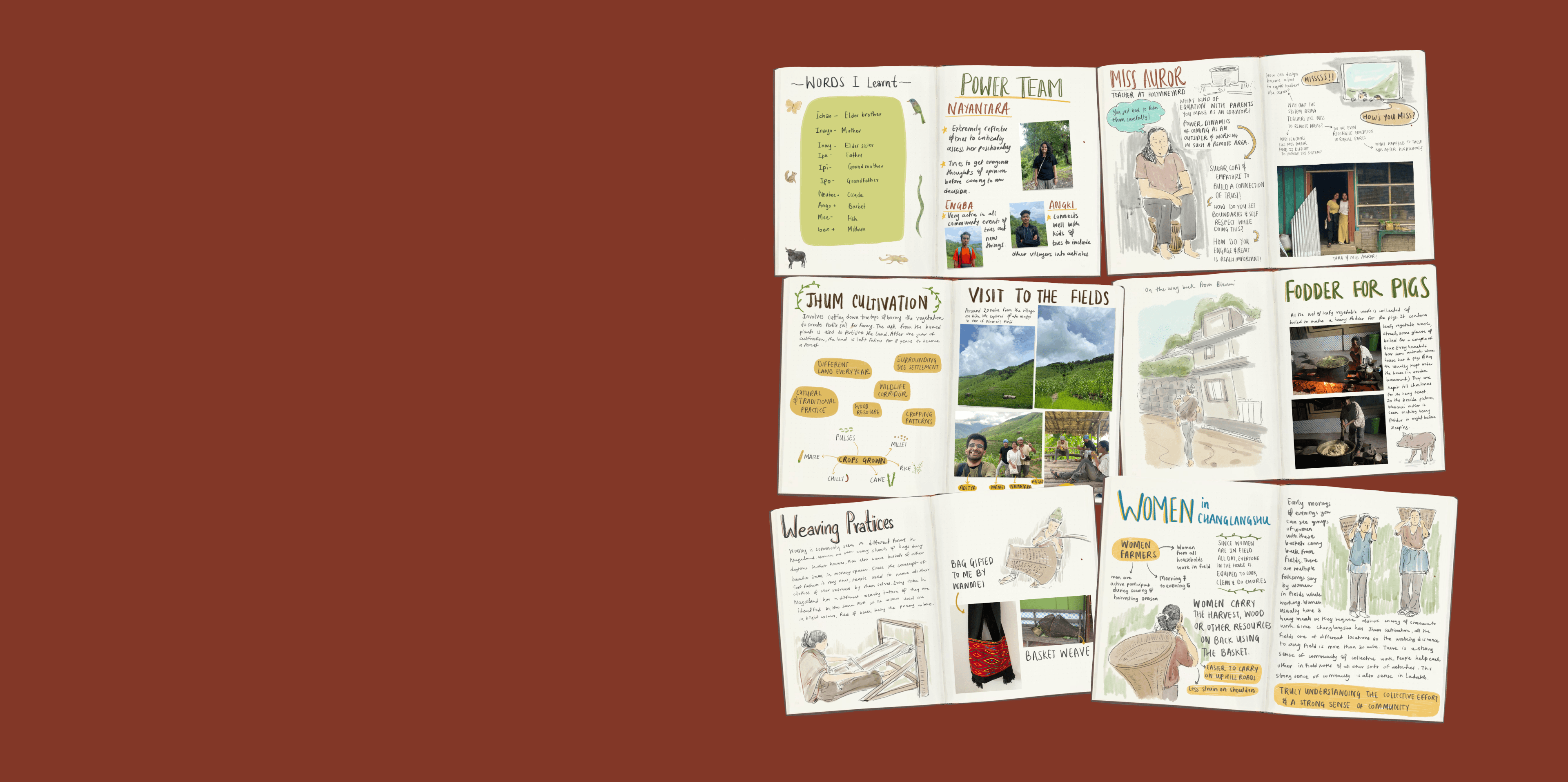
Immersing with the
community
My interactions with the people there, the work they were doing, and the village's social structure were all greatly influenced by my experiences there. The key was to make something simple and functional for them without making it seem like a chore, and being in the right place definitely helped. My personal interactions with the locals and my experiences there have allowed me to see design thinking from a wider angle. Finally, I was able to grasp why educators do what they do and how to incorporate trigger points into my worksheets.
The Auto Enthography project is linked below -
https://www.behance.net/gallery/207948509/Auto-Ethnography-of-Changlangshu
We were able to tailor our assessment framework according to their experiences and motives by conducting user testing and a field visit at Changlangshu. We actively discussed the worksheets with the educators and asked their feedback, revising our drafts of other worksheets based on of the observations. There was active feedback discussions and reasonable engagement throughout this process.
3rd Iterations of the worksheet
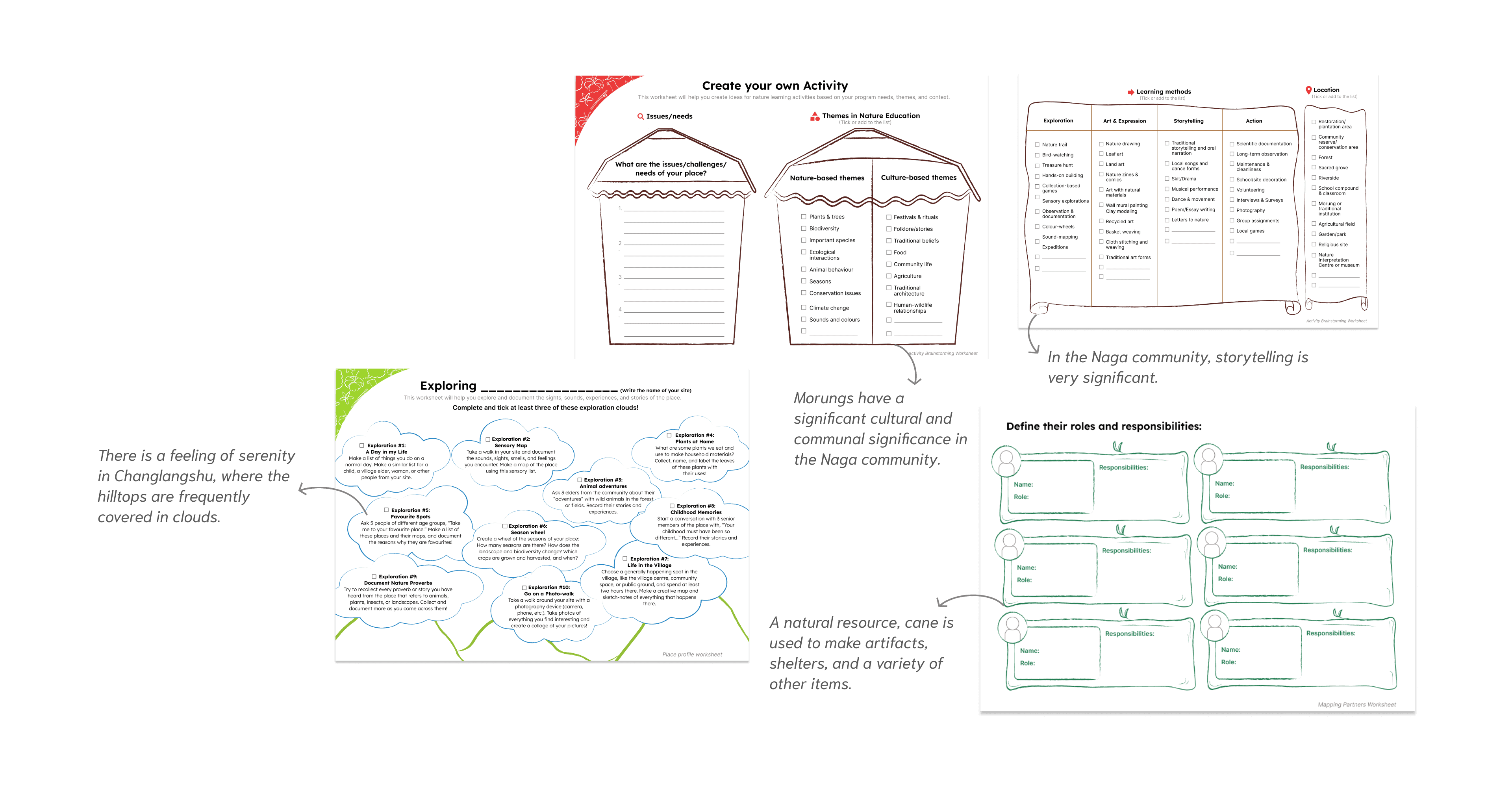
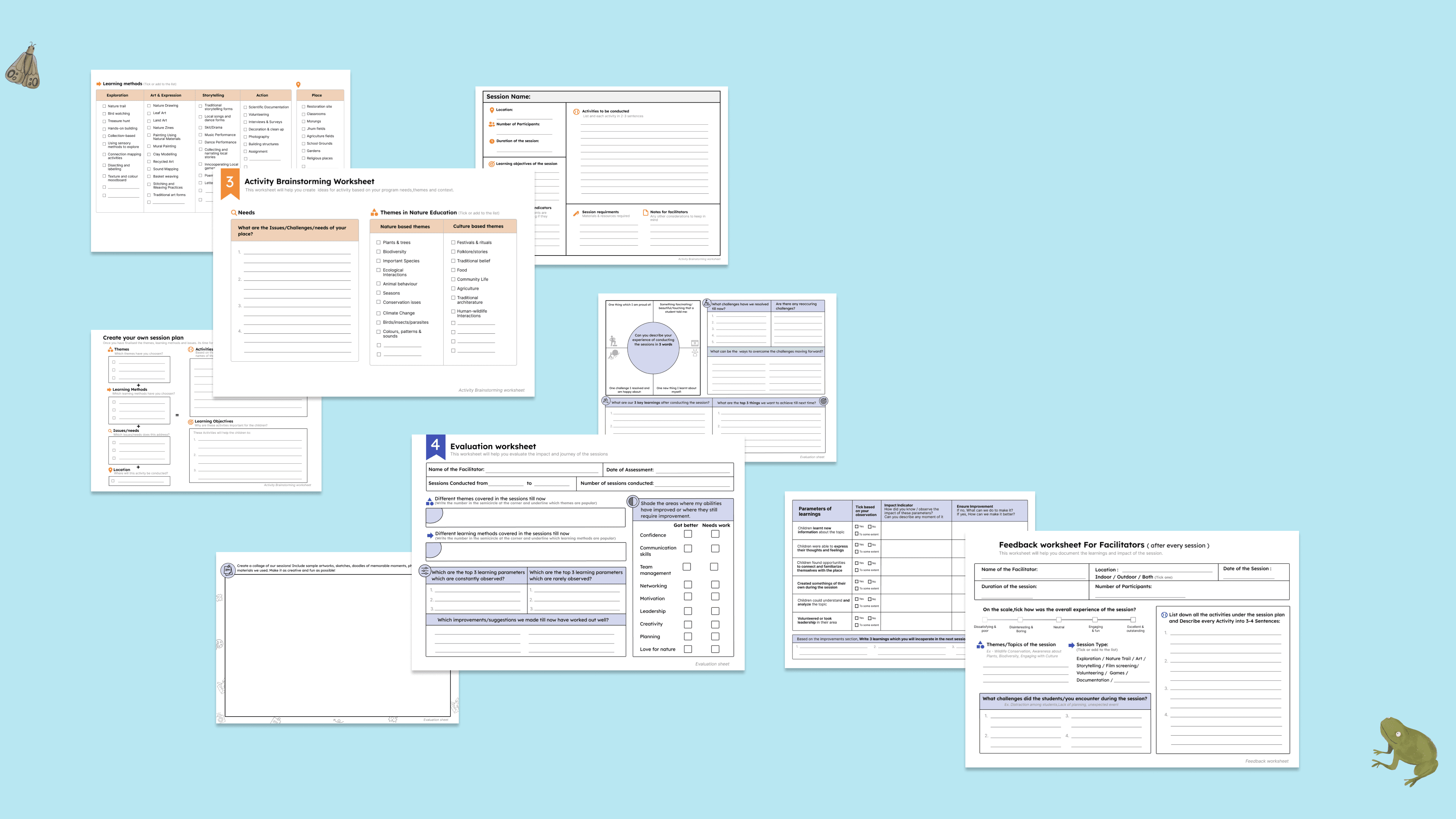
The site visits and knowledge of nature education became the inspiration for the worksheets' visual design. The goal is to engage creatively while still making interaction simple.
Visual Development of
the worksheets
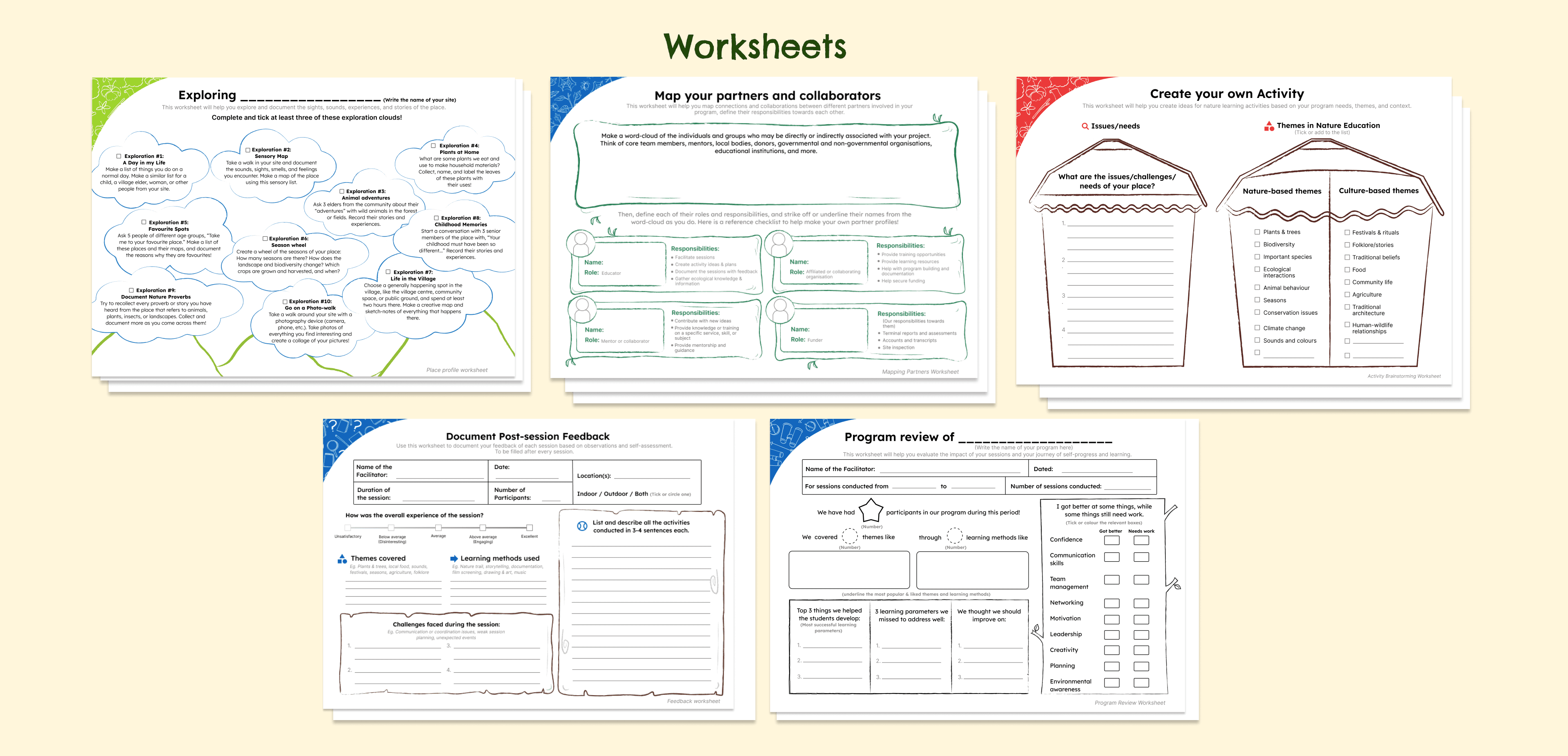


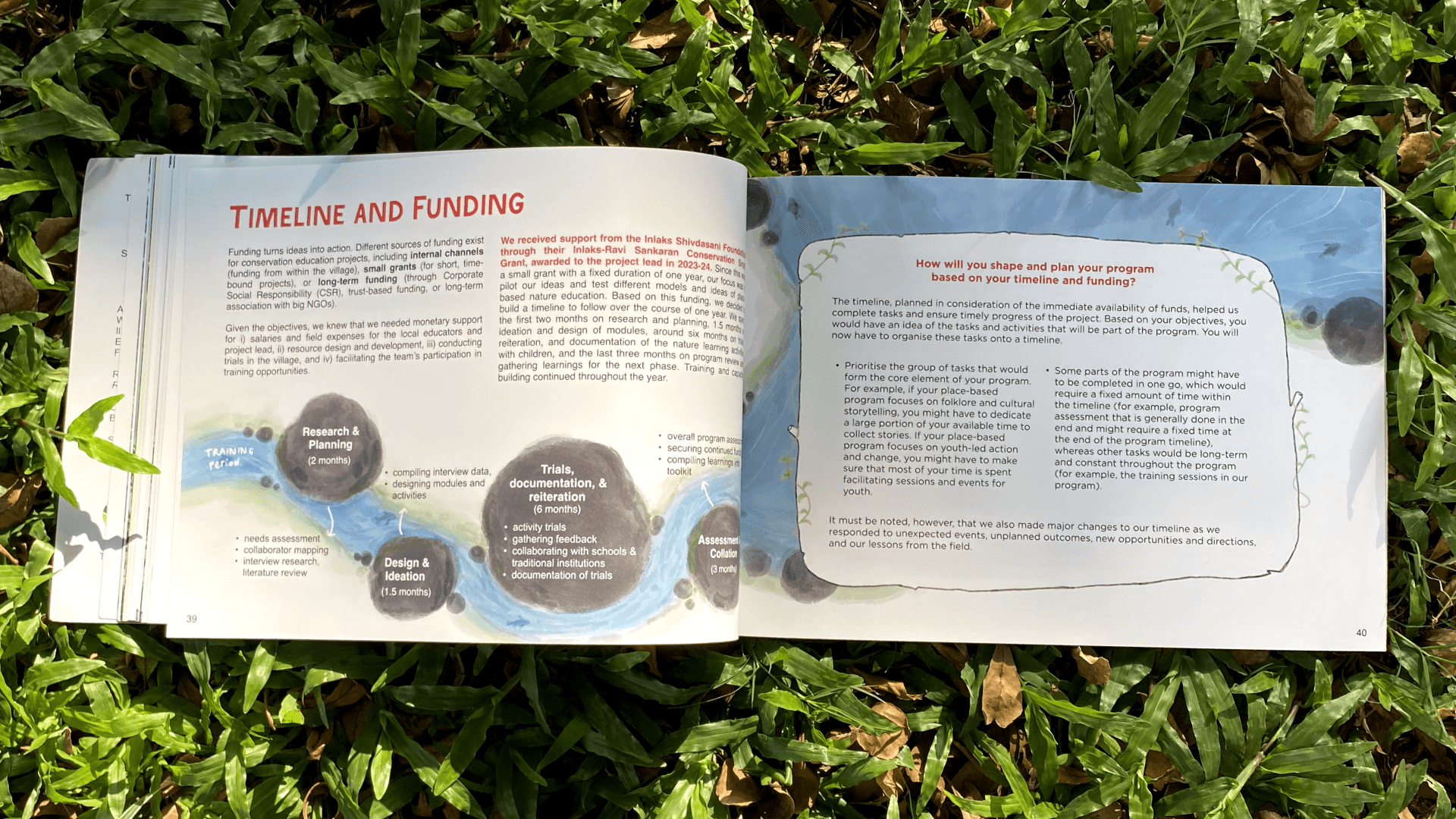
Making of the book

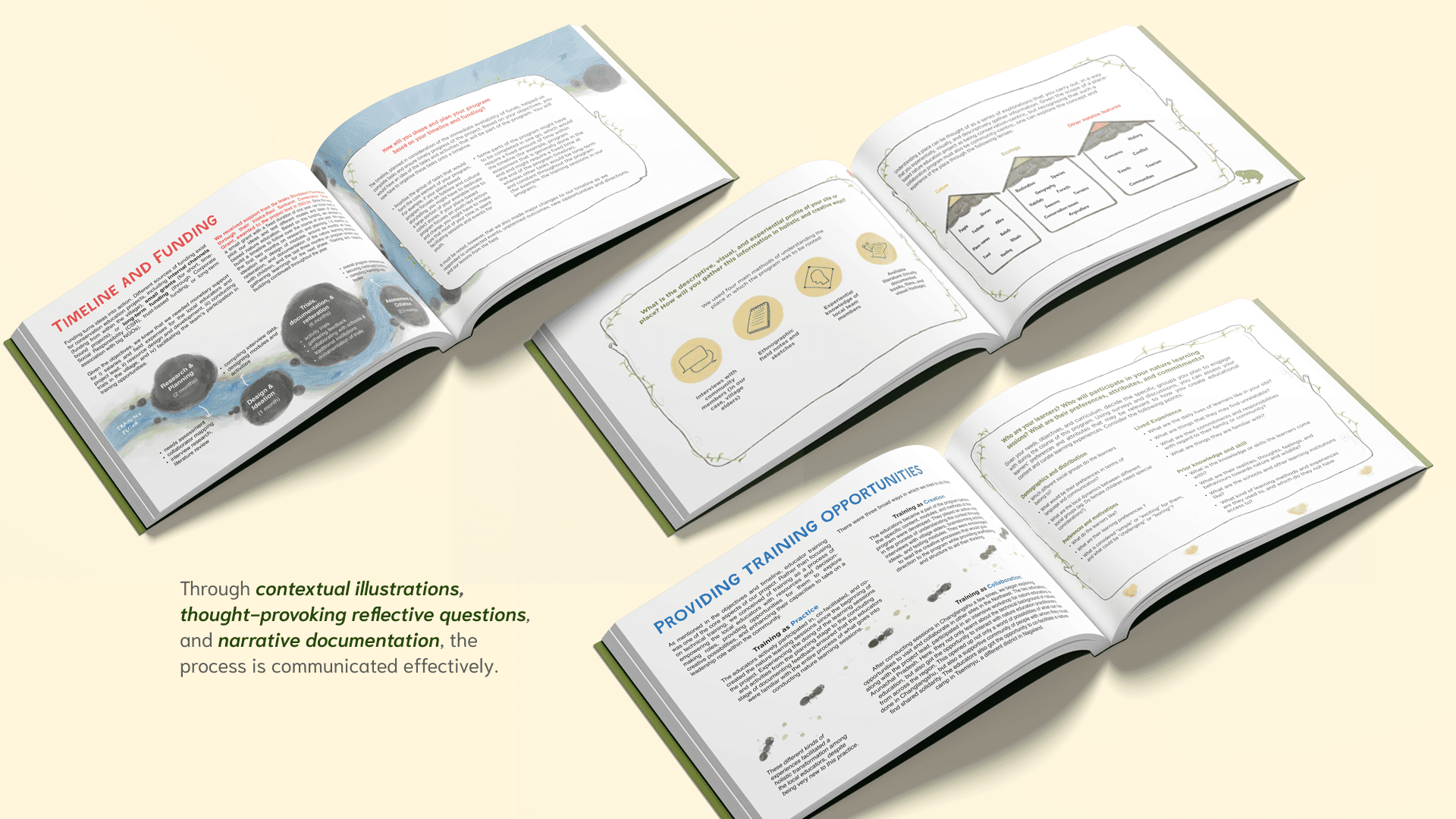
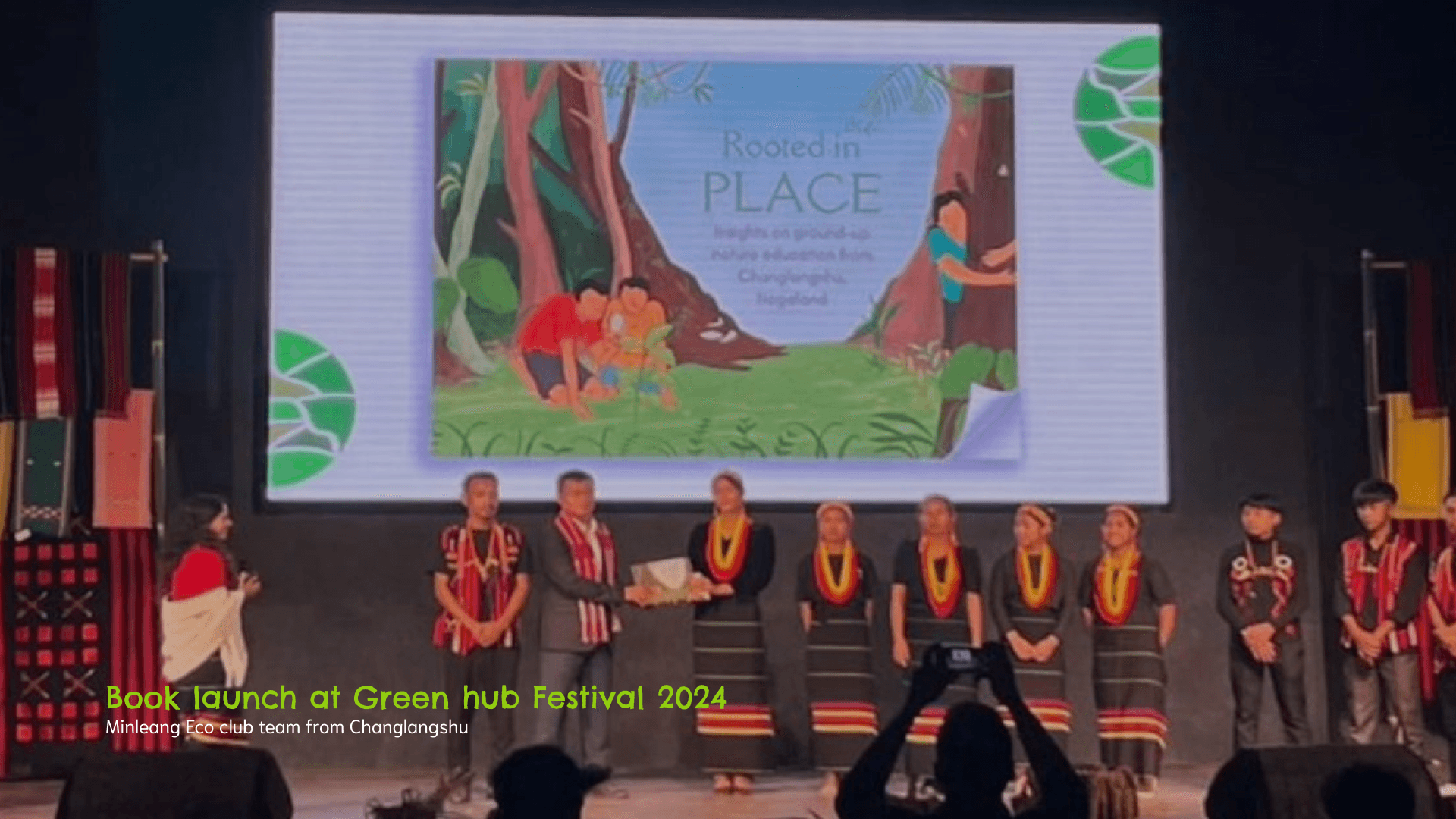

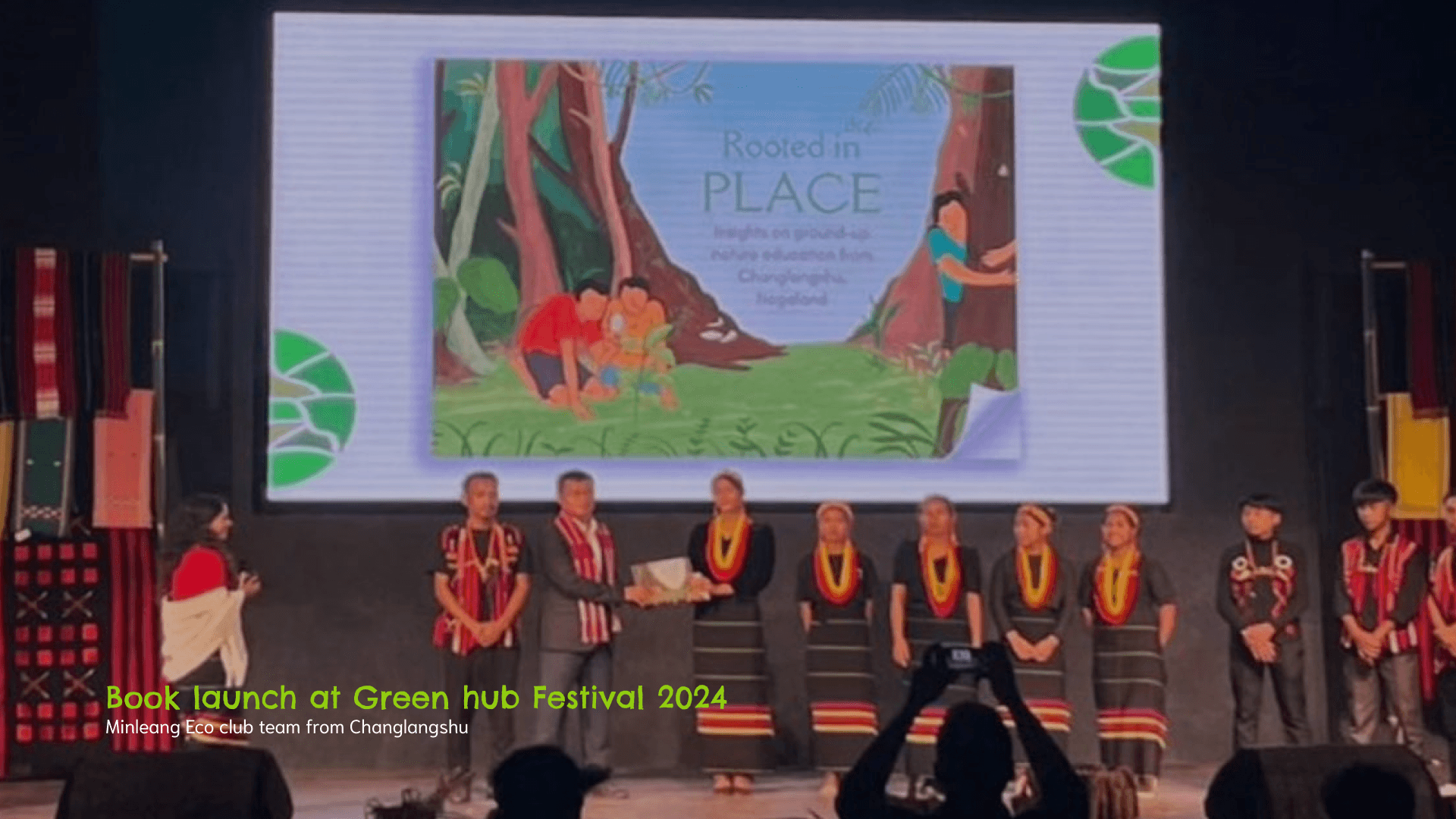
Check out - “Rooted in Place” website to download the book
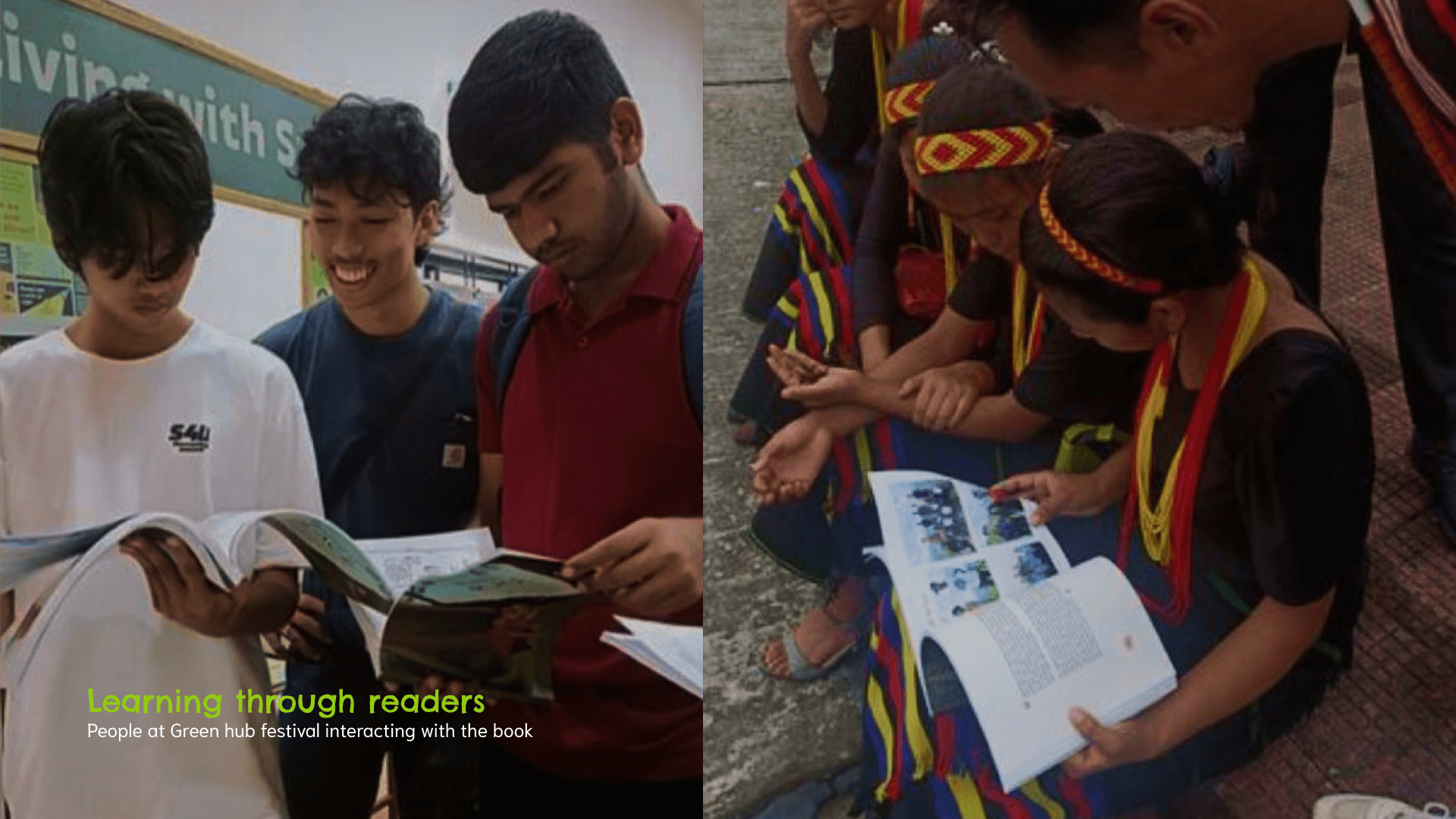
Published Toolkit Copy

We know this is not ideal but the mobile version of this project is WIP!
You can view the project on desktop!
We know this is not ideal but the mobile version of this project is WIP!
You can view the project on desktop!
IK, that was a long Scroll !
Here are some other projects
Can "Development" Listen?
A Participatory Research workshop unpacking and empowering to imagine divergent futures from Kotagiri, Niligirs
Experiential Participatory Futures • Speculative Design • Qualitative Design Research • Learning Experience Design
Tata 1 mg
UI/UX Case study
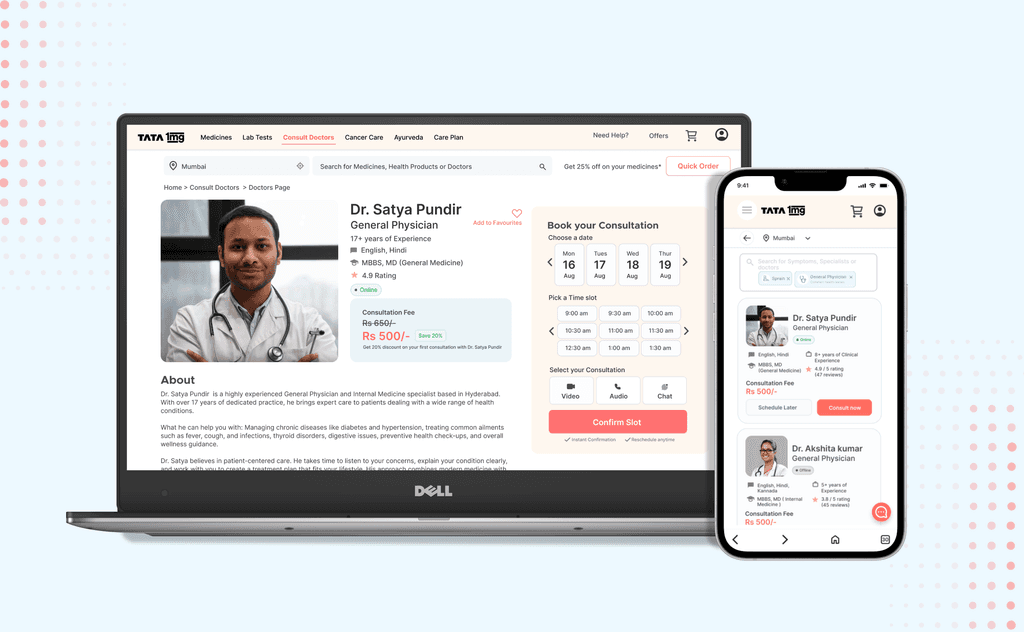
Experience Evaluation • UI Redesign • Interaction Design