Finding my way through the Blue hills

Collaboration with Keystone Foundation
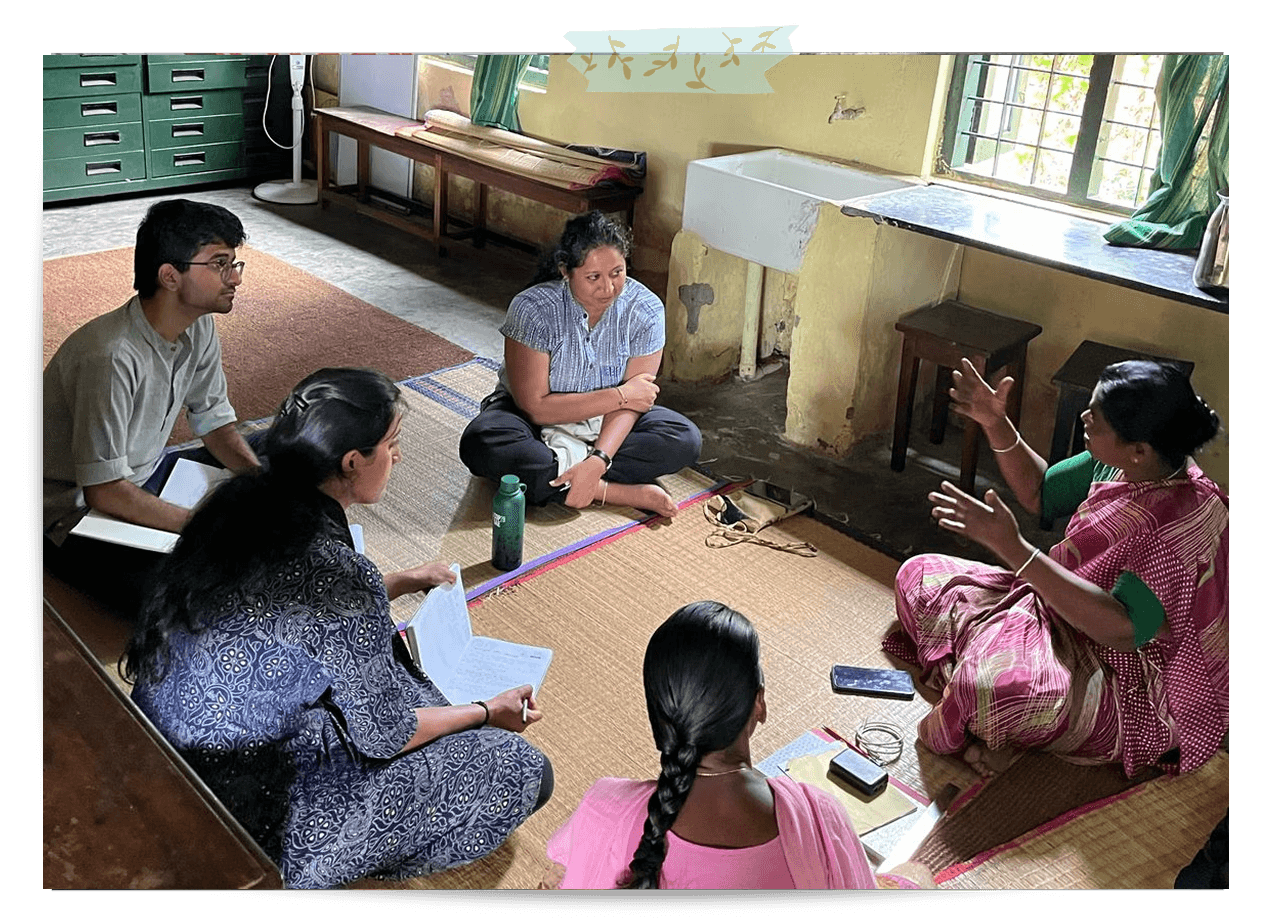
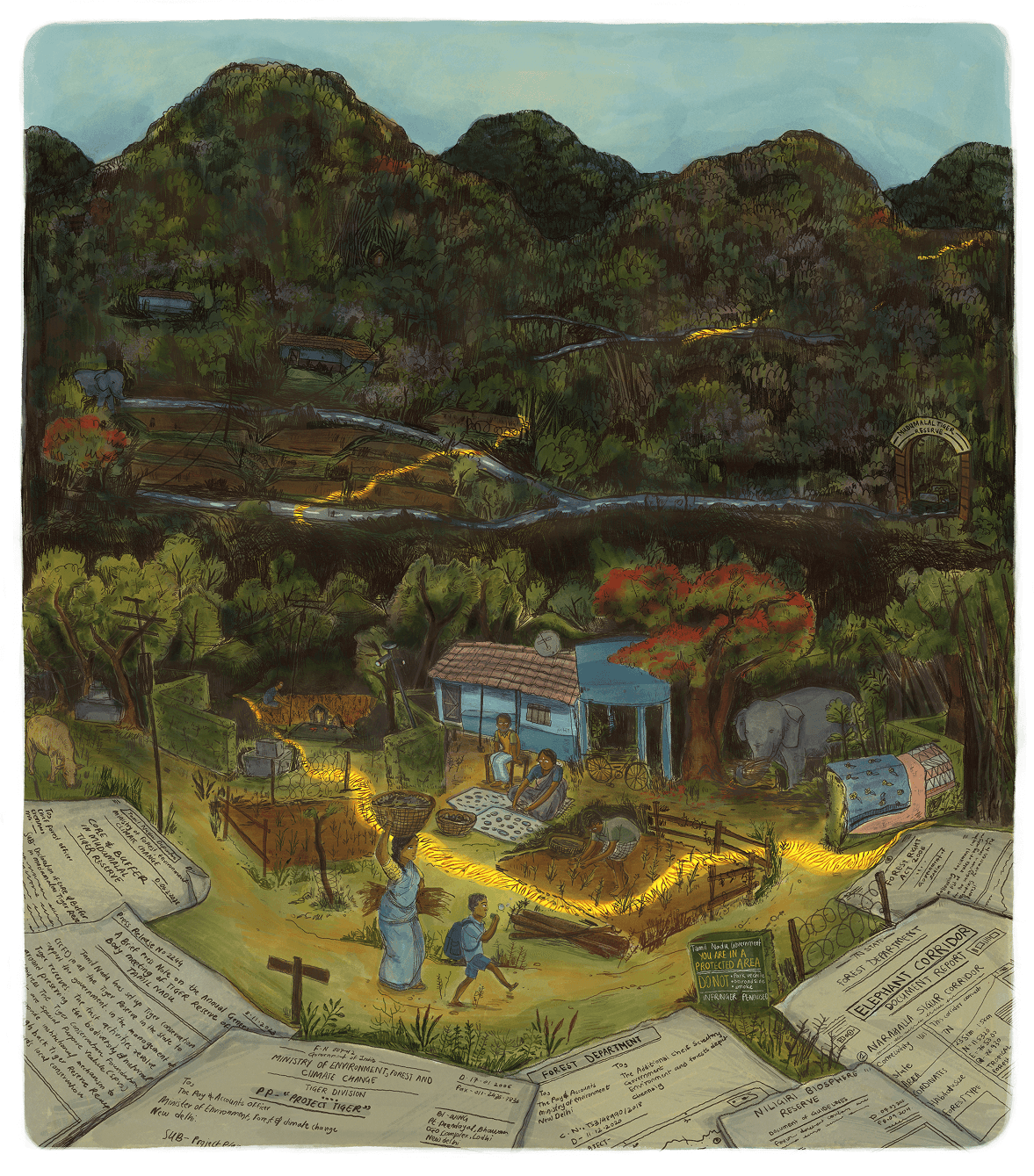
As a Bangalore-based artist and design researcher, this is my first interaction with the Nilgiri Biosphere Reserve and the Irula population. Keystone Foundation approached me as an ethnographic designer and artist for their Climate Uncertainties project, which involves three countries - Nepal, Bhutan, and India - writing a collaborative work about how diverse communities are adapting to climate change. For the India chapter, I made a visual artwork that discusses the iruala communities of the Niligiris and how they are responding and adapting to climate change. This artwork was created through community engagement, ethnographic research, and a lot of reflection while going back and forth with the community.
This landscape is a complex puzzle. It sits at the meeting point of three states—Tamil Nadu, Karnataka, and Kerala, and is layered with a UNESCO biosphere reserve, a tiger reserve, and an elephant corridor. On maps, the land is divided into "core" and "buffer" zones, terms meant to signal protection.
But on the ground, these words feel heavy. For the Irula, protection often looks like restriction, and belonging is constantly shadowed by the threat of displacement. Through sensory ethnographic engagement, attending carefully to embodied experience, place-based knowledge, and the sensory dimensions of ecological change, I tried to listen to their accounts of loss, resilience, and everyday adaptation.
In policy meetings or corporate initiatives, climate change is discussed through data and planned initiatives. But here, the language is different. The Irula don't often name it "Climate Change," but they are living it through their shifting relationship with the rain, the forest, and the animals. They speak of uncertainties that no documentation can ever do justice to. The more time I spent there, the more I realized how little I truly understand.
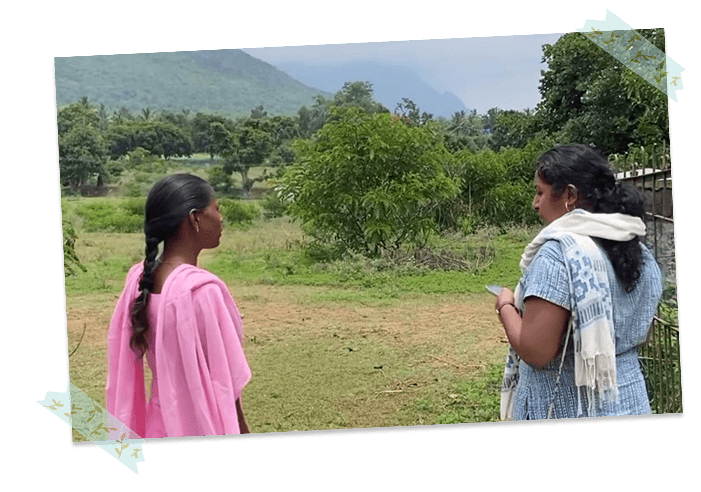
I keep circling back to one question: Who are we really protecting, and what are we protecting them from? The way conservation is imagined by institutions and people like me often comes from a removed, top-down place. It is as if nature needs to be rescued from the very people who have lived with it most closely.
It becomes clear that protection often means asking people to adjust their lives to fit our vision of how they should exist in the environment. It feels less like care and more like a form of control.
I am learning, but I kept asking myself: What are they actually getting out of this project? What value am I bringing to them beyond my own research goals?
I keep circling back to one question: Who are we really protecting, and what are we protecting them from? The way conservation is imagined by institutions and people like me often comes from a removed, top-down place. It is as if nature needs to be rescued from the very people who have lived with it most closely.
It becomes clear that protection often means asking people to adjust their lives to fit our vision of how they should exist in the environment. It feels less like care and more like a form of control.
I am learning, but I kept asking myself: What are they actually getting out of this project? What value am I bringing to them beyond my own research goals?
My role in this process is not to speak for the Irula community, but to facilitate a form of collaborative witnessing. The artwork channels these stories not as a comprehensive representation, but as fragments of conversation, carefully held and reflected.
I remain acutely aware that I am the one framing what gets noticed, what gets emphasized, what becomes visible in the final work. I believe that this power cannot be dissolved; it can only be acknowledged and handled with honesty.
With this artwork, I hope to prompt uncomfortable questions: Who benefits from conservation landscapes? Why do indigenous adaptation strategies remain sidelined in climate policy? What does it mean to document and display another community's crisis?
My hope is that viewers will move beyond empathy to develop genuine curiosity about the Nilgiris as a contested ecological and political space, and that they will question their own relationship to their own systems that drive climate pressures.
My role in this process is not to speak for the Irula community, but to facilitate a form of collaborative witnessing. The artwork channels these stories not as a comprehensive representation, but as fragments of conversation, carefully held and reflected.
I remain acutely aware that I am the one framing what gets noticed, what gets emphasized, what becomes visible in the final work. I believe that this power cannot be dissolved; it can only be acknowledged and handled with honesty.
With this artwork, I hope to prompt uncomfortable questions: Who benefits from conservation landscapes? Why do indigenous adaptation strategies remain sidelined in climate policy? What does it mean to document and display another community's crisis?
My hope is that viewers will move beyond empathy to develop genuine curiosity about the Nilgiris as a contested ecological and political space, and that they will question their own relationship to their own systems that drive climate pressures.
As a budding artist and designer, I have to wonder what my role is beyond making things visually appealing. Is my work adding value to their lives in a way that goes deeper than just form or function?
I am frustrated with design tools and art practices that are only centered for the privileged. With my practice, I am trying to move away from extractive methods of "designing for" or "telling stories about" others. Instead, I want to move towards co-agency. There is a huge need to equip communities with tools and languages that they can find value in for their own practices.
As a budding artist and designer, I have to wonder what my role is beyond making things visually appealing. Is my work adding value to their lives in a way that goes deeper than just form or function?
I am frustrated with design tools and art practices that are only centered for the privileged. With my practice, I am trying to move away from extractive methods of "designing for" or "telling stories about" others. Instead, I want to move towards co-agency. There is a huge need to equip communities with tools and languages that they can find value in for their own practices.
Cyanotype Storytelling workshop!
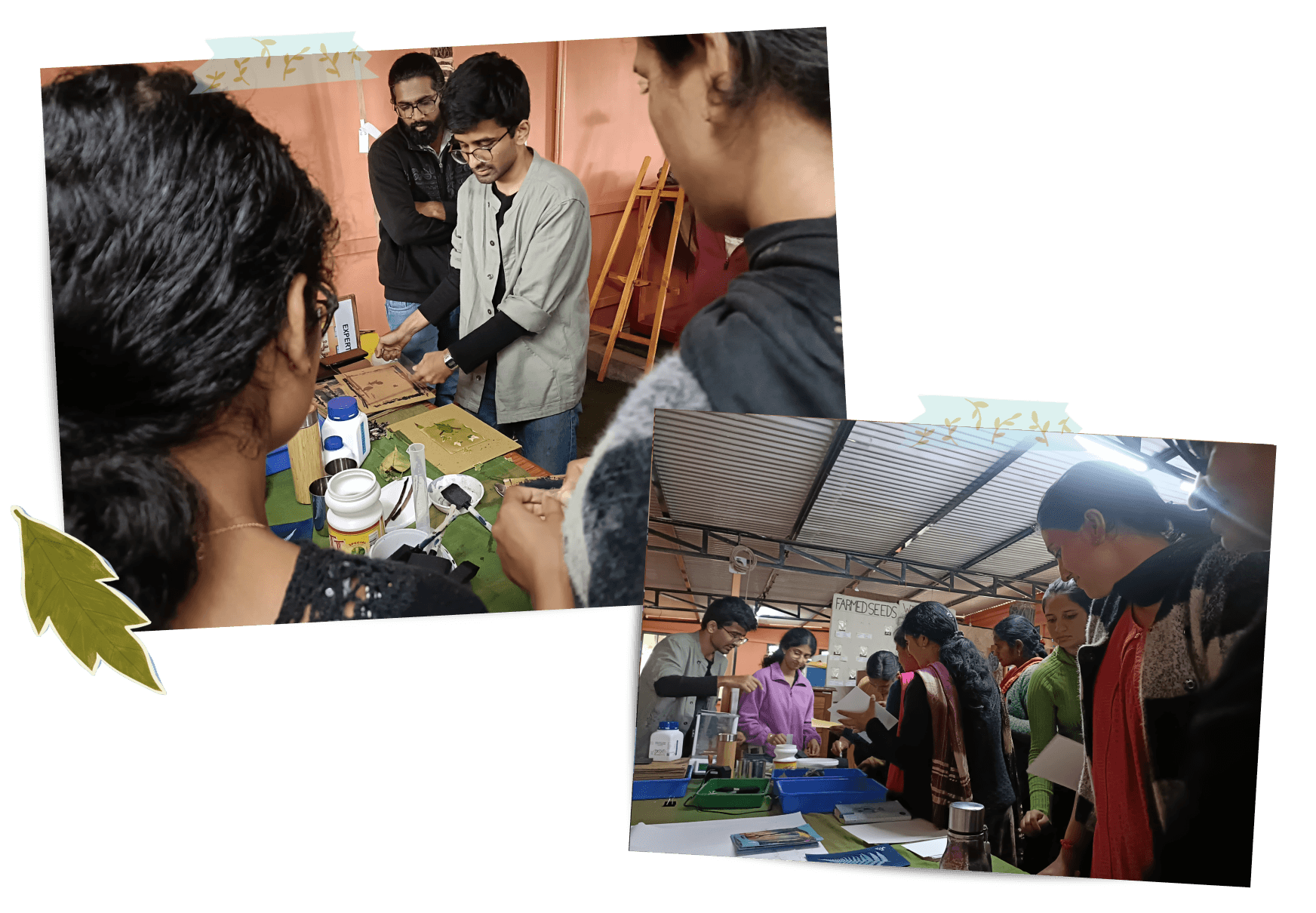
This led to the storytelling workshop I held for climate educators who work across the Nilgiris. I wanted the workshop to be a medium to give back. While I am using their information to create my artwork, I want to share my skills and resources so they gain something tangible.
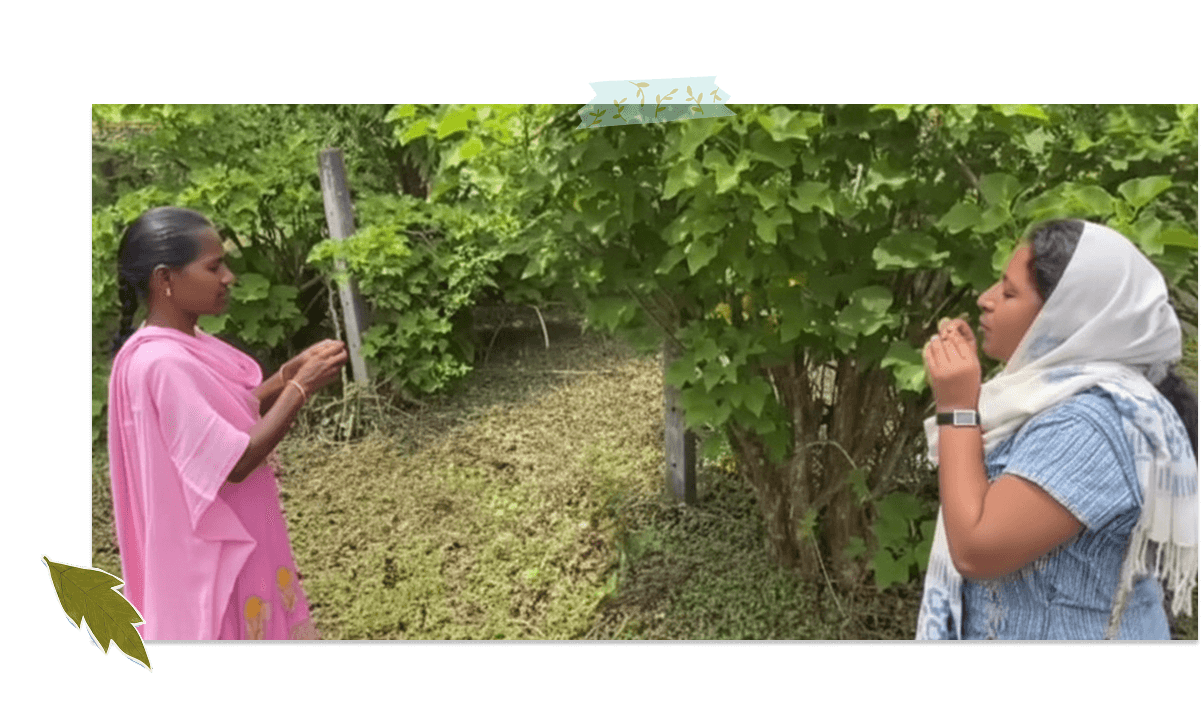
We used cyanotype as a way to learn a new skill together, creating sun-prints from the local environment and telling stories of our relationship with nature. The idea was to create a space where the climate educators can learn cyanotype as a skill and can use them in their curriculum practices or for themselves!
Cyanotype Storytelling workshop!
This led to the storytelling workshop I held for climate educators who work across the Nilgiris. I wanted the workshop to be a medium to give back. While I am using their information to create my artwork, I want to share my skills and resources so they gain something tangible.
We used cyanotype as a way to learn a new skill together, creating sun-prints from the local environment and telling stories of our relationship with nature. The idea was to create a space where the climate educators can learn cyanotype as a skill and can use them in their curriculum practices or for themselves!
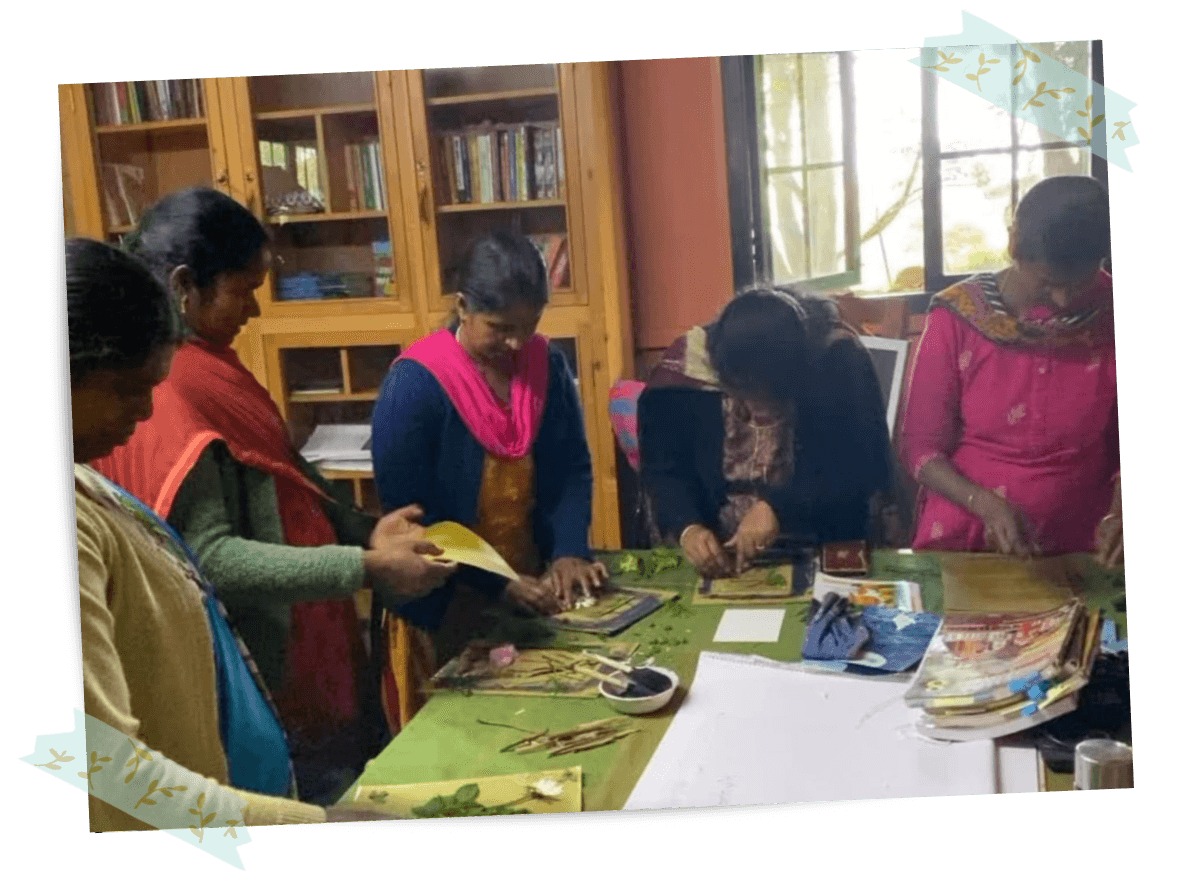
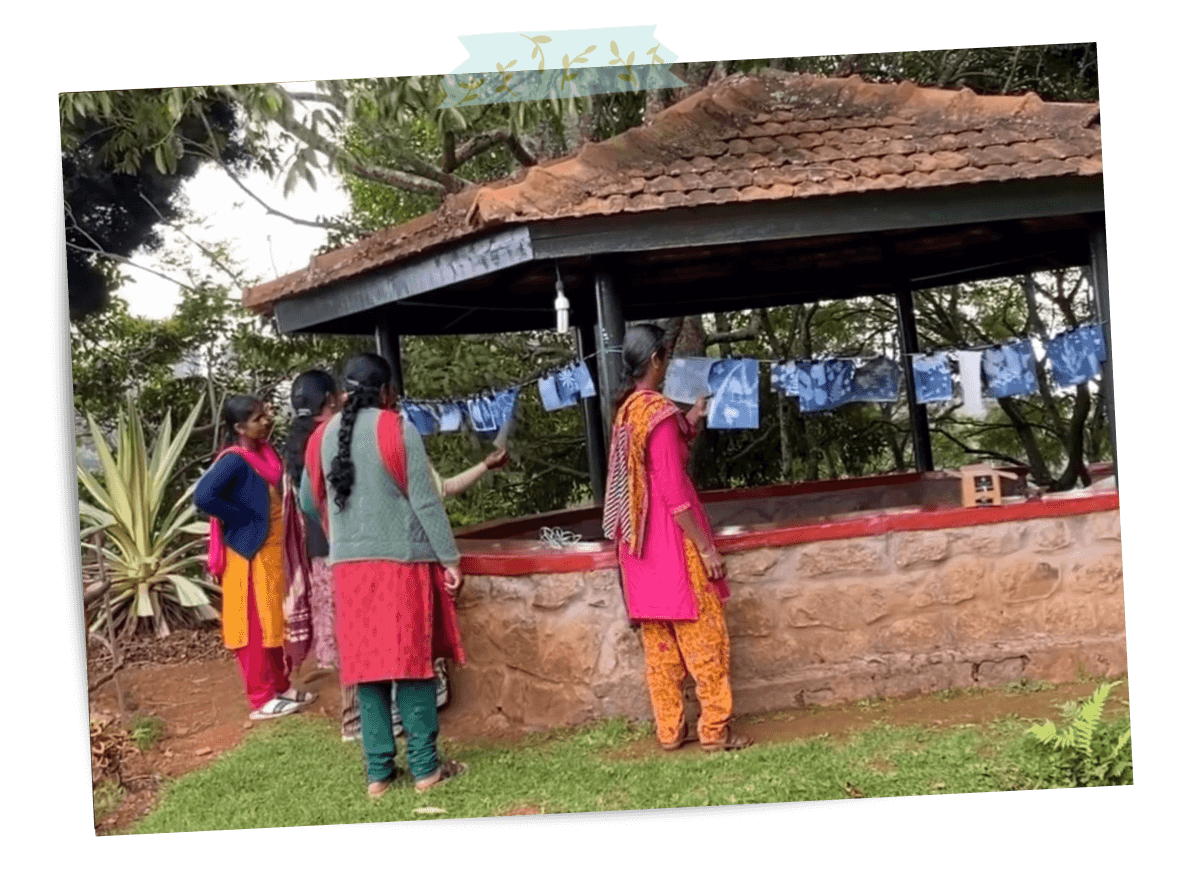
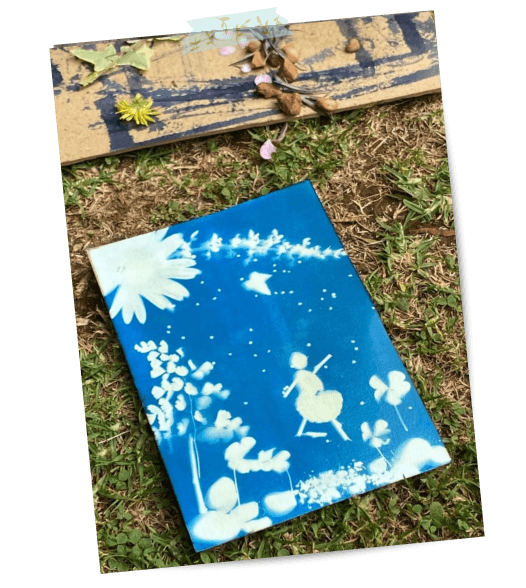
The workshop was a huge hit with over 3 round of printing and many stories!
The cheer joy and happiness on their faces when they used to see their prints come to live and narrate the stories was the highlight moment for me!
Also this project taught me so many things about my own indiviual practice and what I intend to do! This also become a space where I put my words and ideas to practice and move beyond questions into attempts!
The workshop was a huge hit with over 3 round of printing and many stories!
The cheer joy and happiness on their faces when they used to see their prints come to live and narrate the stories was the highlight moment for me!
Also this project taught me so many things about my own indiviual practice and what I intend to do! This also become a space where I put my words and ideas to practice and move beyond questions into attempts!
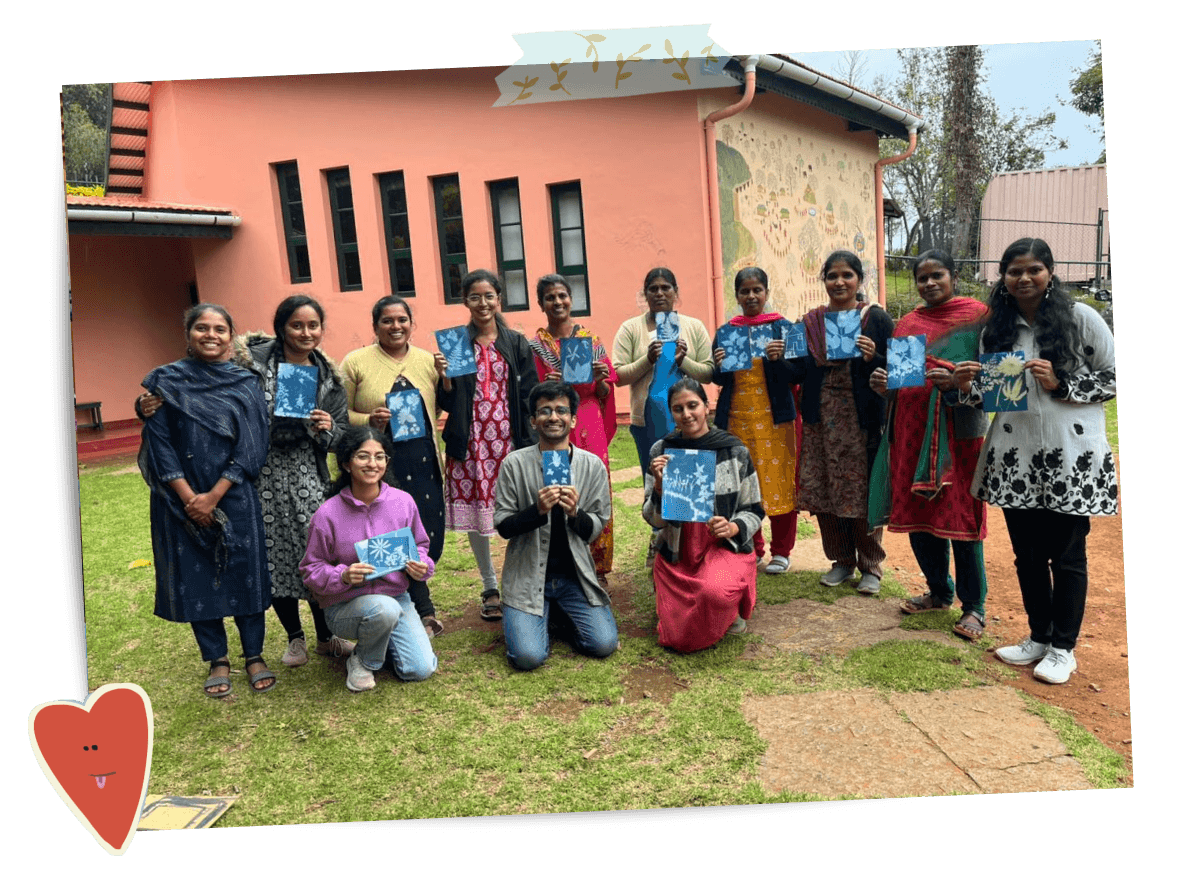
The workshop was a huge hit with over 3 round of printing and many stories!
The cheer joy and happiness on their faces when they used to see their prints come to live and narrate the stories was the highlight moment for me!
Also this project taught me so many things about my own indiviual practice and what I intend to do! This also become a space where I put my words and ideas to practice and move beyond questions into attempts!
The workshop was a huge hit with over 3 round of printing and many stories!
The cheer joy and happiness on their faces when they used to see their prints come to live and narrate the stories was the highlight moment for me!
Also this project taught me so many things about my own indiviual practice and what I intend to do! This also become a space where I put my words and ideas to practice and move beyond questions into attempts!
Working with Aache JIgmet and Deldan Agmo for the HIAL Social Enterpreunrs funding
Finding my way through the blue hills
Collaboration with Keystone foundation
As a Bangalore-based artist and design researcher, this is my first interaction with the Nilgiri Biosphere Reserve and the Irula population. Keystone Foundation approached me as an ethnographic designer and artist for their Climate Uncertainties project, which involves three countries - Nepal, Bhutan, and India - writing a collaborative work about how diverse communities are adapting to climate change. For the India chapter, I made a visual artwork that discusses the iruala communities of the Niligiris and how they are responding and adapting to climate change. This artwork was created through community engagement, ethnographic research, and a lot of reflection while going back and forth with the community.
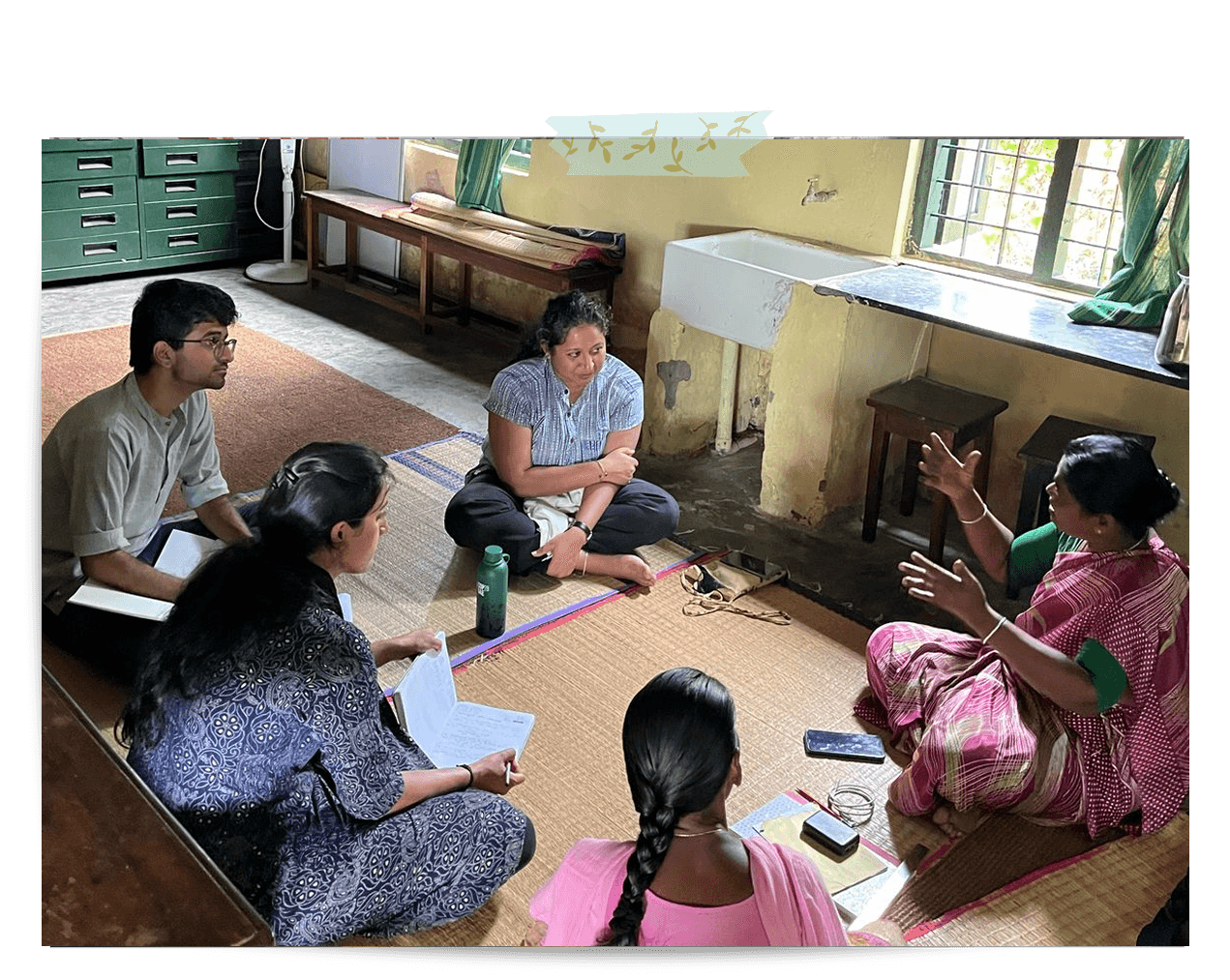
This landscape is a complex puzzle. It sits at the meeting point of three states—Tamil Nadu, Karnataka, and Kerala, and is layered with a UNESCO biosphere reserve, a tiger reserve, and an elephant corridor. On maps, the land is divided into "core" and "buffer" zones, terms meant to signal protection.
But on the ground, these words feel heavy. For the Irula, protection often looks like restriction, and belonging is constantly shadowed by the threat of displacement. Through sensory ethnographic engagement, attending carefully to embodied experience, place-based knowledge, and the sensory dimensions of ecological change, I tried to listen to their accounts of loss, resilience, and everyday adaptation.
In policy meetings or corporate initiatives, climate change is discussed through data and planned initiatives. But here, the language is different. The Irula don't often name it "Climate Change," but they are living it through their shifting relationship with the rain, the forest, and the animals. They speak of uncertainties that no documentation can ever do justice to. The more time I spent there, the more I realized how little I truly understand.



That's all about me!
If you think I will be a good fit to your team.

Reach out to me